Tag: heat insulation sheet

Top Reasons to Choose Aluminium Foil PE Bubble Heat Insulation Sheet for Your Project

In today’s fast-growing construction and industrial sector, controlling indoor temperature and reducing energy consumption has become more important than ever. Whether it is a factory, warehouse, poultry farm, commercial building or residential project, choosing the right insulation material can make a huge difference in comfort and energy savings.

One of the most trusted and effective insulation solutions available today is the Aluminium Foil PE Bubble Heat Insulation Sheet. It is lightweight, durable, energy-efficient, and easy to install. At Neo Thermal Insulation, we provide premium-quality insulation solutions designed to reduce heat transfer and improve building performance.

In this blog, we will explore the top reasons why Aluminium Foil PE Bubble Heat Insulation Sheet is the perfect choice for your next project.

What is Aluminium Foil PE Bubble Heat Insulation Sheet?

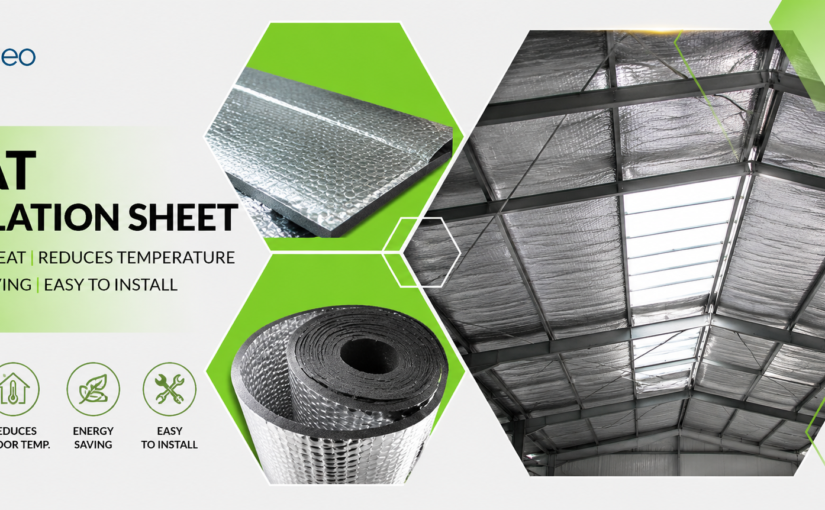
Aluminium Foil PE Bubble Heat Insulation Sheet is a modern thermal insulation material made using layers of reflective aluminium foil combined with polyethylene air bubble sheets. The air bubbles create a thermal barrier, while the aluminium foil reflects radiant heat.

This unique combination helps in maintaining cooler indoor temperatures during summer and warmer conditions during winter.

It is widely used in:

  • Industrial sheds
  • Warehouses
  • Residential roofs
  • Commercial buildings
  • Poultry farms
  • Cold storage units
  • HVAC duct insulation
  1. Excellent Heat Reflection Performance

One of the biggest advantages of Aluminium Foil PE Bubble Heat Insulation Sheet is its high heat reflection capability.

The reflective aluminium surface reflects a significant amount of radiant heat away from the building. This helps reduce indoor heat build-up and keeps interiors cooler.

Benefits:

  • Lower indoor temperature
  • Better comfort for workers and residents
  • Reduced heat transfer through roofs and walls
  • Improved working conditions in factories and warehouses

At Neo Thermal Insulation, our insulation sheets are specially designed to provide maximum thermal efficiency even in extreme weather conditions.

  1. Energy Saving Solution

Air conditioners and cooling systems consume a lot of electricity, especially during summer. Proper insulation helps reduce the load on cooling equipment.

By installing Aluminium Foil PE Bubble Heat Insulation Sheet, you can significantly reduce energy consumption.

Energy-saving advantages:

  • Lower electricity bills
  • Reduced AC usage
  • Better cooling retention
  • Improved energy efficiency

This makes it a cost-effective long-term investment for industrial and residential projects.

  1. Lightweight and Easy to Install

Unlike traditional insulation materials, PE bubble insulation sheets are extremely lightweight and flexible.

Installation benefits:

  • Easy handling
  • Faster installation
  • Lower labor costs
  • Minimal structural load

The sheets can be installed easily under metal roofs, false ceilings, walls, and ducts.

This is one reason why many builders and contractors prefer Neo Thermal Insulation products for large-scale industrial projects.

  1. Moisture and Water Resistance

Moisture can damage many traditional insulation materials over time. Aluminium Foil PE Bubble Heat Insulation Sheet offers excellent resistance against water and humidity.

Moisture protection benefits:

  • Prevents dampness
  • Reduces condensation
  • Helps avoid fungal growth
  • Increases insulation life

This makes it ideal for:

  • Warehouses
  • Food industries
  • Poultry farms
  • HVAC systems
  • Coastal areas
  1. Durable and Long-Lasting Material

Durability is a major factor when choosing insulation for any project.

Aluminium Foil PE Bubble Heat Insulation Sheets are:

  • Tear-resistant
  • Corrosion-resistant
  • Weather-resistant
  • Long-lasting

The high-quality aluminium foil surface and strong bubble structure ensure long service life with minimal maintenance.

At Neo Thermal Insulation, we focus on premium manufacturing quality to deliver reliable insulation products for long-term use.

  1. Eco-Friendly and Safe

Modern construction projects focus heavily on sustainability and environmental safety.

PE Bubble Heat Insulation Sheets are considered environmentally friendly because they:

  • Reduce energy consumption
  • Lower carbon footprint
  • Improve energy efficiency
  • Require minimal maintenance

Additionally, these sheets are:

  • Non-toxic
  • Fiber-free
  • Safe to handle
  • Odourless

This makes them suitable for homes, offices, hospitals and food-processing industries.

  1. Effective Noise Reduction

Another hidden benefit of PE bubble insulation sheets is sound reduction.

The bubble layer helps absorb and reduce external noise, creating a quieter indoor environment.

Noise control applications:

  • Industrial sheds
  • Commercial offices
  • Poultry farms
  • Residential spaces
  • Machinery rooms

This improves comfort and productivity inside buildings.

  1. Ideal for Industrial and Commercial Projects

Industries and commercial buildings often face extreme heat due to metal roofing and machinery.

Aluminium Foil PE Bubble Heat Insulation Sheet is highly effective in such environments because it helps maintain balanced indoor temperatures.

Common industrial uses:

  • Factory roof insulation
  • Warehouse insulation
  • Metal building insulation
  • Production units
  • Logistics centers

Neo Thermal Insulation provides customized insulation solutions suitable for different industrial applications.

  1. Cost-Effective Insulation Option

Compared to many traditional insulation materials, PE bubble insulation offers excellent performance at an affordable price.

Cost advantages:

  • Affordable installation
  • Reduced maintenance
  • Long product life
  • Energy savings over time

This combination makes it one of the best-value insulation products in the market.

  1. Versatile Applications

Aluminium Foil PE Bubble Heat Insulation Sheet can be used in multiple applications.

Common uses include:

  • Roof insulation
  • Wall insulation
  • Ceiling insulation
  • Under deck insulation
  • Portable cabins
  • Poultry farm sheds
  • Cold storage rooms

Its flexibility and adaptability make it suitable for both small and large projects.

Why Choose Neo Thermal Insulation?

When it comes to high-quality thermal insulation products, Neo Thermal Insulation is a trusted name in the industry.

Our advantages:

  • Premium quality insulation materials
  • Advanced manufacturing technology
  • Durable and energy-efficient products
  • Affordable pricing
  • Excellent customer support
  • Pan India supply capability

We are committed to helping industries and homeowners create energy-efficient and comfortable spaces.

Conclusion

Choosing the right insulation material is essential for improving energy efficiency, indoor comfort, and long-term savings.

Aluminium Foil PE Bubble Heat Insulation Sheet is one of the best modern insulation solutions available today because it offers:

  • Excellent heat reflection
  • Energy savings
  • Moisture resistance
  • Durability
  • Easy installation
  • Cost-effectiveness

Whether you are building a warehouse, factory, poultry farm, commercial space or home, this insulation solution can significantly improve your project performance.

With trusted products from Neo Thermal Insulation, you can ensure reliable thermal protection and long-lasting results for your project.

FAQs

  1. What is Aluminium Foil PE Bubble Heat Insulation Sheet used for?

It is used for reducing heat transfer in roofs, walls, ceilings, warehouses, factories, poultry farms, HVAC ducts and commercial buildings.

  1. How does PE Bubble Heat Insulation work?

The aluminium foil reflects radiant heat, while the air bubble layer acts as a thermal barrier to reduce heat transfer.

  1. Is Aluminium Foil PE Bubble Insulation waterproof?

Yes, it offers excellent resistance against moisture and water, helping prevent dampness and condensation.

  1. Can it reduce electricity bills?

Yes, it helps maintain indoor temperatures and reduces the load on air conditioning systems, which lowers electricity consumption.

  1. Is it suitable for metal roof insulation?

Yes, it is highly effective for metal roof insulation in factories, warehouses, and industrial sheds.

  1. Is the insulation sheet easy to install?

Yes, the material is lightweight, flexible, and easy to install on roofs, walls, ceilings, and ducts.

  1. Why should I choose Neo Thermal Insulation?

Neo Thermal Insulation offers premium-quality thermal insulation products designed for durability, energy efficiency, and long-term performance.
Insulation Sheet Price Across Various Types

People around the globe are searching for energy-efficient and sustainable solutions for their thermal insulation needs. Whether it comes to industrial, engineering or construction use, insulation has its place everywhere. It is vital to understand that thermal insulation requirements are the need of the hour.

In the case of insulation sheet price factors like material, market demand, and individual needs are necessary to consider. This domain has multifaceted aspects, and paying attention to them results in profitable deals. There are a diverse range of factors that one must bear in mind before determining thermal insulation sheet price.

In this article, we understand the world of insulation sheets and examine different types, materials, and additional factors that affect insulation sheet prices in the market. This exhaustive overview helps you to find the best deal; without compromising on cost and thermal efficiency. We also pay attention to what is an insulation sheet. The information presented here aids you in making an informed decision and strategizing your plans for the next insulation project.

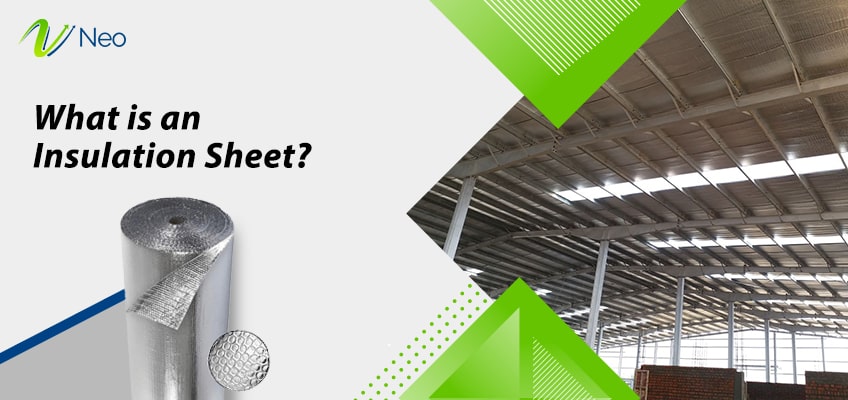
What is an Insulation Sheet?

What-is-an-Insulation-Sheet

An insulation sheet is a sustainable and environment-friendly solution for improving thermal efficiency. A heat insulation sheet (insulation panel or insulation board) curtails heat transfer between the surface of an insulated object and the surroundings. These materials are primarily used in the construction of residential, commercial, and industrial buildings for insulation purposes. Apart from this, it is also used in automotive and various industries to enhance overall energy efficiency.

Insulation Sheet Price List

1. Air Bubble Insulation Sheet

An Air Bubble Insulation Sheet is a thin, flexible material designed to provide thermal insulation by trapping air bubbles between reflective layers.

Bubble Sheet Name Thickness R Value Price (₹/sq. ft)
Bubble Insulation Sheets 4mm 2.98 M2 C/W ₹ 8.5
Aluminum Foil Air Bubble Insulation Sheets 8mm 3.10 M2 C/W ₹ 8
Aluminum Foil Double Bubble Insulation 8mm 2.20 M2 C/W ₹ 8
Bubble Insulation Thermal Wrap 8mm 3.20 M2 C/W ₹ 13
Foil Bubble Insulation Roll 4-20 MM 3.20 M2 C/W ₹ 7

2. HEAT INSULATION SHEET

A heat insulation sheet is a material designed to reduce the transfer of heat through a surface by trapping air pockets within its structure, thereby slowing down conduction, convection and radiation of heat.

Sheet Name Thickness (MM) R Value (M2°-C/W) Price (₹ per Unit)
Heat Insulation Sheet 4-20 3.00 M2° C/W ₹ 7.5 per Square Feet
Heat Resistance Insulation Material 4-20 3.18 – 3.80 M2° C/W ₹ 1,184.03 per Square Meter

3. Thermal Insulation Materials

Thermal Insulation Sheet work by incorporating barriers to minimize heat exchange between solids, fluids, or gases through mechanisms like reducing conduction, convection and radiation, effectively conserving heat and maintaining desired temperatures.

Sheet Name Thickness R-Value Price
Thermal Insulation Wrap 4-20 mm ₹ 75/ Square Meter

4. Aluminum Foil Insulation

Aluminum Foil Insulation Sheets are versatile, multi-layered materials primarily used for thermal insulation purposes in various industries and construction applications, working by reflecting radiant heat to maintain desired temperatures inside a space.

Sheet Name Thickness R-Value Price
Aluminum Foil Insulation 4-20mm 3-3.80 M2° C/W ₹ 77-80 Square Meter

Seeking a Reliable Thermal Insulation Company?

Additional Factors Affecting Insulation Sheet Price

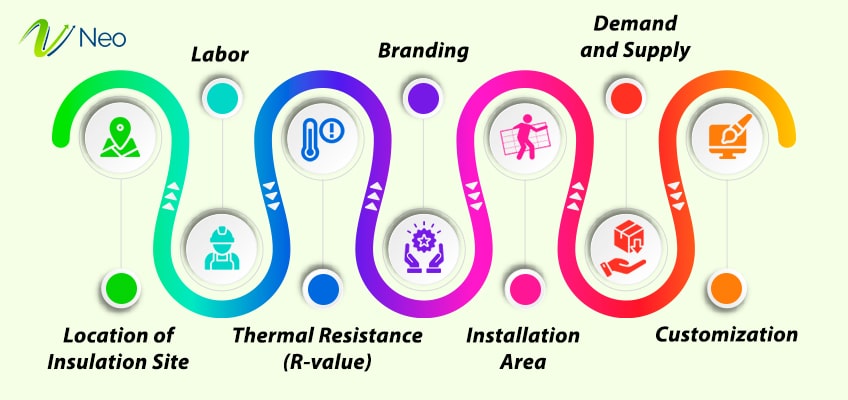
Various factors affect thermal sheet price. Apart from the material and their costs, additional factors also play a vital role in determining the price of insulation sheets.

Additional-Factors-Affecting-Insulation-Sheet-Price

1. Location of Insulation Site

Location and accessibility to the installation site play an important role in determining the price of an insulation sheet. If a site is situated in far-flung areas and demands more transportation costs, this impacts the overall price of an insulation sheet. In case, the installation site is near and easily accessible, it will have a negligible effect on the overall cost.

2. Labor

Apart from material costs, the cost of labor also impacts the price of an insulation sheet. Insulation installation requires skilled labor for effective and hassle-free installation. A skilled labor will charge more money than a non-skilled labor.

3. Thermal Resistance (R-value)

Thermal resistance is one of the most important properties of an insulating material. R-value has a direct influence over the price and effectiveness of an insulating material. Thermal resistance and thickness of a material are directly proportional to each other. The higher the thickness, the higher the thermal resistance. Also, the higher the thickness of a material, the higher the price of a material.

4. Branding

Brands that are known for their quality products and have established reputations in the market will cost more prices than their other counterparts. Every customer desires a durable and reliable product, and this is the reason why brands with established names cost more. These brands attract customers’ attention by providing warranty support, better service and offering on-time delivery.

5. Installation Area

The installation area affects the price of an insulation sheet. Location with large surface area requires more quantity of insulation sheet than location with lower surface area. Even a difference of a few per-unit areas may affect the overall price of an insulation sheet.

6. Demand and Supply

The market has a very important say in determining the price of an insulation sheet. Market factors like demand and supply directly influence the price structure. There are some materials that have higher demand in comparison to other materials, this creates price differences. Also, factors like the availability of raw materials, production of a particular material and seasonal demands impact the price of an insulation sheet.

7. Customization

Specific customization impacts the price of insulation sheets. Sometimes, people ask for specific sizes, materials, and features, this requires special attention to fulfill the orders. When special customization is asked for, it results in a higher price than the standard price.
Some important features of insulation sheets:

Types of Insulation Sheets Material

Insulation sheets are available in a variety of materials:

  • Fiberglass: This material is known for its extraordinary thermal resistivity, durability, and flexibility. The insulation material comprises glass fiber with good thermal efficiency. It is readily available in the form of sheets and rolls.
  • Foam Boards: Materials like polystyrene, polyurethane, or polyisocyanurate are used as main ingredients in the manufacturing of foam boards. Each material has its thermal resistivity, thickness, and flexibility. Depending on insulation needs and budget, individuals can choose from any of these.
  • Reflective Insulation: These kinds of sheets consist of metallic foil that acts as a barrier between the insulated surface and the surroundings. The metallic foil present in it reflects away the radiant heat and hence, improves the thermal efficiency of this material.
  • Mineral Wool: The mineral wool insulation sheets have rock or slag fibers as their main components, making them a perfect fit for thermal and sound insulation requirements.

What is the R-value of sheet insulation?

R-value refers to the thermal resistivity of an insulation material. In simple terms, it refers to the effectiveness of an insulation sheet against heat transfer. The R-value is directly proportional to the thermal resistance, more is the resistance, higher is the R-value. Each insulation material present has its specific R-value therefore, it becomes essential to choose the right material depending on needs and application requirements.

Application of Thermal Insulation

  1. One of the primary uses of a heat insulation sheet is to insulate different parts of a residential, commercial or industrial building. The sheets are used for insulating walls, attics, floors, roofs, and various other parts for better thermal efficiency and comfort.
  2. It is used for insulating HVAC ducts which results in enhanced production efficiency and preventing unnecessary heat loss and heat gain. Insulation sheets are also applied to heating, ventilation, and air conditioning systems.
  3. Insulation sheets are widely used in the automotive industry for improving vehicle performance by reducing engine overheating. It is also used for ameliorating sound insulation and overall driving experience.
  4. Insulation sheets are used in a variety of electronic appliances like refrigerators, water heaters, etc. It improves their overall functioning, boosts thermal efficiency, and supplements in maintaining energy proficiency.

Request a quote now for the most competitive insulation pricing!

Advantages of Thermal Insulation

  • It curtails heat transfer between the insulated object’s surface and the surroundings. By curtailing heat, it improves overall efficiency, lowers energy costs, and makes systems more thermal efficient.
  • It offers consistent indoor temperatures without any extra cost. It reduces excessive heat gain in summers and excessive heat loss in winters.
  • Apart from thermal insulation, insulation sheets also provide resistance against noise pollution. It reduces the movement of excessive sound between the interior and exterior of a room.

Insulation sheets offer sustainable and green-house emission-free solutions. It contributes to overall environmental protection and energy efficiency.

Conclusion

For making an informed decision in the case of insulation sheets, it is imperative to pay attention to factors like insulation sheet price, types of insulation material, and additional factors that affect the price of insulation sheet. To fulfill individual requirements and balance between effective cost and performance, one needs expert guidance and industry knowledge. In this article, we pay attention to details and provide you with expert knowledge so that you can easily navigate through the question of insulation sheet price.

The information presented above helps you to make smart decisions that not only save you money on insulation sheet purchases but also get you effective thermal performance with environmental sustainability.

FAQ’s for Thermal Insulation Sheet Price

1. What is the thickness of the insulation sheet in MM?

Each individual insulation sheet has its specific thickness depending on its use and the materials used in its manufacturing. To get information regarding the thickness of different insulation sheets please refer to the table mentioned in the article.

2. What is the Insulation Sheet Price for the Roof?

The insulation sheet price for the roof depends on factors like the material used as an ingredient in manufacturing and the thickness of the material, and the area to cover. To get a proper idea about insulation sheet price visit the table mentioned in the article.

3. Is thermal insulation expensive?

The thermal insulation is not as expensive as many people think. the price of insulation material depends on factors like material, thickness, area to cover, thermal resistance, labor, etc.

4. What is the price of thermo foam?

The price of thermo foam is Rs. 100 to Rs 500 (approx.) depending on its quality and thickness.

Talk to us?

Download Brochure