Tag: pre engineering building

Process to Thermal Insulate Buildings with Pre-engineered Building Manufacturers India

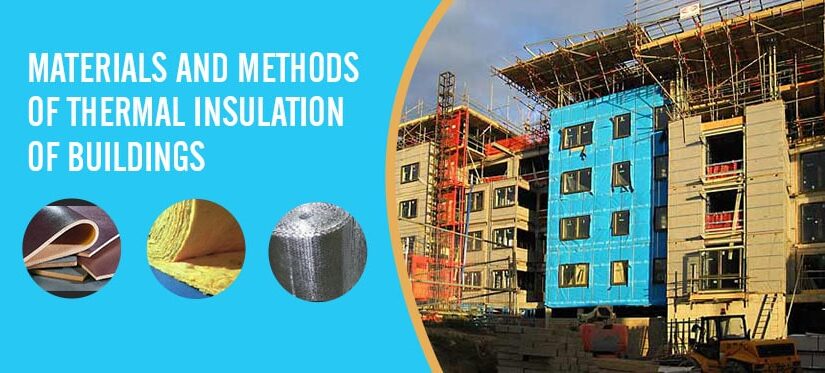
The natural condition of the earth is in huge danger due to our activities. In other words, global warming is disturbing the ecological balance of the earth. Heat emissions cause an increase in the average atmospheric pressure and harms the nature. Buildings all around the world are one of the prime thermal emitters. There are various companies like Pre Engineering Building Manufacturers India that help to curb the thermal emissions from all types of buildings. So, in this article, we are going to discuss the various method to thermally insulate the buildings.

Role of companies like Pre Engineering Building Manufacturers India

No individual can insulate his house on his own. Moreover, the story is a lot more complex when it comes to a large building like a factory. Thus, you need experts who have years of experience in this field to have effective insulation. So, companies like Pre Engineering Building Manufacturers India, are the best choice for this job. Now, it’s time to take a look at all the best thermal insulation practices.

Slab or block Insulation

This is the most common and cost-effective insulation practice. Here, you have to fix the insulator slabs to the walls of the roof. These slabs help to control heat loss or gain and thus maintain the optimal temperature in the building. You can use materials like mineral wool, corkboard, cellular glass, and cellular rubber or sawdust for this purpose.

Blanket Insulation

This is the complete opposite of slab insulation. In blanket insulation, you have to put the insulating sheet directly over the roof of the building. These sheets are usually very flexible and can adapt to almost all roof types. You can use material such as animal hair, cotton, woolen fiber, etc for this purpose. These sheets are usually 12 to 80mm thick and serve as excellent heat absorption medium.

Loose-Fill Insulation

This is an advanced insulation process. A stud space is provided between the two layers of the wall. Now, you can fill this space with some insulating material. Thus, the heat will get trapped between the two layers of the building wall. For loose-fill insulation, you can use rock wool, wood fiber, cellulose, etc. This insulation is most commonly used in cold regions.

Read Also: – How to insulate window using bubble sheet roll

Bat insulating materials

Bat insulation is very similar to blanket insulation. The only difference is that bat inclusion sheets are thinker than the blankets. You can use cellulose, woolen fiber, for bat insulation. Additionally, just like blanket insulation, these are also spread over the walls and roof of the building.

Insulating boards

You can use pulpwood or cane to make insulating boards. The pulp is pressed with pressure under a certain temperature to turn it into sheets. Now, you have to attach these sheets to the inner side of the building to block your room temperature from being emitted through the walls. These boards are very cheap to make and thus they are very cost-effective. Companies such as Pre Engineering Building Manufacturers India make these sheets to allow insulation on a budget.

Reflective Sheet Material

Aluminum sheets, gypsum boards, steel sheet have high reflective and heat resistance capacity. This means that when this sheet will come in contact with solar heat, it will reflect it straight back. So, these materials are best for houses or buildings that are located in tropical areas with high average temperatures. These sheets can also be used to maintain a low temperature in large refrigeration units.

Lightweight Materials

This is a very easy insulation practice. During the construction of the building, certain insulating materials such as blast furnace slag, vermiculite, burnt clay aggregates, etc are mixed with the concrete mixture. These increase the heat resistance of your house and don’t need to do any sort of separate insulation in your house.

Proving a proper roof shading

If you can block the direct sunlight on your roof then, you can increase the heat efficiency of your house. Thus, you can construct a shade on your roof for this purpose. Moreover, you have to ensure that the angle of the shade is accurate to the direction of the sun. Companies such as Pre Engineering Building Manufacturers India provide innovative ideas for roof shading. They also have various customization options to help the shade blend in with the aesthetic of your building.

Conclusive view on insulation practices by Pre Engineering Building Manufacturers India

So, we can conclude that the thermal insulation of a building is very crucial to saving the environment. Additionally, it will save a lot of your energy bill that you have been wasting to make up for the heat loss due to non-insulation. Pre Engineering Building Manufacturers India has been doing building insulation for years., So they know everything there is to know in this field. Thus, you can blindly rely on them to provide you with the best insulation. Moreover, many governments have made it mandatory to have some sort of insulation in all buildings.
Benefits of Pre-Engineered Buildings and How to Insulate Them

From small businesses to large heavy machinery industries are choosing pre-engineered buildings over concrete buildings. The reason is very simple, they are easy to construct and are cost-effective. A pre-engineered building is designed by using best-suited raw materials depending on the structural and aesthetic requirements. That is why they offer robust and strong structural designs suiting various industrial needs. In this article we will discuss the following points:

  • What is a pre-engineered building?
  • Benefits of using pre-engineered buildings.
  • What are the thermal insulation techniques for insulating pre-engineered buildings?

What is a pre-engineered building?

Pre-engineered building (PEB) are custom computer-aided designs which are simply engineered metal buildings. These buildings are easy, fast and cost-effective to develop. Pre-engineered buildings are steel structures which are built over a structural concept of having wall cladding, roof sheeting, primary framing system, secondary framing system and accessories.

PEB is best-suited for construction sites or large industries or manufacturing units. It is also used in earthquake-prone areas to build the houses.

Benefits of Using Pre-Engineered Buildings

There are many benefits of using pre-engineered buildings over concrete buildings, few of them are as follows:

Less Construction Time:

The use of high-quality steel, tapered build-up sections, light gauge steel section, etc. makes the overall process extremely light weighted and cost-effective. Apart from this, the pre-engineered building designs are computerized design programs. Using automatic machinery for welding, multi-cutting torches, etc.in the production line to fasten the procedure of construction. These buildings take 50% less time than usual.

Simple Foundation:

Pre-engineered buildings are easy to construct and are lighter in weight as they are 30%-40% lighter than conventional steel structures.

Scalable:

The building design after construction is expandable for the future needs or additional requirements. The modification or changes in the physical design like height or width are easily changeable, unlike concrete buildings.

High- Quality Assurance:

As the production line is highly automated and under great supervision, thus, the quality of products is assured.

Energy- Efficient:

This is the exclusive feature of a pre-engineered building. As they are energy efficient, they save up to 70% of energy consumption, thus reduces electricity expenses.

What are the thermal insulation techniques for insulating pre-engineered buildings?

To make the metal building energy efficient it is important to create a thermal barrier and air barrier. It is unavoidable to prevent the temperature stability if there will be heat transfer through the walls, roofs/lofts, ceiling, vents etc. Thus, it is important to provide the heat insulation to the buildings. Metal building insulation provides a barrier to exterior sounds, heat, dust and moisture hence improves the energy efficiency of the building.

There are many thermal insulation materials available in the market which offers high insulating characteristics. But when we talk about pre-engineered building insulation then there are two main insulating materials, that is:

Fiber Insulation:

Fiberglass provides an excellent insulation to the pre-engineered buildings. It provides insulation to thermal and acoustical for walls, roofs, and ceilings. Fiberglass comes in many forms like batt, loose-fill and roll form. Fiberglass can be made from recycled glass and it offers insulation to diverse parts of the building.

Rock and mineral wool insulation provides high resistance to fire and is used to the insulated floor, ceiling or walls. Another fiber insulation product – Cellulose insulation is used in a loose-fill form to insulate attics, walls, and floors. Cellulose have high resistance to air leakage thus, provides better roof insulation, under deck roof insulation, etc.

Foams:

Polyurethane and Polyisocyanurate have high R-value, thus are better insulating materials. Polyurethane foam is primarily used to block the air leakage and insulate efficiently. These foaming products are less polluting and harmful to the environment and offer cost-effective solutions.

Insulating Techniques for Pre-Engineered Buildings

Steel or metal buildings are incapable of protecting from the outside climatic conditions. Thus, supportive insulation materials are required to enhance the thermal stability. In general, there are four insulating techniques that are used to protect the pre-engineered buildings.

Batt and Blanket Insulation:

Batt insulation is inexpensive and offers effective wall insulation. It consists of rock wool or fiberglass processed to form a mineral fiber. Batt and blanket insulation are used for walls, floor, ceiling insulation. They have an R-value of R-3 per inch.

Loose-fill Insulation:

It is perfect insulation techniques to block the air leakage and reduce unwanted noise from outside. It wills every corner and space in the cavities thus, provides effective thermal insulation. Loose-fill insulation consists of loose fiber pallets or fibers and is blown into the building cavities with an equipment. The R-value lies between R-3 to R-4 per inch. This insulating technique can be a little expensive than other techniques.

Spray Foam Insulation:

It provides a perfect floor, ceiling, and wall insulation. With the help spray technique, liquid form of polyurethane is sprayed on to the wall or ceiling or floor. The mixture expands as it is sprayed and then convert into solid air-filled cells of plastic. This technique is advantageous to buildings having shaped designs or some complex structures.

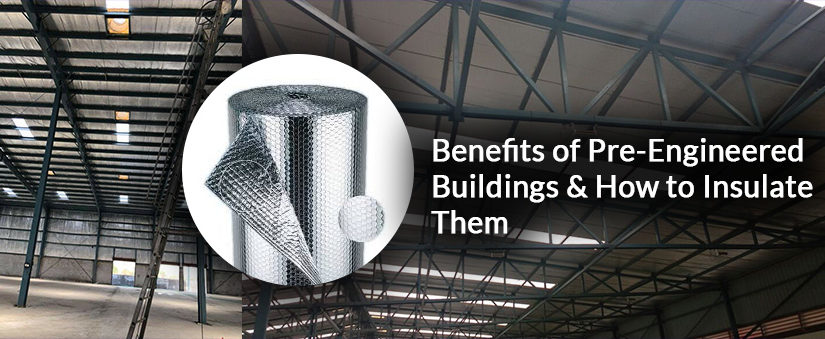
Reflective Foil Bubble Insulation:

This is the most effective form of thermal insulation technique. It provides a dry, clean and easy installation of the insulation material. Reflective foil bubble insulation sheet provides a barrier to moisture, radiation, reflects heat, and dust. Bubble insulation sheets give roof insulation offering temperature stability in the building during the change in the environment.

It reflects 90% – 95% of radiant heat and offers waterproof insulation. The reflective foil bubble insulation sheets are strong, light weighted and flexible.

Conclusion

Proving roof insulation, heat insulation or any other insulation to your pre-engineered building entirely depends to the requirements for which the building will be required and on the climatic conditions of the region. Thus, it is important to consult insulation constructor or thermal insulation providing service companies for better guidance. In the market, there are many insulation materials and insulating techniques are available. Thus, depending on your business requirements or personal demands, choose the perfect insulation technique and material for your pre-engineered building.


Talk to us?

Download Brochure