Tag: PRE ENGINEERED BUILDINGS

Top Pre Engineered Building Manufacturers in India

Technology has made a huge impact in several industries. One such great example is the construction industry, where the demand for pre-engineered building structures (PEBs) has rapidly grown.

According to the stats, The pre-engineered building market size is expected to reach $0.888 billion by 2032 with a CAGR of 7.40%. It clearly shows that PEBs have reached a billion-dollar industry and are growing in India.

These pre-engineered buildings are metal or steel structures that are manufactured in the factory and assessed on time. So, they make the construction process faster by setting up a pre-built structure on-site rather than traditional construction step-by-step. Because these pre engineered buildings are stronger, lighter and easier to modify than steel buildings and save huge time in construction.

Mostly the demand of pre-built structures required in small retail, commercial buildings, warehouses and storage units. By seeing such numerous benefits and fast demand of PEB structures in the construction industry, various PEBs manufacturing companies are now available in India.

However, such high competition makes it challenging to find the ideal Pre engineered building manufacturers in India. Don’t worry!

In this article, we’ve handpicked the top six PEB manufacturers in India that are known for their fast production, remarkable quality and flexibility. By the end of this article, you’ll know exactly which PEB company is best fit for your requirements.

Top 6 Pre Engineered Building Manufacturers in India

Here are the top six pre-engineered building manufacturers in India:

1. Neo Thermal Insulation

Neo Thermal Insulation is an award-winning manufacturer in the list of pre-engineered buildings (PEBs) insulation solutions in India.

Since 2007, Neo Thermal Insulation has specialized in manufacturing, retail, supply and export of a wide range of insulation materials such as PEBs, heat insulation, air bubble, aluminum foil, reflective sheet, bubble wrap etc.

Whether it’s commercial, industrial, residential, warehouse, power plants or metal roof, Neo Thermal Insulation has end-to-end insulation solutions for pre-engineered buildings with top-notch quality and tailored services for their clients.

Transform Your Construction Process with Leading PEB Manufacturers

They’ve won several awards and certifications via CNBC, TQV, Benchmark Trust, ISO-certified and many others.

Neo Thermal Insulation served their insulation solutions to India’s most reputed companies including Amazon, BKT, Asian Paints, Coca-Cola, Walmart etc across various sectors including PEBs, industrial buildings, warehouses, FMCG and more.

2. Kirby Building Systems

Another popular Pre-engineered building (PEBs) manufacturer in India is Kirby. Since 1976, Kirby manufacturers have been popular for their tailor-fit pre-engineered services.

They’ve successfully delivered 100k+ projects, 515k+ MT production capacity, 7+ manufacturing locations worldwide and 5k+ dedicated team globally. They are one of the oldest PEB manufacturers with top-quality work and customer-centric approach.

Kirby building systems has a proven track record for PEBs manufacturing services for warehouses, showrooms, supermarkets, malls and much more. They’ve won several awards as an excellent manufacturer in India.

Some of the biggest clients they’ve worked with are Honda, Asia Steel, IKEA, Moyee, Unilever and more.

3. Tata BlueScope Steel

Tata BlueScope Steel is one of the leading PEB manufacturers and suppliers in India. They’ve completed more than 1000 projects for their customers across India.

It’s a Pune-based manufacturer that is known for their world class manufacturing facilities, high-quality design, fast delivery and end-to-end PEB solution.

They are popular in the SAARC region because they provide the best-prefabricated steel building solutions.

In 2005, they started a manufacturing company and are now delivering continuous quality PEB work. They are ISO-certified and FM-approved, which makes them a trustworthy manufacturer.

4. Interarch Building Products

In 1984, Interarch Building Products Ltd started and is now one of the biggest PEB manufacturers in India. They pioneered the pre-engineered construction services and took first mover advantage in metal construction from ceilings to roofs to pre-engineered buildings.

Interarch Building Products gets expertise in manufacturing, designing, and installing PEBs of top-notch quality and commitment to their customers. They have a huge portfolio of PEB projects and offices across all major cities.

Some of the giant companies they’ve worked with are HUL, Tata, Godrej, Asian Paints, LOGOS, MG Motors, CEAT, PepsiCo and many more.

Whether the PEB structure required for industries, commercial, infest stuck or residential purpose, Interarch Building Products has years of experience and proven track record in India.

5. Zamil Steel Buildings India

When you are looking for a reliable name in pre-engineered manufacturing, Zamil Steel Buildings always comes to our list.

With 44+ years of industry experience, global presence, quality work, and on-time delivery, Zamil Steel Buildings has made a huge name as a PEB manufacturer.

They are one of the largest global steel structural or pre-engineered steel building suppliers with over 90,000 steel structures across 90 countries. They’ve ISO 9001:2015, ISO 14001:2015 and ISO 45001:2018 Certifications, which ensure top-notch and controlled quality.

Zamil Steel is one of the few manufacturers globally that offer a complete building system, from engineering, procurement and manufacturing to accessories installation. If you’re looking for an all-in-one PEB manufacturer, then it’s worth considering.

Looking for quality and efficiency? Check out the top PEB manufacturers in India.

6. Jindal Buildsys

Jindal Buildsys Limited is one of the fastest-growing PEB manufacturers in India. It was established in Gurgaon, Haryana. This firm is especially known for super-quality steel building, structural design and tailor-made solutions.

To cater the growing demand of PEB structures, Jindal Buildsys Limited has earned a big name by completing 1500+ projects successfully. They’re offering complete PEB solutions, including designing, manufacturing and erection services.

With their innovative designs, reliable buildings, warranty and proven track records make Jindal Buildsys Limited a friendly option for PEB solution.

Benefits of Pre-Engineered Buildings

Here are some major benefits of PEBs:

1. Cost-Effectiveness

One of the biggest benefits of considering pre-engineered buildings (PEBs) i.e, cost-effectiveness. As compared to traditional building construction, the cost of PEB is comparatively lower and requires less maintenance that overall leads to saving more money and less wastage in the long-term. Especially in such cases when a factory is shifting to another location then pre-engineered buildings can easily unlock the bolt and transport.

2. Faster Construction Time

Another benefit of considering pre-engineered buildings is to reduce the construction time and make it faster than traditional construction. These pre-engineered buildings are manufactured off-site and assembled on-site that reduce the construction time by doing only on-site fabrication, cutting and welding. It makes the construction process much easier and faster.

3. Design Flexibility

These pre-engineered steel buildings are modernly structured and set up with complete flexibility. These steel structures are first designed using software and then fabricated with machines that can be customized in all possible ways. These structures are versatile in design, layouts, sizes and aesthetics. So, there are tons of options for modifications and future scalability making it an ideal option.

4. Durability and Low Maintenance

The pre-engineered buildings are extremely durable and sturdy in nature, and they can stand in any bad weather conditions. Because of the fire-resistance properties, PEBs are safe materials in the industrial sector. The best part is that PEB first designed the software to allow virtual simulation before turning it into reality. So, the quality will be top-notch and will have long-term durability. Plus, having such high-quality material can make the PEBs less maintenance-free in the long term.

5. Sustainability and Energy Efficiency

Pre-engineered buildings are also energy-efficient and environmentally friendly. They used to design various sustainable things, including green roofs, solar panels, rainwater harvesting systems, etc, as these are durable and energy-efficient and they less affect the environment. Plus, these pre-engineered buildings are made up of recyclable materials that can be reused.

Key Considerations When Choosing a PEB Manufacturer in India

Here are some key factors to consider when you are choosing a right PEB manufacturer:

1. Experience and Reputation

The very first thing to consider when you’re looking for the right Pre engineered building manufacturers in India is the years of experience and reputation in the market they have. If you work with a PEB manufacturer who has huge years of experience and tons of proven track records for delivering top-quality pre-engineered buildings and complete customer satisfaction, then the chances of delivering the same or better results for your project will be higher.

2. Quality of Materials

Quality is the key factor that will decide whether to choose a manufacturer or not. You should always consider a manufacturer who is known for their quality materials and strong durability. Every company has certain parameters to check the quality; you can ask for the documents to check the quality standard they’ve and meet your expectations. Overall, the project will be executed smoothly when quality is the core thing. So, make sure to choose a manufacturer that offers quality materials that are durable, long-lasting and can withstand any bad weather conditions.

3. Customization Options

Every business has different requirements and that’s why customization is also a big factor to consider. You should consider a PEB manufacturer in India which offers tailored solutions and high customization as per specific needs including dimensions, doors, windows styles, roof and color options.

4. Project Management and Support

Pre-engineered building is one of the complex projects that is done under the surveillance of team experts and project managers. So, it’s essential to choose a company that offers an experienced project manager for your project to handle everything from designing to construction and be able to manage queries if they arise. Plus, having an excellent support team will ensure that all the operations work smoothly and provide complete satisfaction.

5. After-Sales Service

After-sales support really matters the most. So, you should look for a best pre engineered building manufacturers in India who offers after-sales support, repair and maintenance to ensure everything keeps working fine without any worry.

Conclusion

Pre-engineered building manufacturers (PEBs) are in high demand and are making a revolution in the construction industry. It makes the construction process faster, more convenient, and more cost-effective. So, it’s the right time to adopt the PEB option for numerous benefits. However, it’s essential to let the professionals do this project. We hope this guide will help you learn everything about pre-engineered buildings and their benefits and explore some of the best PEB manufacturers in India. Now, it’s your turn to find the right Pre engineered building manufacturers in India that meets your specific needs and requirements.

Plus, pre-engineered buildings (PEBs) also required insulation to save money on energy bills and long-term durability. So, if you want to insulate your pre-engineered building then Neo Thermal Insulation is a one-stop place to find the best quality insulation materials for PEBs and keep the area warmer in winter and cooler in summer for comfortable living.

FAQs

1. What is a pre-engineered building?

Pre-engineered buildings are steel structures that are manufactured off-site and assembled on-site. It’s a better option than traditional construction, and the process of construction is faster, whether it’s manufacturing buildings, commercial, residential, warehouses or storage units pre-engineered buildings can make the process faster and more effective.

2. What are the advantages of pre-engineered buildings over traditional construction?

Some of the key advantages of pre-engineered buildings (PEBs) are faster construction, cost-effectiveness, low maintenance, durability, energy efficiency and flexibility.

3. Are pre-engineered buildings suitable for all types of climates?

These pre-engineered buildings (PEBs) are durable enough to handle all types of climates. However, it’s recommended for insulation to ensure a comfortable living temperature and protect from the bad weather.

4. How do I choose the right PEB manufacturer in India for my project?

Some of the key factors to consider to find the right PEB manufacturer for your project are experience, quality, customization and after-sale support.

5. What maintenance is required for pre-engineered buildings?

As pre-engineered buildings require low maintenance, then doing some cleaning regularly and checking the insulation from time to time is enough.

6. Can PEBs be expanded or modified in the future?

Yes, PEBs can be expanded and modified if the project requires future expansion. The modular PEB structure allows for easy addition of new sections without disrupting the existing building.
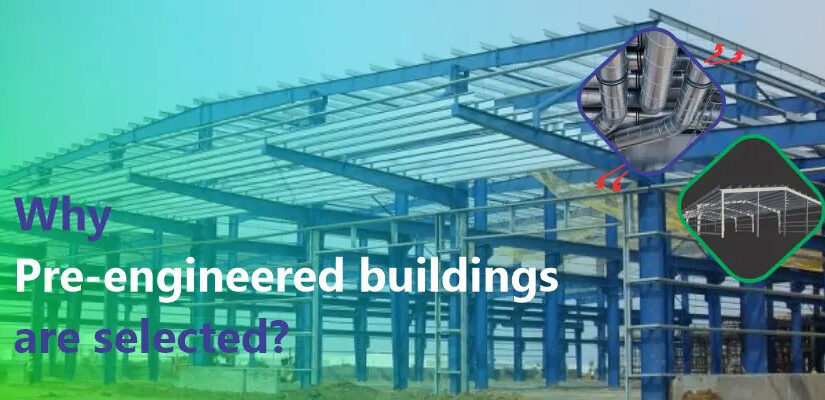
Why Pre-Engineered Buildings are Selected?

Pre Engineered Buildings are assembled at site and engineered at a factory. Normally, Pre Engineered Buildings are related to steel format. Developed sections are fabricated in the factory in order to exact size, transported to the site as well as, assembled at site with the bolted network. Following are reason for selecting Pre-engineered buildings:

Utilize Preset Stock of Raw Materials :

Pre engineered buildings utilize preset stock of raw materials, which attains larger areas of aesthetic and structural design needs. This kind of resilience permits Pre-engineered buildings steel to meet almost developing configurations, uses and custom designs.

Related to Metal Area Development :

The Pre-engineered buildings are related to metal area development which involves a structural design as well as, wall support and standard roof. It is developed for a factory and it is erected on the site.

Pre-engineered buildings related to new manufacturing aspect that replaces conventional manufacturing.

It is identified as a breakthrough in the sector of construction that provides less time in construction, low maintenance, cost-effectiveness, consistent span, as well as premium quality.

Industrial Building Manufacturers :

Pre-engineered buildings focus on wider area of industry. In the current time, there has been substantial improvement in Pre-engineered buildings. Because of rapid construction development, there is an increase in demand regarding quick-track construction in India.

Eco-Friendly Modes

Pre-engineered buildings use eco-friendly modes to address global warming, which is also economically efficient. The prefabricated construction saves time since it is intended in a shorter time. The components are prefabricated regarding transport and specification to the site in which they are accumulated.

Steel Structures :

Generally, Pre-engineered buildings are related to steel structures. For correct size, developed segments are manufactured in the factory. There are two kinds of systems in the context of pre-engineering buildings such as primary and secondary.

Primary Structures :

Primary structures in Pre-engineered buildings are the management of developed I-shaped members of steel and considering the trusses and castellated beams. It contains all elements regarding the structure that passes the load to the base as well as considering End wall structures. The end walls are either intended to be economical bearing structures and rigid structures. These structures are reinforced to connect bolts, wind bracing and if required, it considers anchor bolts.

Apart of individual parts, it integrates these three components as well as weather considering sheeting outcomes in the context of robust steel construction. In the context of conventional framing, individually developed and stand-alone structures could be trusses as well as, individual columns in large as well as, heavy structures.

Secondary Structures :

The secondary structure considers wall girts, clips, struts as well as roof purlins. It assists and aids the primary structure regarding wall panelling as well as, roof. The secondary framing technique consists mainly of C and Z purlin kinds of different sizes. The initial technique involves the column and rafters whereas Z and C Purlin have been considered in the structure maintenance.

Decline Expenses :

Apart from conventional platforms, angles, and beams uses purlins that aids to decline expenses. To get whole stability about building structures, Purlins/Girts moves force instantly from one frame to another. It functions as a developing system for weather covering sheeting requirements. Purlins exist in different thicknesses and lengthy that makes sure no cost of production as well, wastage. Purlins could be frequently mounted, robust, lightweight and resistant to corrosion.

Leading Supplier and Manufactures of Pre Engineered Building

Neo thermal insulation is a leading supplier and manufactures of Pre-engineered buildings in India.  Pre engineered building manufacturers in India considers single-source accountability regarding shipment, manufacture, design and erection related to Pre-engineered building manufacturers. Neo thermal insulation company focuses on providing Pre-engineered building manufacturers to the SAARC areas.

Involvement of overseas and Indian companies

Neo thermal insulation has accomplished more than 1500 projects for our customers across different areas of India. Neo thermal insulation list of clients involves different significant overseas and Indian companies. Neo thermal insulation company is one of the first companies in India that integrates to the system for planning, manufacturing, engineering and erection.

Energy efficiency is another factor supporting the success of Pre-engineered building designs. Pre-engineered metal buildings are energy efficient since they could be manufactured in factories. Therefore, there is no construction contamination happening at the site that is unheard about brick and mortar construction.

Wider Range of products

Neo thermal insulation offers these steel buildings to companies ranging from e-commerce warehouses to airports. They are high-quality structures that are developed to longer terms. The construction though lightweight that needs minimal maintenance. Therefore, in the longer term, Neo thermal insulation focuses on immense savings of cost. Thermal insulation products are prominent in the context of weather-resistant properties as well as, it is easy in terms of installation. Lastly, Neo thermal insulation company provides peace of mind assurance for every steel building we develop.

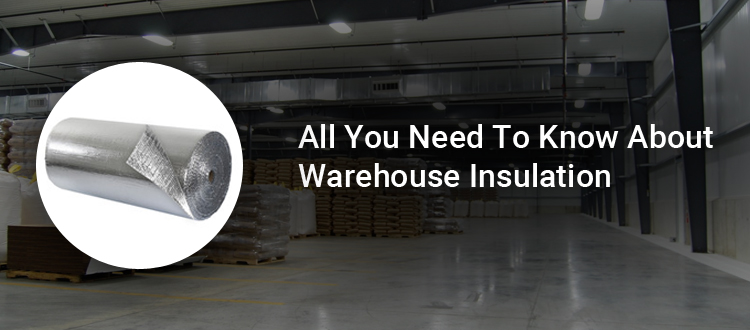
Warehouse Insulation (Benefits, Type)

Insulating a warehouse or any other similar commercial building can save up to $9.5 billion in energy costs annually. It’s huge, right? You can also save a major portion of your money from going into utility bills through Warehouse Insulation . And how to save the energy consumption, we are going to learn in this article.

In this article we will get to know the following things:

  • Reasons to insulate your warehouse
  • Types of suitable warehouse insulation
  • The best way to insulate your warehouse

What is insulation sheet?

An insulate sheet, also known as an insulation sheet, is a material specifically designed to enhance the thermal resistance and energy efficiency of buildings or structures. These sheets are typically composed of various insulating materials such as foam board, fiberglass, or reflective foil.

The primary purpose of an insulate sheet is to reduce heat transfer, keeping indoor spaces warmer in the winter and cooler in the summer. It accomplishes this by creating a barrier that inhibits the movement of heat through walls, ceilings, roofs or windows. This helps homeowners and building occupants maintain a more comfortable and energy-efficient environment while reducing heating and cooling costs.

Insulate sheets come in various forms, including rigid boards, flexible rolls and reflective bubble wrap. The choice of insulating material and form depends on specific application needs and local climate conditions.

Overall, insulate sheets are a crucial component in modern construction and retrofitting efforts, playing a significant role in sustainable building practices and energy conservation. They are instrumental in creating well-insulated, energy-efficient and environmentally-friendly structures. So let’s address the points one by one.

Benefits of Insulate your Warehouse

The cost that you pay for the utility bills is much more than that of the investment you put in warehouse insulation. Thus, insulating the warehouse is important for attaining stable and desirable conditions.

Following are the reasons to insulate the warehouse.

1. Reduce Cooling and Heating Costs:

Recently, architectures and the designers are constructing the warehouses using pre-engineered building designs. Pre-engineered buildings consist of metal frames and walls that are easy to construct and cost-efficient. But the only drawback it offers is poor quality in maintaining the interior conditions.

Metal warehouses consume a large amount of energy to maintain the desired temperature. Thus, a perfect insulation layer with suitable R-value is applied to the ceiling, exterior and interior walls. Insulation helps in keeping the air inside the building and prevents or blocks the movement of air.

2. Reduce Emissions:

Well, a major concern these days is to improve the environmental conditions by reducing the carbon emissions. Insulation helps to reduce the energy consumptions which further leads to a reduction in fuel consumption which is essential for heating and cooling. Thus, leading to a lower carbon emission from your end.

3. Enhance HVAC System Performance:

HVAC (Heating, Ventilation, Air Conditioning) System requires more repair and maintenance when they work excessively and continuously for a longer duration. Insulation helps to reduce the cost that is put in the maintenance of the HVAC system.

Get Insulation Sheet for Warehouse

4. Reduce Unwanted Noise:

Insulation provides more than just a barrier to heat transfer. It is a perfect remedy to reduce external noise.

5. Comfortable and Healthier Work Place:

To enhance the productivity and quality of the work, it is necessary to create a healthier environment. Warehouse insulation gives a comfortable and cozy workplace for the employees.

Types of suitable Warehouse Insulation

There are a variety of insulation types and insulation materials available in the market. But insulation depends on various factors like climatic conditions, demography, usage of the warehouse, etc.

Following are the insulation types suitable of warehouse:

1. Insulation Sheets

Insulation sheets are pre-cut panels that can be easily installed to provide insulation for walls, ceilings and floors. They offer a convenient and efficient solution for improving energy efficiency and reducing heat loss or gain.

Advantages:

  • Quick and easy installation: No specialized equipment or labor is required.
  • Versatile: Can be used in various applications, including new construction and retrofit projects.
  • Durable: Resistant to moisture, mold and pests.
  • Cost-effective: Can be a more affordable option compared to other insulation methods.

1. Cellulose Insulation:

It consists of about 80% recycled materials and is environmentally friendly. You can use cellulose to insulate the walls for your commercial buildings or warehouses.

2. Fiberglass Insulation:

Fiberglass sandwiched between two layers of foil is effective in providing heat insulation. They are installed below the roof deck for achieving better insulation. Fiberglass insulation is available in either loose-fill or blanket form.

3. Radiant Barrier Insulation:

Radiant barrier offers a great reflection to the radiant heat coming from the sun. It helps to keep the warehouse cool as it doesn’t absorb the heat but reflect it back to space. Installing on the warehouse roof, radiant barriers are very useful if you utilize your warehouse for storing things that require low temperature. It consists of reflective material like foil.

4. Spray Foam Insulation:

The liquid of Polyurethane is sprayed evenly on the walls or attic, it expands as it is applied and peeks into the cracks and unreachable places. It blocks each and every crack, gaps, etc. which lets air exchange between the exterior and interior spaces.

5. Vinyl insulation:

It is a synthetic plastic consisting of polyvinyl chloride. It is a versatile material which is used for making seat covers, window frames, phonograph records, etc. Vinyl insulation is moisture and humidity resistant. It is durable and strong insulation material for commercial metal buildings.

Talk to Experts for Any Query

Factors to Consider When Choosing Insulation

  • Climate: Your region’s climate will influence the type of insulation needed. For example, colder climates may require thicker insulation.
  • Building Structure: The age, size, and construction materials of your warehouse will impact insulation requirements.
  • Budget: Different insulation types vary in cost. Consider your budget when making a decision.
  • Environmental Considerations: Some insulation materials are more environmentally friendly than others.

By carefully considering these factors and selecting the appropriate insulation type, you can significantly improve the energy efficiency, comfort and overall performance of your warehouse.

What are the Best ways to Insulate your Warehouse?

There can be two choices; either you insulate yourself by doing DIY steps or call the insulation contractors for doing it professionally. Well, DIY is possible if you are insulating a small space like home, garage etc. But for a space as big for a warehouse, it is not possible for an individual to do it the right way.

On the other hand, professional insulation contractors can analyse the surroundings and implement best-suited insulation material. They can install insulation layer with perfection and also provide a cost-effective solution for your requirements.

Conclusion

Insulation plays an important part in preventing heat transfer, moisture retention and helping to maintain desirable interior conditions.  Warehouse insulation is necessary to maintain the quality of the products that you store in the warehouse for a long duration. We suggest taking advice from an expert on providing perfect thermal insulation conditions for your warehouse.

FAQ’s

1. What is Insulation in Warehouse?

Insulation in a warehouse refers to the use of materials to minimize heat transfer, helping to maintain stable indoor temperatures, reduce energy costs and protect stored goods from temperature fluctuations.

2. Why is Insulation Important in Commercial Buildings?

Insulation in commercial buildings is crucial to conserve energy, improve comfort and reduce heating and cooling expenses, making it a cost-effective and environmentally-friendly choice.

3. How can we Reduce Heat in Warehouse?

To reduce heat in a warehouse, consider using reflective roof coatings, insulating walls and ceilings, installing proper ventilation and using high-efficiency lighting systems.

4. What is the Best Insulation for a Warehouse?

The best insulation for a warehouse depends on factors like climate, budget and specific needs. Options include fiberglass, spray foam and reflective insulation, tailored to the building’s requirements.

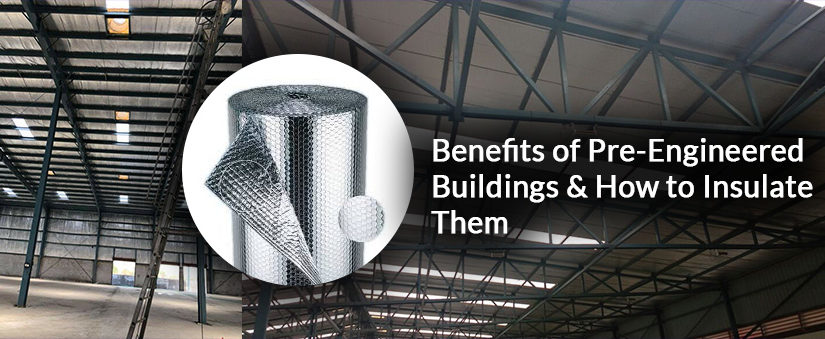
Benefits of Pre-Engineered Buildings and How to Insulate Them

From small businesses to large heavy machinery industries are choosing pre-engineered buildings over concrete buildings. The reason is very simple, they are easy to construct and are cost-effective. A pre-engineered building is designed by using best-suited raw materials depending on the structural and aesthetic requirements. That is why they offer robust and strong structural designs suiting various industrial needs. In this article we will discuss the following points:

  • What is a pre-engineered building?
  • Benefits of using pre-engineered buildings.
  • What are the thermal insulation techniques for insulating pre-engineered buildings?

What is a pre-engineered building?

Pre-engineered building (PEB) are custom computer-aided designs which are simply engineered metal buildings. These buildings are easy, fast and cost-effective to develop. Pre-engineered buildings are steel structures which are built over a structural concept of having wall cladding, roof sheeting, primary framing system, secondary framing system and accessories.

PEB is best-suited for construction sites or large industries or manufacturing units. It is also used in earthquake-prone areas to build the houses.

Benefits of Using Pre-Engineered Buildings

There are many benefits of using pre-engineered buildings over concrete buildings, few of them are as follows:

Less Construction Time:

The use of high-quality steel, tapered build-up sections, light gauge steel section, etc. makes the overall process extremely light weighted and cost-effective. Apart from this, the pre-engineered building designs are computerized design programs. Using automatic machinery for welding, multi-cutting torches, etc.in the production line to fasten the procedure of construction. These buildings take 50% less time than usual.

Simple Foundation:

Pre-engineered buildings are easy to construct and are lighter in weight as they are 30%-40% lighter than conventional steel structures.

Scalable:

The building design after construction is expandable for the future needs or additional requirements. The modification or changes in the physical design like height or width are easily changeable, unlike concrete buildings.

High- Quality Assurance:

As the production line is highly automated and under great supervision, thus, the quality of products is assured.

Energy- Efficient:

This is the exclusive feature of a pre-engineered building. As they are energy efficient, they save up to 70% of energy consumption, thus reduces electricity expenses.

What are the thermal insulation techniques for insulating pre-engineered buildings?

To make the metal building energy efficient it is important to create a thermal barrier and air barrier. It is unavoidable to prevent the temperature stability if there will be heat transfer through the walls, roofs/lofts, ceiling, vents etc. Thus, it is important to provide the heat insulation to the buildings. Metal building insulation provides a barrier to exterior sounds, heat, dust and moisture hence improves the energy efficiency of the building.

There are many thermal insulation materials available in the market which offers high insulating characteristics. But when we talk about pre-engineered building insulation then there are two main insulating materials, that is:

Fiber Insulation:

Fiberglass provides an excellent insulation to the pre-engineered buildings. It provides insulation to thermal and acoustical for walls, roofs, and ceilings. Fiberglass comes in many forms like batt, loose-fill and roll form. Fiberglass can be made from recycled glass and it offers insulation to diverse parts of the building.

Rock and mineral wool insulation provides high resistance to fire and is used to the insulated floor, ceiling or walls. Another fiber insulation product – Cellulose insulation is used in a loose-fill form to insulate attics, walls, and floors. Cellulose have high resistance to air leakage thus, provides better roof insulation, under deck roof insulation, etc.

Foams:

Polyurethane and Polyisocyanurate have high R-value, thus are better insulating materials. Polyurethane foam is primarily used to block the air leakage and insulate efficiently. These foaming products are less polluting and harmful to the environment and offer cost-effective solutions.

Insulating Techniques for Pre-Engineered Buildings

Steel or metal buildings are incapable of protecting from the outside climatic conditions. Thus, supportive insulation materials are required to enhance the thermal stability. In general, there are four insulating techniques that are used to protect the pre-engineered buildings.

Batt and Blanket Insulation:

Batt insulation is inexpensive and offers effective wall insulation. It consists of rock wool or fiberglass processed to form a mineral fiber. Batt and blanket insulation are used for walls, floor, ceiling insulation. They have an R-value of R-3 per inch.

Loose-fill Insulation:

It is perfect insulation techniques to block the air leakage and reduce unwanted noise from outside. It wills every corner and space in the cavities thus, provides effective thermal insulation. Loose-fill insulation consists of loose fiber pallets or fibers and is blown into the building cavities with an equipment. The R-value lies between R-3 to R-4 per inch. This insulating technique can be a little expensive than other techniques.

Spray Foam Insulation:

It provides a perfect floor, ceiling, and wall insulation. With the help spray technique, liquid form of polyurethane is sprayed on to the wall or ceiling or floor. The mixture expands as it is sprayed and then convert into solid air-filled cells of plastic. This technique is advantageous to buildings having shaped designs or some complex structures.

Reflective Foil Bubble Insulation:

This is the most effective form of thermal insulation technique. It provides a dry, clean and easy installation of the insulation material. Reflective foil bubble insulation sheet provides a barrier to moisture, radiation, reflects heat, and dust. Bubble insulation sheets give roof insulation offering temperature stability in the building during the change in the environment.

It reflects 90% – 95% of radiant heat and offers waterproof insulation. The reflective foil bubble insulation sheets are strong, light weighted and flexible.

Conclusion

Proving roof insulation, heat insulation or any other insulation to your pre-engineered building entirely depends to the requirements for which the building will be required and on the climatic conditions of the region. Thus, it is important to consult insulation constructor or thermal insulation providing service companies for better guidance. In the market, there are many insulation materials and insulating techniques are available. Thus, depending on your business requirements or personal demands, choose the perfect insulation technique and material for your pre-engineered building.


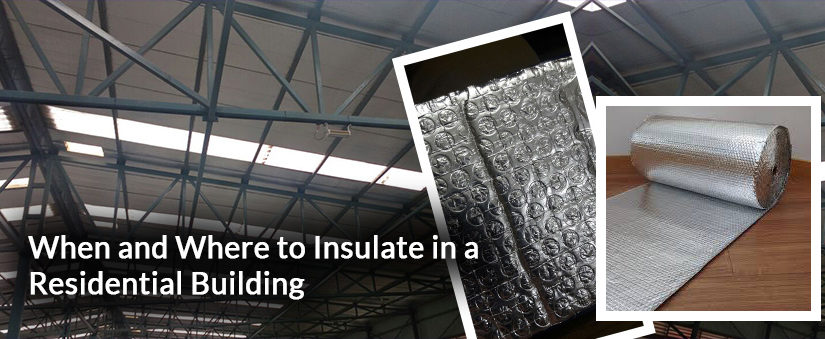
When and Where to Insulate in a Residential Building

Insulation is one of the prime factors that one should consider before constructing a building. When we talk about energy conservation and preservation, it starts with your home. Energy is a strategic commodity and plays a prominent role in a country’s economic development. Thus, it is important to wisely use the national commodity. Moreover, if energy consumption is reduced then there will be cost-saving on utilities like electricity, water, etc. Thermal insulation is the key factor that if implemented successfully can benefit in saving up to 90% of the energy.

Where to insulate in a building?

To start with the thermal insulation of the house or any residential building, it is important to analyze the weak spots in the building that need to be insulated. There are numerous areas from where air can leak or heat transfer can take place.

Few of the areas where possibilities are high for heat transfer is as follows:

  • Thermal insulation is required for unfinished attic spaces between and over the floor joists to prevent the escape of the air and heat exchange.
  • Insulate between studs of knee walls.
  • Insulate space between rafters and studs.
  • Providing insulation between roof and ceilings.
  • Insulation of exterior walls is more prone to exchange the heat, moisture, and air.
  • Floors above unheated garages or floors that are built directly above ground.
  • Bend beam, where there is a high chance for escape spaces.

Attic/Loft Insulation

Providing loft or roof insulation ensures high resistance to heat, moisture and sun’s radiation. The type of insulation used for insulating attic is either loose-fill or batt insulation. However, loose-fill insulation is cost-effective and offers better coverage area than batt insulation.

Exterior Wall Insulation

If your house feels warmer in summer or colder in winter then one of the reason is lack of proper exterior wall insulation. For a pre-built home, use blow-in insulation that will provide a significant air sealing and will enhance thermal stability inside your living space. Also, if you are repairing or remodeling your house walls and if, your wall cavity is open then use two-part spray foam to fill the cavity.

However, if you are planning an architectural structure for your new house, then it is advisory to consider thermal insulation contractors. They will help you in deciding the best-suited heat insulation material or thermal insulation material for your house according to the climatic conditions in your surroundings.

The perfect insulation technique which will improve the R-value of the complete wall is advanced wall framing techniques. This technique helps in thermal bridging and enhancing wall insulation area. Use of insulation wall sheets provides higher R-value than wood sheathing. Thus, use higher R-value insulation sheets for better thermal bridging.

Underdeck Roof Insulation

They are the efficient heat barriers and thus ideal for providing heat insulation in buildings. The underdeck insulation materials for roofs provides resistance to UV rays penetration. Apart from this, it reduces unwanted noise entrance and heat escape.

There are many types of underdeck roof insulation materials like TF Expanded Polystyrene, Phenotherm, Aluminum Faced Fiberglass, Polynum or Crosslinked Polyethylene.

Color Coated Roofing Sheets

Well, another type of insulation for the open space in the roof can be insulated by color coated insulation sheets. These sheets come in different colors like grey, blue, green, red, etc. each color has a specific significance in preventing the entrance of harmful UV rays and wind from the roof. Apart from this, it stops dust to enter your clean living space. If you are living in areas with hot weather and little dust then you can implement color coated sheets. Also, it will add to the beauty of the house.

Basement Insulation

Basement is connected to a major part of your living space. The ceiling which becomes the floor of your living space and the exterior walls of the basement which is highly susceptible to the underground soil, moisture and water content can cause a major defect in the thermal stability of your house.

Thus, to insulate better you basement it is advised to build a strong foundation of the house by minimizing the thermal bridging, providing resistance to moisture intrusion, reduce condensation on the surfaces, etc.

Depending on various geographical conditions and constructional requirements, your insulation contractors will suggest the best type of insulation material. Following are the types of insulation materials that enhance the thermal stability of your building.

– Foam board insulation

– Loose-fill insulation

– Blanket insulation

– Sprayed foam insulation

What is the best time to insulate your residential building?

The best and highly recommended time to install insulation whether heat insulation, underdeck roof insulation or ceiling insulation, etc. is when you are constructing the building or while renovating the building.

To meet the minimum energy efficiency standards it is preferred to build a house by following the standards as stated by the legal department of the states or territories. However, it is never too late to insulate your existing building as there are many options to do the insulation of your already constructed building.

Conclusion

Insulating your building brings a significant cost-cutting in your electricity bills while making your living space comfortable and cozy. Today, there are many cost-effective insulation materials are available that are eco-friendly and offers high durability with less maintenance. Try to consult an expert from a top provider of insulation services and get the best-suited insulation advice.

Talk to us?

Download Brochure