The name of insulation roofing sheets comes up repeatedly when talking about any viable roofing idea. But have you ever thought about how heat insulation sheets help in maintaining cold temperatures in summer and hot in winter? If yes, then you have come to the perfect place. Here, in this article, we will explain how the insulation material maintains a stable temperature and provides comfort. No need to worry, there is no complicated science or systems involved in this. The procedure and working of the heat insulation sheets and materials are quite simple as explained below.
What is Heat Insulation Sheet?
The heat insulation sheet comprises a dual-layered aluminum foil exterior encasing an inner layer of polyethylene foam. Its primary function is to thwart the intrusion of heat within structures. This heat resistant or insulation material possesses the ability to reflect an impressive 97% of radiant heat, ensuring effective temperature regulation within diverse building structures.
How Do Heat Insulation Sheets Work?
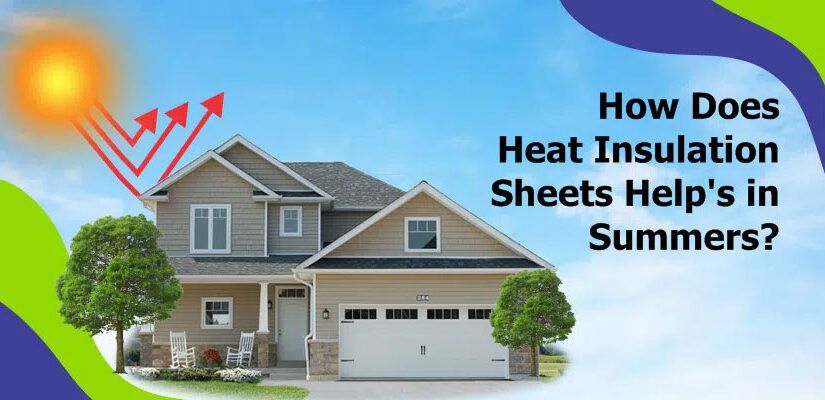
Now we will present the working process of the heat insulation in maintaining stable temperature through various attributes. Heat insulation sheets help to create an air barrier. This barrier, in turn, helps in maintaining a stable temperature in the premises. These keep the cool air in and the hot temperature out during the summer.
By providing this facility with low temperatures inside the premises, the property owners can reduce the cost of power as well. When the temperature is stable, the A/c will consume less power to cool the space. This results in long-term unseen savings for the property owner. So, let’s have a look at the working procedures of the heat insulation material.
Installing an Air Conditioning Setup
In summer, just installing the heat insulation sheets will not work for you. You also need to install a central or any other form of air conditioning as well. As other devices inside your property radiate heat, this is the only method to overcome them. Additionally, when the whole building and its rooms are properly insulated, it also helps in maintaining cool air circulation as well.
Considering the Type of Heat Transfer
When the a/c is set up, the next step is to figure out the type of heat insulation transfer that affects the building the most. There are different kinds of heat transfers. We are listing them below for your ease of understanding:
Radiant Transfer of Heat– Under the radiant transfer of heat, the heat is transferred because of the electric waves inside the property.
Conductive Transfer of Heat– Under the conductive transfer of heat, the parts of a building get heat because of physical contact like touching.
Convective Transfer of Heat– Under the convective transfer of heat, the heat gets to the property through the flow of hot air or liquid within the premises.
As the sources of heat are different, the thermal insulation providers and suppliers have to ascertain the main source of heat transfer and deal with it accordingly. The barrier created by the insulation sheets helps in keeping these sources of heat at bay and reduces their impact.
Selecting the Type of Heat Insulation Material
Lastly, you need to determine the type of insulation material to be installed. There are different types of materials like fiberglass, cellulose, aluminum, etc. Different materials show different levels of insulation. For example, fiberglass provides fewer levels of insulation. Hence, once the level of heat management is decided, the heat insulation material is also decided to protect the premises.
So this is how thermal insulation is done and works in any premises. Now you know how every step of the process provides a different result. And, how every step is important to maintain the desired temperature.
Conclusion
Heat insulation sheets emerge as a reliable ally. Their ability to reflect radiant heat, reduce energy consumption, and enhance indoor comfort makes them indispensable during scorching summers. By incorporating these sheets into your home, you can transform it into a haven of cool tranquillity, providing respite from the sweltering outdoor temperatures. Stay cool and comfortable all summer long with the power of heat insulation sheets. Neo Thermal Insulation stands out as a prominent supplier of thermal insulation services, specializing in effective roof insulation solutions.
Frequently Asked Questions!
1. What is the purpose of heat insulation?
The main purpose of heat insulation serve as a crucial element in controlling the exchange of energy between the interior and exterior of a system.
2. What is the benefit of insulation?
The insulation within your residence offers a barrier to the movement of heat, effectively diminishing both your expenses for heating and cooling. Adequately insulating your home not only leads to decreased costs for temperature regulation but also enhances the overall comfort of your living space.
3. Which material is used for heat insulation?
Mineral wool and fiberglass stand out as prevalent forms of thermal insulation. Mineral wool, crafted from steel slag and basalt, boasts enhanced eco-friendliness compared to alternative insulation varieties. Its production involves the rapid spinning of molten rock under the influence of cool air.
4. How thick is the heat insulation sheet?
The Thickness of the Heat Thermal Insulation Sheet is 5 to 10 mm.
Every home deserves to be a sanctuary and insulation services play a crucial role in making that dream a reality. Forget drafty winters and sweltering summers – insulation acts as a silent guardian, trapping heat in when it’s chilly and keeping it out when the sun blazes. But wait, there’s more! This unsung hero also shields you from the modern-day plague – noise pollution. Imagine layers of protection whispering “shhh” to unwanted sounds, creating a peaceful oasis within your walls. Yet, amidst its undeniable benefits, fascinating facts about insulation often go unnoticed. Let’s peek behind the curtain and uncover the hidden wonders of this essential home comfort service!
The anticipated growth in the global building insulation market is projected to add $4.6 billion to its value from 2021 to 2026. Valued at $28 billion in 2021, this sector within the construction industry is expected to reach $33 billion by 2026. The significance of insulation lies in its contribution to sustainable construction practices, effectively curbing heat transfer and enhancing the energy efficiency of buildings. Join us in this article as we explore the top 10 intriguing facts about insulation services.
What is insulation services?
Insulation services, specifically home insulation services, encompass a range of expert solutions geared towards enhancing the energy efficiency, comfort, and sustainability of residential structures. Insulation refers to the material or combination of materials used to slow down or prevent the transfer of heat, sound, or electricity between different spaces or materials. These services involve the installation and maintenance of materials within buildings or structures to regulate temperature, reduce energy consumption and control sound transmission. These services play a crucial role in creating comfortable, energy-efficient and acoustically sound indoor environments.
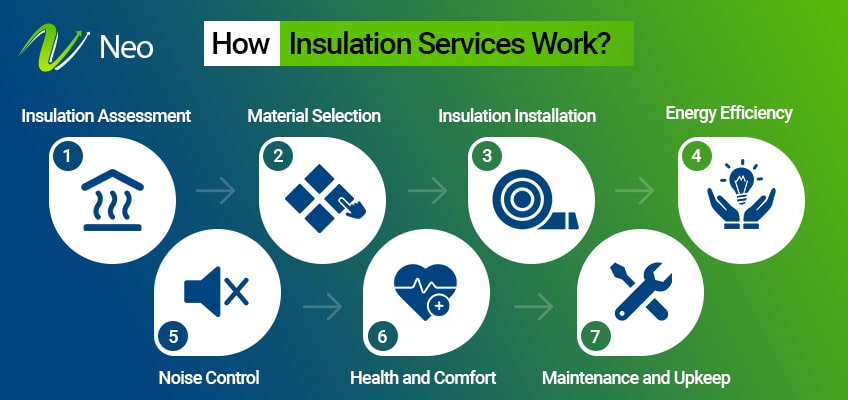
How does Insulation Services work?
1. Insulation Assessment
Insulation contractors begin by conducting a thorough assessment of a Building’s Insulation needs. This involves considering factors such as climate, building design and energy efficiency goals.
2. Material Selection
Thermal Insulation services begin with the selection of appropriate insulation materials. Common insulation materials include fiberglass, cellulose, foam board, spray foam, mineral wool and reflective foil, each with its own unique properties and applications.
3. Insulation Installation
Insulation contractors expertly install the selected materials to create a barrier against heat loss or gain. This process involves placing insulation in walls, ceilings, floors and other areas where energy transfer occurs. Proper installation is crucial for the effectiveness of the insulation.
4. Energy Efficiency
Insulation contributes to energy efficiency by reducing the need for excessive heating or cooling. This, in turn, can lead to lower energy consumption, decreased utility bills and a reduced environmental impact.
5. Noise Control
Multi-layered insulation materials also provide a shield against noise pollution. Insulation contractors use these materials strategically to create barriers that absorb or reflect sound, resulting in a quieter indoor environment.
6. Health and Comfort
Professional Insulation services contribute to the overall health and comfort of occupants by preventing drafts, controlling humidity and minimizing the infiltration of allergens and pollutants. This is particularly important for individuals with respiratory conditions.
7. Maintenance and Upkeep
Insulation contractors may offer maintenance services to ensure that insulation continues to perform optimally over time. This can include periodic inspections, repairs, or upgrades as needed.
Types of Insulation Services
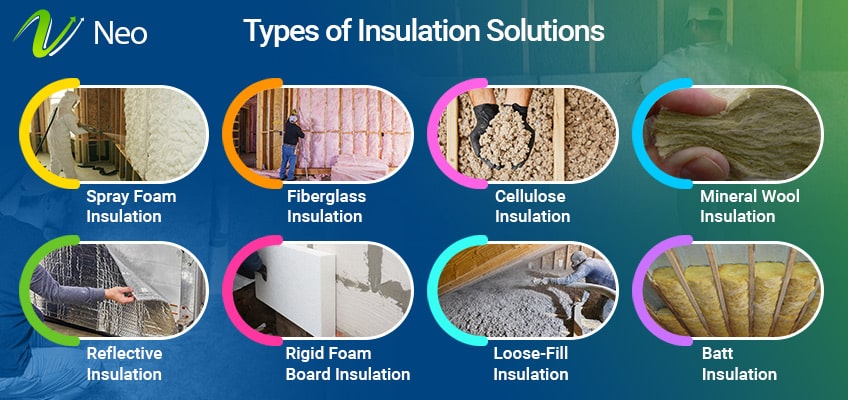
1. Spray Foam Insulation
This involves spraying a liquid foam that expands into a solid, providing an effective seal against air infiltration. Spray foam insulation is versatile and can be applied to various surfaces and irregular spaces.
2. Fiberglass Insulation
Fiberglass insulation consists of fine glass fibers and is widely used for its affordability and fire-resistant properties. It is available in batts, rolls and loose-fill forms.
3. Cellulose Insulation
Made from recycled paper or plant fibers, cellulose insulation is an eco-friendly option. It can be blown into cavities or installed as loose-fill, providing good thermal resistance.
4. Mineral Wool Insulation
This insulation type is derived from natural minerals like basalt or recycled slag. Mineral wool is known for its fire resistance and can be used in various applications, including batts, blankets and loose-fill.
5. Reflective Insulation
Reflective insulation materials typically consist of a reflective surface that reflects radiant heat. This type of insulation is often used in attics to control the transfer of radiant heat.
6. Rigid Foam Board Insulation
Rigid foam boards are made from materials like polystyrene, polyisocyanurate, or polyurethane. These boards provide high thermal resistance and are suitable for walls, roofs and foundations.
7. Loose-Fill Insulation
Loose-fill insulation, such as blown-in fiberglass or cellulose, is installed by blowing or pouring loose insulation material into cavities, attics or other enclosed spaces.
8. Batt Insulation
Batt insulation comes in pre-cut panels or rolls and is typically made of fiberglass. It is designed to fit between standard spacing in framing, making it a convenient option for walls and ceilings.
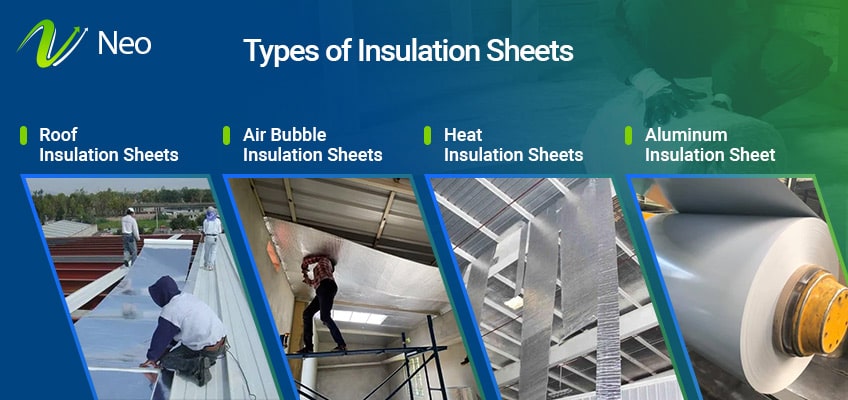
Types of Insulation Sheets
The insulation sheets play a crucial role in enhancing energy efficiency, maintaining optimal temperatures, and contributing to overall comfort within living and working spaces. This exploration into the “Types of Insulation Sheets” seeks to shed light on the characteristics, applications, and advantages of these materials, empowering homeowners, builders and insulation enthusiasts with the knowledge needed to make informed decisions about their insulation needs.
1. Roof Insulation Sheets
Roof insulation sheetsplays a pivotal role in creating a thermally efficient and comfortable living space. The choice of insulation sheets is a crucial aspect of roof insulation services, contributing to energy savings and enhanced home insulation.
2. Air Bubble Insulation Sheets
Air bubble insulation sheets have gained popularity as an innovative and effective solution for thermal insulation in various applications. These sheets, often comprised of layers of reflective foil and trapped air pockets, offer a range of benefits that make them a preferred choice in the realm of insulation.
3. Heat Insulation Sheets
Heat insulation sheets are essential components in creating energy-efficient and comfortable environments by preventing the transfer of heat. These sheets, designed with specific thermal properties, find applications in various industries, construction projects, and home improvements.
4. Aluminum Insulation Sheets
Aluminum insulation sheets represent a sophisticated solution in the realm of home insulation services, combining the versatility of aluminum with the thermal properties essential for effective insulation. These sheets, often composed of aluminum foil layers and other insulating materials, offer unique advantages in enhancing energy efficiency and maintaining optimal indoor temperatures.
Facts About Insulation Service
Thermal Insulation services, often delivered by skilled insulation contractors, go beyond the contemporary understanding of regulating temperature and reducing energy consumption. Insulating your home is not just about keeping the energy bills in check; it’s a fundamental aspect of creating a warm and comfortable living space. However, there are several misconceptions surrounding insulation, and it’s crucial to grasp the key facts. Here are 13 intriguing facts about insulation that should be on your radar:
1. Recyclable and Reusable
Insulation is a recyclable and reusable heating solution, contributing to sustainability. Materials like cellulose insulation are crafted from 85% recycled paper product, making them eco-friendly choices for maintaining a warm home. This recycling process transforms post-consumer and post-industrial paper waste into a high-performance insulation material. By utilizing recycled materials, cellulose insulation reduces the demand for new resources, promoting a circular economy.
2. Easy Insulation Installation
When it comes to enhancing the comfort of your home and achieving significant energy savings, installing insulation stands out as a simple and easy. The process of insulating your home doesn’t require complex procedures or extensive renovations, making it an accessible and impactful home improvement option. In the realm of sustainable construction and responsible energy consumption, insulation stands out as a simple yet powerful tool.
3. Cost-Effective
Insulation services offer a cost-effective investment for slashing energy bills. Despite the initial cost that may seem substantial, insulation services prove to be a wise financial decision. The investment pays for itself within five to six years and continues to generate savings over its impressive 40-year lifespan. Recognizing insulation as more than just an upfront expense, this strategic financial move becomes evident as it significantly curtails energy bills, showcasing a swift return on investment.
4. Energy Bill Savings
By investing in top-notch Thermal insulation, you can enjoy significant savings. High-quality insulation can potentially cut down utility bills by as much as 40%. Given that heating and cooling makeup about 54% of typical utility costs, choosing the right insulation services becomes a smart approach to managing expenses and avoiding unnecessary energy waste. This underscores the considerable financial impact of effective temperature regulation on household spending.
5. R-Value Measurement
Integrating top-tier thermal insulation services into your home can lead to significant savings. The implementation of optimal insulation has the potential to achieve a remarkable 40% reduction in utility bills. Given that heating and cooling account for 54% of average utility expenses, choosing the Professional insulation services emerges as a potent strategy to manage costs and curtail energy wastage. This emphasizes the considerable financial impact that efficient temperature regulation, facilitated by high-quality insulation, can exert on overall household expenditures.
6. Reduces Carbon Dioxide
Insulating a house not only lowers energy demand but also reduces carbon dioxide emissions. By decreasing energy needs, insulation contributes to a greener world by curbing a major contributor to global warming. This natural air pollutant is a major contributor to global warming and climate change, so by using insulation you’ll be lowering your carbon footprint and contributing towards a greener world.
7. Varieties in insulation service
People often misunderstand that insulation is only a one-step process and has no variety. But actually, insulation service has over 10 varieties. Such insulation services include insulation with the help of spray foam, blown fiberglass, injection foam, rigid barrier, cellulose, etc. The realm of Thermal insulation is far from a singular, one-size-fits-all approach. Contrary to common misconceptions, insulation offers a diverse array of options, each tailored to specific needs and preferences. These types of insulation materials span from spray foam and blown fiberglass to injection foam, rigid barrier, cellulose, and more.
Schedule a consultation for top-notch Insulation Services.
As we discussed before, asbestos was an earlier solution to insulation. But later, it was discovered that asbestos had permanent harmful effects on the human lungs. So, there was an immediate need to replace it with a safer insulating material. Thus, fiberglass came into existence and it became a quick success. As a result, we use it today in all Professional insulation services.
Thus, Fiberglass is one of several accidental inventions. Maybe if this accident hadn’t happened then we would be still using harmful asbestos for insulating services.
9. Upgraded Insulation can increase your home’s value:
Installing new insulation not only contributes to energy bill savings but can also enhance your home’s market value. Elevating your home’s Energy Performance Certificate from a D to a C has the potential to boost your house value by 3%. Furthermore, achieving an increase of two bands could result in an impressive 8.8% rise in your property’s overall value.
10. Coloring insulation material for better results
Many people simply install insulation material and think that it’s all they need to do to save energy. But very few realize that coloring the sheets will improve the insulation capacity. A dark color will help it to absorb more heat and increase the insulating ability. On the other hand, a lighter color will help it to reflect a lot of heat and maintain a low temperature.
In summarizing this discourse on insulation services and unveiling compelling facts about insulation, it’s resoundingly clear that insulation stands as a non-negotiable element for every household. So, from this article, we can easily conclude that insulation is a must-have for all houses. Many governments have made it mandatory for new construction.
Opting for Neo Thermal Insulation, recognized as a leader in thermal insulation services, becomes a strategic move for transforming outdated homes into energy-efficient sanctuaries. Therefore, it is a great idea to renovate all old houses with insulating materials. Insulating services are very affordable and don’t drain you by any means. They are available both offline and online. And, the companies also provide excellent after-sales support. it is a fundamental necessity for all houses. Governments worldwide have recognized its pivotal role in energy efficiency, making it mandatory for new constructions. Looking back to the pre-1980 era, when insulation wasn’t a requirement, we see a stark contrast in energy consumption and emission levels.
Frequently Asked Question
1. What are the benefits of having insulation services?
Insulation services contribute to substantial savings on heating and cooling expenses, often exceeding 40%. This reduction in energy consumption leads to lower utility bills, making it a cost-effective investment for homeowners and businesses alike.
2. which company provide the Professional insulation services?
Neo Thermal Insulation is the best insulation company in India that provides top insulation services for diverse sectors like Warehouses, Manufacturing Industries, Commercial, Domestics, Apartments, Malls, Fitness Training Centers, etc. In the services include roof thermal insulation, complete building insulation, ceiling insulation, floor insulation, etc. They have a team of insulation constructors that analyze your building inside-out and recommend the best thermal insulation services that will provide high resistance to your building and will sustain all weather changes to keep your interior environment unchanged.
3. Where is the best place to put insulation?
Insulate every outer wall, encompassing (3A) walls that separate living spaces from unheated garages, shed roofs, or storage areas; (3B) foundation walls situated above ground level; (3C) foundation walls within heated basements. Additionally, apply insulation to floors positioned above unconditioned spaces, such as vented crawl spaces and unheated garages.
4. How long is insulation good for?
The lifespan of insulation can vary based on factors such as the type of insulation, environmental conditions, and the quality of installation. Here are general estimates for the longevity of common types of insulation:
1. Fiberglass Insulation: Fiberglass insulation, when properly installed and not subjected to damage, can last for 100 years or more. It is durable and does not deteriorate over time.
2. Cellulose Insulation: Cellulose insulation, typically made from recycled paper or plant fibers, can have a lifespan of around 20 to 30 years. However, its longevity can be affected by factors such as moisture and settling.
3. Spray Foam Insulation: Spray foam insulation has a long lifespan and is known for its durability. It can last 20 years or more, and its effectiveness is less likely to diminish over time.
4. Polyurethane Foam Insulation: Like spray foam, polyurethane foam insulation is durable and can last for several decades. With proper installation, it can provide effective insulation for 20 years or more.
5. Mineral Wool Insulation: Mineral wool insulation, made from materials like basalt or recycled slag, is known for its resilience. It can last for 50 years or more, maintaining its insulating properties.
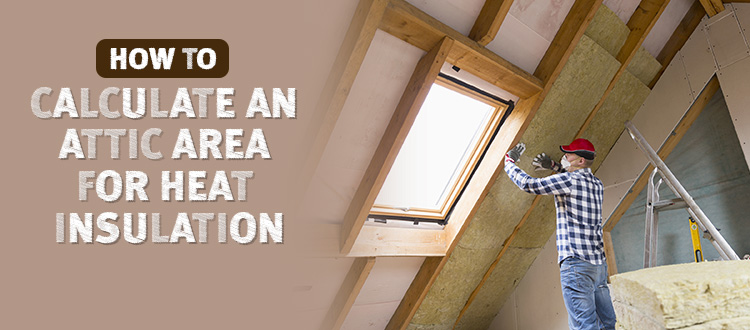
Let us face the fact here. In case your house is situated in a place where the climate is cold, keeping it hot during the wintertime is going to be pretty expensive. There are some attics that are really worth protecting form the different cases of temperature changes and heat escape problems for sure.
So, for these cases, it is really important to choose some proper and effective insulation material. In most situations, people tend to go to PUR Foam. Hence, it is really essential for people to know how to use it and how to measure the attic space or area for heat insulation. This is exactly what this article is about. Check out this article for the perfect heat insulation solution.
Calculating The Attic Area For Proper Heat Insulation
Ascertaining a usable area or space of an attic can cause issues. It is important to keep in mind that the surface used for insulation isn’t equivalent to the surface which is situated in an upper story. So as to precisely figure its worth, you have to think about the components of roofs and inclinations.
The specific outcome can be acquired by estimating the whole attic. You can likewise utilize an equation that generally decides its usable area. How to figure out square meters of the slants? Accept that there is 1.4 m2 for the insulation of a rooftop surface for each m2 of an upper area. Definite information on the best way to figure a usable area of the attic can be found in the different standards of construction.
In the event that you don’t plan to make a usable area under a rooftop, the entire calculations are less confounded. How to total the slants on a non-utility rooftop? You don’t have to know their measurements. Also, you can do the thermal insulation just on an upper story. At that point, the estimation of the surface to be protected is equivalent to the outside of a roof.
On account of the heat insulation solution of an attic, the thickness of the thermal insulation layer is significant, particularly if a room is to be usable. The touch of thermal insulation occupies a touch of room, lessening its volume.
The thickness of the attic insulation relies upon the estimation of the heat transfer coefficient U. Its worth is as of now 0.18 W/(m2K), thusly the thickness of the open-cell PUR foam layer, for example, Purios E, which ought to be secured with an upper room, is at any rate 21 cm. The lower the thermal transferring coefficient you need to accomplish is, the thicker the foam layer ought to be applied. To accomplish the U-esteem for the shut cell foam, for example, Purios H, the ideal foam thickness is just 12 cm, which on account of practical attics is critical.
On the off chance that you anticipate a more elevated level of insulation, you can apply a thicker layer of up to 24 cm. Such thickness of PUR froth will build the degree of insulation, which will have an extra sparing on account of room warming, and as a result – for your funds.
Choice Of Proper PUR foam For Insulation Of An Attic
There is certainly no unambiguous answer – the two sorts are ideal for thermal insulation. The open-cell PUR Foam, for example, Purios E, is a lightweight material with incredible insulation properties. Moreover, it is impeccable as an acoustic isolator. Thus, the closed-cell foam, for example, Purios H, is recognized by a low heat transfer coefficient. It is unbending, impervious to mechanical harm, and doesn’t assimilate dampness, which results from high dispersion opposition and the structure of shut cells. The open-cell foam is suggested for wooden upper rooms and the closed-cell foam – for attics made of cement.
On the off chance that ascertaining the initial expense of the attic insulation is hard for you, you can utilize the type of attic thermal insulation calculation. This apparatus will assist you in deciding the sum that you will presumably need to spend on the insulation of a rooftop.
You can utilize the loft insulation number cruncher on the off chance that you have just decided the size of a rooftop surface to be protected, you comprehend what material you need to utilize, and you know the prerequisites for the protection thickness. Look at whether you intend to convey rooftop protection with a wooden roof and corner to corner storage room floor, or protecting a roof over a story. The subsequent stage includes the assurance of the sum for the work believing the sort of a surface to be protected.
So, that is all we have for you today. We have mentioned details about finding out the perfect usable area in the attic for insulation. Also, we have mentioned how to calculate the amount for the heat insulation solution. Make sure to follow this article for more details.
When it comes to summer, there are so many exciting things to do and explore such as beaches, watermelon coolers, pool dips, BBQs, mountains, and more. However, all this excitement soon vanishes when summer goes to its peak. Every year, people think that this year is the hottest summer ever and staying in the home, and turning on AC is the only option left for them.
But, the situation is not done yet because now people have to face various challenges to stay cool in summer such as high electricity bills, bad environmental impact and many homes are not prepared for such hot weather.
At this point, many people don’t know how to keep home cool in summer. Well, if you don’t have any ideas, then this guide is all you need.
Fortunately, there are numerous ways that you can try to keep your home cool.
Here, we have covered some of the best sustainable ways to keep your home cool in the summer, provide comfortable living at home, reduce electricity bills and ensure a healthy environment.
So, without any further delay, let’s find out!
How to Keep Home Cool in Summer? – Top Six Ways
Here are the six most ways to keep your house cool in the hot summer:
1. Proper Insulation
One of the most sustainable and eco-friendly ways to keep your home cool in the summer is by properly insulating your home. Proper insulation creates a layer that acts as a barrier, prevents the outer hot air, and keeps the inside temperature cool.
When you’ve done proper insulation, then the usage of air conditioning is reduced, electricity bills are low, and your indoor temperature is naturally cool with high air quality. There are different types and sizes of insulation available, such as rolls, panels, spray foam, fiberglass, or metal roof insulation.
Each types of insulation has its own way of protecting your home for heat prevention and keeping your home cool in summer. However, insulation is a typical process that requires professional help to install in your walls. So, you can choose the most suitable thermal insulation option done by professionals for cool and comfortable living.
Having proper insulation in your home will keep your home cool in summer and warm in winter, reduce your electricity bills, provide pure indoor air quality and ensure long-term savings.
2. Sealing Gaps and Cracks
Another common way to keep your house cool in summer is by sealing all the gaps and little cracks in your house. Even when you’ve closed all the windows and doors properly, the hot air keeps coming, which means there are some gaps and cracks left that you haven’t noticed yet.
So, first you should look and identify all the places where you can check the gaps and cracks where hot air coming around windows, door frames, crawl spaces, etc and then use draught excluders to properly seal it tightly to make sure hot air didn’t come into your house or cool air did not escape.
3. Effective Ventilation
If your house gets immediately hot during summer, even if the AC is turned on, then there’s no proper ventilation. You need effective ventilation throughout inside hot air and give space to cool air.
All you can do is open the windows early in the morning and late at night when the outside temperature is a bit cool, which can help you replace the inside warm air with cool air and ensure proper ventilation in your house.
It’s recommended to open windows around 5 am to 8 am and 8 pm to 10 pm to improve airflow around your house. Plus, you can also start exhaust fans to throw the hot air outside for faster cooling.
4. Air Conditioning
Air conditioning is the common way that most people prefer to cool down their inside house temperature. However, running the air conditioner all the time can increase the electricity bills and badly affect the environment.
If you use the air conditioner efficiently by setting an optimal temperature, keeping your air conditioner maintained by cleaning or replacing filters and using other sustainable ways then surely the usage of air conditioner will reduce that overall leads to low electricity bill, high cooling in house and pure air quality.
Most heat directly comes from the windows. So make sure you keep the windows shut with blinds and covers during the summer season. It will prevent the heat flow inside of the house and keep the house cool.
You should especially close those on the west and north-facing windows from late morning to early evening. Plus, you can consider breathable curtains like sheers, cotton, jute or bamboo shades to prevent maximum sunlight.
6. Exterior Shading
To prevent the effect of direct sunlight on your house, there are various external shading things you can consider, such as awnings, solar panels, planted trees, etc, which can absorb the direct sunlight and reduce the impact. For example, inside plants, it can keep the temperature cool and provide pure air.
How to Keep the House Cool in Summer Without AC?
Keeping the house interior cool in summer without AC is vital for energy conservation, reducing electricity bills, and minimizing environmental impact. It promotes a healthier indoor environment by avoiding the dry air and allergens often associated with AC use. Further, natural cooling methods bring comfort and well-being, making living spaces more pleasant without relying on energy-intensive air conditioning systems.
Optimize ventilation
At times when the outside temperature drops, usually during early mornings or late evenings, open windows to let in the cooler air. Open windows on opposite sides of the house to create cross ventilation and promote air circulation.
Block Out the Sun
Block the heat coming from the sun through your windows to keep your home cool without AC. The easiest way is to use light-colored curtains or blinds. This passive or natural cooling method is one of the effortless and cheapest ways to keep your home cool in summer.
Reduce Heat Sources
Appliances that usually generate heat such as hair dryers, water heaters, electric irons, and dishwashers, etc. should be used as minimum as possible to avoid heat transfer. Additionally, use LED bulbs instead of normal lights as they produce less heat.
Use Cooling Techniques
Under the most common cooling techniques and methods, one of the simplest ways is to buy an air cooler that works on the principle of evaporative cooling that can help you beat the heat during the peak hours of summer.
Conclusion
Keeping your house cool in summer is the most challenging thing. However, there are some sustainable ways, like proper insulation at home, sealing gaps, exterior shades, and curtains, which can actually help to prevent the heat inside flow and keep your home cool in the summer without impacting the electricity bills.
By implementing these ways, you can make this summer cooler, comfortable, save energy consumption , and sustainable. Because the climate is changing rapidly, summer temperatures will keep rising. So, it’s better to prepare early to make your house cooler. We would love to know how you’re planning to keep your home cool this summer. Please Share your additional tips and exercises by commenting below.
FAQ
1. What is the most cost-effective way to cool my home?
The most cost-effective way to cool your home is by doing proper insulation and sealing air leaks. Both ways can help to keep your home cool inside and reduce the need of air conditioning.
2. How can I keep my home cool without using a lot of energy?
To keep your home cool without using a lot of energy then you need to implement sustainable ways that will keep your home cool in summer such as proper insulation and ventilation, and cover windows with curtains.
3. Are there any eco-friendly cooling solutions?
Yes, doing thermal insulation in the internal walls of the house can protect the home from external temperature keep it cooler in summer, and provide clean air, which makes it the best eco-friendly option.
4 How often should I service my air conditioning system?
If you are using AC regularly, then it’s recommended that AC service is performed at least once a year.
5. What are the benefits of using thermal curtains?
Thermal curtains are the best option to protect the heat from direct sunlight. These curtains can block the sunlight, reduce the heat impact in your house, and ensure internal cooling temperature. Also thermal curtains help in noise reduction and prevent UV rays.
6. Can landscaping really help in cooling my home?
Yes, trees are the most natural way to keep your home cooler in summer because they can absorb the heat and release pure and cool air, which keeps the inside temperature cooler in summer.
7. How do reflective roof coatings work?
Reflective coatings are also known as solar reflective paints. These are specially designed to prevent direct sunlight from moving away from the roof’s surface and ensure the inside temperature is cooler in summer.
8. What are some quick fixes for an extremely hot day?
Some of the quickest fixes are using fans with ice in the bowl in front, opening windows, cross-ventilation, running exhausts and limiting appliance use.
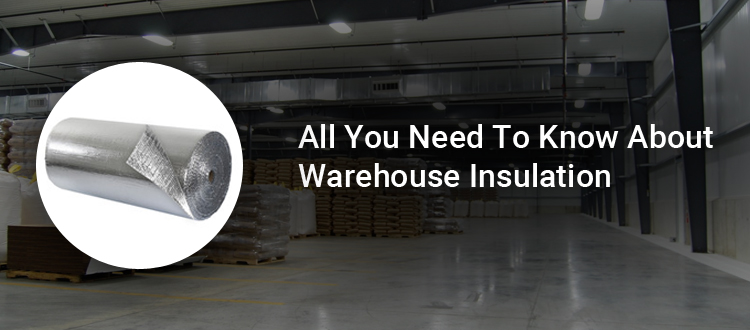
Insulating a warehouse or any other similar commercial building can save up to $9.5 billion in energy costs annually. It’s huge, right? You can also save a major portion of your money from going into utility bills through Warehouse Insulation . And how to save the energy consumption, we are going to learn in this article.
In this article we will get to know the following things:
Reasons to insulate your warehouse
Types of suitable warehouse insulation
The best way to insulate your warehouse
What is Insulation Sheet?
An insulate sheet, also known as an insulation sheet, is a material specifically designed to enhance the thermal resistance and energy efficiency of buildings or structures. These sheets are typically composed of various insulating materials such as foam board, fiberglass, or reflective foil.
The primary purpose of an insulate sheet is to reduce heat transfer, keeping indoor spaces warmer in the winter and cooler in the summer. It accomplishes this by creating a barrier that inhibits the movement of heat through walls, ceilings, roofs or windows. This helps homeowners and building occupants maintain a more comfortable and energy-efficient environment while reducing heating and cooling costs.
Insulate sheets come in various forms, including rigid boards, flexible rolls and reflective bubble wrap. The choice of insulating material and form depends on specific application needs and local climate conditions.
Overall, insulate sheets are a crucial component in modern construction and retrofitting efforts, playing a significant role in sustainable building practices and energy conservation. They are instrumental in creating well-insulated, energy-efficient and environmentally-friendly structures. So let’s address the points one by one.
Benefits of Insulate your Warehouse
The cost that you pay for the utility bills is much more than that of the investment you put in warehouse insulation. Thus, insulating the warehouse is important for attaining stable and desirable conditions.
Following are the reasons to insulate the warehouse.
1. Reduce Cooling and Heating Costs:
Recently, architectures and the designers are constructing the warehouses using pre-engineered building designs. Pre-engineered buildings consist of metal frames and walls that are easy to construct and cost-efficient. But the only drawback it offers is poor quality in maintaining the interior conditions.
Metal warehouses consume a large amount of energy to maintain the desired temperature. Thus, a perfect insulation layer with suitable R-value is applied to the ceiling, exterior and interior walls. Insulation helps in keeping the air inside the building and prevents or blocks the movement of air.
2. Reduce Emissions:
Well, a major concern these days is to improve the environmental conditions by reducing the carbon emissions. Insulation helps to reduce the energy consumptions which further leads to a reduction in fuel consumption which is essential for heating and cooling. Thus, leading to a lower carbon emission from your end.
3. Enhance HVAC System Performance:
HVAC (Heating, Ventilation, Air Conditioning) System requires more repair and maintenance when they work excessively and continuously for a longer duration. Insulation helps to reduce the cost that is put in the maintenance of the HVAC system.
Insulation provides more than just a barrier to heat transfer. It is a perfect remedy to reduce external noise.
5. Comfortable and Healthier Work Place:
To enhance the productivity and quality of the work, it is necessary to create a healthier environment. Warehouse insulation gives a comfortable and cozy workplace for the employees.
Types of suitable Warehouse Insulation
There are a variety of insulation types and insulation materials available in the market. But insulation depends on various factors like climatic conditions, demography, usage of the warehouse, etc.
Following are the insulation types suitable of warehouse:
1. Insulation Sheets
Insulation Sheets are pre-cut panels that can be easily installed to provide insulation for walls, ceilings and floors. They offer a convenient and efficient solution for improving energy efficiency and reducing heat loss or gain.
Advantages:
Quick and easy installation: No specialized equipment or labor is required.
Versatile: Can be used in various applications, including new construction and retrofit projects.
Durable: Resistant to moisture, mold and pests.
Cost-effective: Can be a more affordable option compared to other insulation methods.
1. Cellulose Insulation:
It consists of about 80% recycled materials and is environmentally friendly. You can use cellulose to insulate the walls for your commercial buildings or warehouses.
2. Fiberglass Insulation:
Fiberglass sandwiched between two layers of foil is effective in providing heat insulation. They are installed below the roof deck for achieving better insulation. Fiberglass insulation is available in either loose-fill or blanket form.
3. Radiant Barrier Insulation:
Radiant barrier offers a great reflection to the radiant heat coming from the sun. It helps to keep the warehouse cool as it doesn’t absorb the heat but reflect it back to space. Installing on the warehouse roof, radiant barriers are very useful if you utilize your warehouse for storing things that require low temperature. It consists of reflective material like foil.
4. Spray Foam Insulation:
The liquid of Polyurethane is sprayed evenly on the walls or attic, it expands as it is applied and peeks into the cracks and unreachable places. It blocks each and every crack, gaps, etc. which lets air exchange between the exterior and interior spaces.
5. Vinyl insulation:
It is a synthetic plastic consisting of polyvinyl chloride. It is a versatile material which is used for making seat covers, window frames, phonograph records, etc. Vinyl insulation is moisture and humidity resistant. It is durable and strong insulation material for commercial metal buildings.
Climate: Your region’s climate will influence the type of insulation needed. For example, colder climates may require thicker insulation.
Building Structure: The age, size, and construction materials of your warehouse will impact insulation requirements.
Budget: Different insulation types vary in cost. Consider your budget when making a decision.
Environmental Considerations: Some insulation materials are more environmentally friendly than others.
By carefully considering these factors and selecting the appropriate insulation type, you can significantly improve the energy efficiency, comfort and overall performance of your warehouse.
What are the Best ways to Insulate your Warehouse?
There can be two choices; either you insulate yourself by doing DIY steps or call the insulation contractors for doing it professionally. Well, DIY is possible if you are insulating a small space like home, garage etc. But for a space as big for a warehouse, it is not possible for an individual to do it the right way.
On the other hand, professional insulation contractors can analyse the surroundings and implement best-suited insulation material. They can install insulation layer with perfection and also provide a cost-effective solution for your requirements.
Conclusion
Insulation plays an important part in preventing heat transfer, moisture retention and helping to maintain desirable interior conditions. Warehouse insulation is necessary to maintain the quality of the products that you store in the warehouse for a long duration. We suggest taking advice from an expert on providing perfect thermal insulation conditions for your warehouse.
FAQ’s
1. What is Insulation in Warehouse?
Insulation in a warehouse refers to the use of materials to minimize heat transfer, helping to maintain stable indoor temperatures, reduce energy costs and protect stored goods from temperature fluctuations.
2. Why is Insulation Important in Commercial Buildings?
Insulation in commercial buildings is crucial to conserve energy, improve comfort and reduce heating and cooling expenses, making it a cost-effective and environmentally-friendly choice.
3. How can we Reduce Heat in Warehouse?
To reduce heat in a warehouse, consider using reflective roof coatings, insulating walls and ceilings, installing proper ventilation and using high-efficiency lighting systems.
4. What is the Best Insulation for a Warehouse?
The best insulation for a warehouse depends on factors like climate, budget and specific needs. Options include fiberglass, spray foam and reflective insulation, tailored to the building’s requirements.
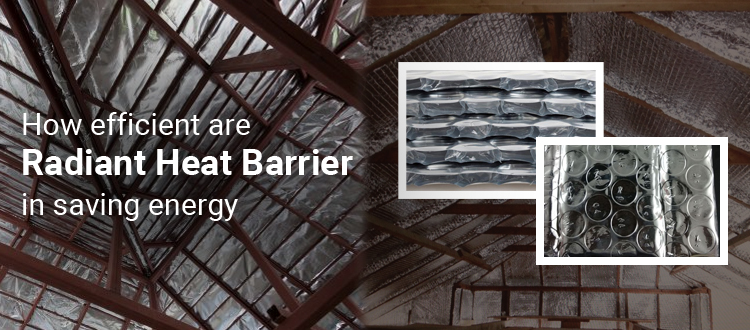
As the climatic conditions are changing with the time due to various ecological changes like global warming, increase in pollution, smog, dust, etc., the demand of a barrier between an exterior and interior spaces increases. People are looking for different techniques that can be helpful in reducing the consumption of energy and provide highly efficient thermal insulation.
Radiant barriers or reflective insulation materials provide cooling effective during hot climate. Without the proper attic insulation or roof insulation materials, solar heat will transfer to the living spaces and will make discomfort to you. Of course, you can have Air Conditioners in your homes but that is only going to consume energy and add to your utility billings.
Thus, radiant barriers are the perfect solution to fight with the hot climatic conditions and have a cooler environment in your home or work space. But how much they are effective and how it works? We are going to learn in this article.
How Radiant Barrier Work?
Radiant heat transfer is the most dominating mode among three heat transfer mode i.e. Conduction, Convection and Radiation. It is the transmission of the electromagnetic rays through space to your living space. The rays are commonly infrared rays and their origin is the sun.
Radiant barrier is consist of reflective sheets, generally aluminum and non-toxic light-weighted material which is easy to handle and install. Usually, radiant barrier alone is inefficient to provide a high-quality insulation. Thus, they make a part of a large assembly which consist of other roof insulation or attic insulation materials like foam, fiberglass or cellulose.
Radiant barriers are reflective and light color coated roofing sheets insulation materials that solve the purpose of overheating in the house. They are applied to either on the existing insulation or under the roof surface. Radiant barriers reduce the heat transfer and 95% of the radiant heat that directly fall on the roof surface during daytime.
To block or reflect the heat energy radiant barrier utilizes to physical properties of aluminum, they are:
Reflectivity:
Aluminum or any reflective surface sends back or reflect the rays striking to their surface back to space. Thus, blocking 95% of heat rays to enter your living space.
Emissivity:
The emissivity of a material is the effectiveness of radiating its energy as thermal radiation. In simple terms, radiant barrier’s own heat. Radiant materials should have a low range of emissivity, generally ranging from 0.1 or less. In general, low emissivity property of a reflective surface that is facing an air space results in low emittance of heat from the surface of the material.
Factors to remember before installing a radiant barrier
Implementing a radiant barrier in your building is surely advantageous but to enhance the effectiveness of the radiant barrier insulation, you need to analyse a few parameters. Here are some factors that can boost the cooling effect in your building.
Type of existing insulation:
A good insulation has R-value. If your insulation has high R-value then it is referred to be as efficient insulation material. If your roof or attic is already insulated earlier with a high value of the material, like R-30 then your radiant barrier will block major heat transfer. However, if R-value is below R-30 then 40% reduction in roof or attic heat will transfer through radiant barriers.
Demographic location:
A major factor that decides the effectiveness of your radiant barrier is the location where you live. If you live in hot climatic conditions, then you will immediately notice the cost cuttings in your energy consumption and your radiant barrier will work efficiently. Although radiant barrier works in cold weather to maintain the heat inside the room, however, it will not be effective as its major strength is noticeable in the hot climatic condition.
Air Space:
Radiant barriers must have at least one air space of minimum 3/4th of an inch on either side. Airspace is necessary to block the conductive heat transfer. If there is no air space then conductive heat transfer will take place from the surface touching the radiant barrier. Thus, it is a MUST to have an air space.
Application of radiant barriers
There are many applications of radiant barriers in providing efficient thermal insulation at a different place.
Space Exploration:
To protect the spacecraft, astronauts and equipment from thermal radiations in the pace.
Window Treatments:
To attain a low emissivity, window glasses are coated with radiant barriers.
Roof and Attic Insulation:
Radiant barriers enhance the thermal insulation in the living space and offer a comfortable space.
Conclusion
Thermal insulation can be achieved through various approaches depending on the demand of the climatic conditions, requirements, the position of installation and thermal insulation materials availability. Radiant barriers work well along with other insulation materials to obtain a high degree of thermal stability in your building.
It is important that before taking any step towards installing radiant barriers, take an advice from the thermal insulation contractors or suppliers in India, to gain potential knowledge about the best-fitted solution for your building.
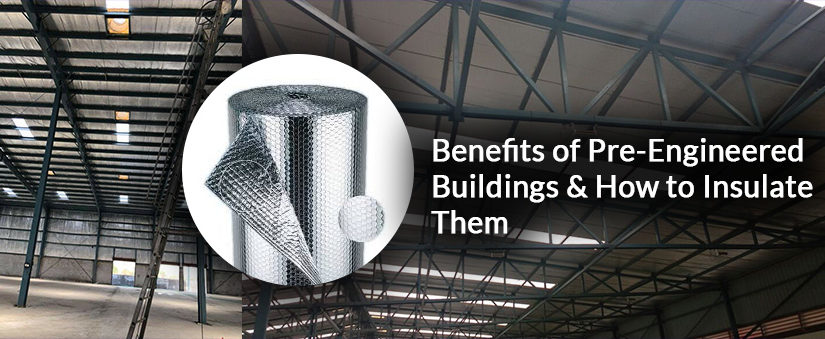
From small businesses to large heavy machinery industries are choosing pre-engineered buildings over concrete buildings. The reason is very simple, they are easy to construct and are cost-effective. A pre-engineered building is designed by using best-suited raw materials depending on the structural and aesthetic requirements. That is why they offer robust and strong structural designs suiting various industrial needs. In this article we will discuss the following points:
What is a pre-engineered building?
Benefits of using pre-engineered buildings.
What are the thermal insulation techniques for insulating pre-engineered buildings?
What is a pre-engineered building?
Pre-Engineered Building (PEB) are custom computer-aided designs which are simply engineered metal buildings. These buildings are easy, fast and cost-effective to develop. Pre-engineered buildings are steel structures which are built over a structural concept of having wall cladding, roof sheeting, primary framing system, secondary framing system and accessories.
PEB is best-suited for construction sites or large industries or manufacturing units. It is also used in earthquake-prone areas to build the houses.
Benefits of Using Pre-Engineered Buildings
There are many benefits of using pre-engineered buildings over concrete buildings, few of them are as follows:
Less Construction Time:
The use of high-quality steel, tapered build-up sections, light gauge steel section, etc. makes the overall process extremely light weighted and cost-effective. Apart from this, the pre-engineered building designs are computerized design programs. Using automatic machinery for welding, multi-cutting torches, etc.in the production line to fasten the procedure of construction. These buildings take 50% less time than usual.
Simple Foundation:
Pre-engineered buildings are easy to construct and are lighter in weight as they are 30%-40% lighter than conventional steel structures.
Scalable:
The building design after construction is expandable for the future needs or additional requirements. The modification or changes in the physical design like height or width are easily changeable, unlike concrete buildings.
High- Quality Assurance:
As the production line is highly automated and under great supervision, thus, the quality of products is assured.
Energy- Efficient:
This is the exclusive feature of a pre-engineered building. As they are energy efficient, they save up to 70% of energy consumption, thus reduces electricity expenses.
What are the thermal insulation techniques for insulating pre-engineered buildings?
To make the metal building energy efficient it is important to create a thermal barrier and air barrier. It is unavoidable to prevent the temperature stability if there will be heat transfer through the walls, roofs/lofts, ceiling, vents etc. Thus, it is important to provide the heat insulation to the buildings. Metal building insulation provides a barrier to exterior sounds, heat, dust and moisture hence improves the energy efficiency of the building.
There are many thermal insulation materials available in the market which offers high insulating characteristics. But when we talk about pre-engineered building insulation then there are two main insulating materials, that is:
Fiber Insulation:
Fiberglass provides an excellent insulation to the pre-engineered buildings. It provides insulation to thermal and acoustical for walls, roofs, and ceilings. Fiberglass comes in many forms like batt, loose-fill and roll form. Fiberglass can be made from recycled glass and it offers insulation to diverse parts of the building.
Rock and mineral wool insulation provides high resistance to fire and is used to the insulated floor, ceiling or walls. Another fiber insulation product – Cellulose insulation is used in a loose-fill form to insulate attics, walls, and floors. Cellulose have high resistance to air leakage thus, provides better roof insulation, under deck roof insulation, etc.
Foams:
Polyurethane and Polyisocyanurate have high R-value, thus are better insulating materials. Polyurethane foam is primarily used to block the air leakage and insulate efficiently. These foaming products are less polluting and harmful to the environment and offer cost-effective solutions.
Insulating Techniques for Pre-Engineered Buildings
Steel or metal buildings are incapable of protecting from the outside climatic conditions. Thus, supportive insulation materials are required to enhance the thermal stability. In general, there are four insulating techniques that are used to protect the pre-engineered buildings.
Batt and Blanket Insulation:
Batt insulation is inexpensive and offers effective wall insulation. It consists of rock wool or fiberglass processed to form a mineral fiber. Batt and blanket insulation are used for walls, floor, ceiling insulation. They have an R-value of R-3 per inch.
Loose-fill Insulation:
It is perfect insulation techniques to block the air leakage and reduce unwanted noise from outside. It wills every corner and space in the cavities thus, provides effective thermal insulation. Loose-fill insulation consists of loose fiber pallets or fibers and is blown into the building cavities with an equipment. The R-value lies between R-3 to R-4 per inch. This insulating technique can be a little expensive than other techniques.
Spray Foam Insulation:
It provides a perfect floor, ceiling, and wall insulation. With the help spray technique, liquid form of polyurethane is sprayed on to the wall or ceiling or floor. The mixture expands as it is sprayed and then convert into solid air-filled cells of plastic. This technique is advantageous to buildings having shaped designs or some complex structures.
Reflective Foil Bubble Insulation:
This is the most effective form of thermal insulation technique. It provides a dry, clean and easy installation of the insulation material. Reflective foil bubble insulation sheet provides a barrier to moisture, radiation, reflects heat, and dust. Bubble insulation sheets give roof insulation offering temperature stability in the building during the change in the environment.
It reflects 90% – 95% of radiant heat and offers waterproof insulation. The reflective foil bubble insulation sheets are strong, light weighted and flexible.
Conclusion
Proving roof insulation, heat insulation or any other insulation to your pre-engineered building entirely depends to the requirements for which the building will be required and on the climatic conditions of the region. Thus, it is important to consult insulation constructor or thermal insulation providing service companies for better guidance. In the market, there are many insulation materials and insulating techniques are available. Thus, depending on your business requirements or personal demands, choose the perfect insulation technique and material for your pre-engineered building.