Category: Bubble Insulation

Reflective Insulation: A Comprehensive Guide

Unnecessary transfer of radiant heat is one of the major problems faced by contemporary constructions. This unwarranted heat transfer increases overall energy requirements and leads to higher utility costs. To curtail this unnecessary transfer of thermal radiation, reflective insulation comes into play. Whether it is a home, commercial building, or industrial establishment, reflective insulation can quench the thirst for thermal needs and enhance overall energy efficiency.

Reflective Insulation offers environment-friendly and sustainable solution for thermal insulation requirements. This energy-efficient method is designed to curtail heat transfer by reflecting radiant heat away from the surface. What makes this insulation method popular among consumers is its reliability and effectiveness which may restrict heat transfer by up to 95%.

With rising demand for energy efficiency, reflective insulation materials have come out as the one-stop solution for thermal insulation needs. By reflecting away the radiant heat, it restricts the movement of heat between the different surfaces of a building and the surroundings. It enhances the overall thermal efficiency of any construction and it is easy to insulate places with tight spaces like walls, attics, and roofs.

Before putting reflective insulation into action, it is imperative to understand what reflective insulation is, its different kinds, and how to install it properly for maximum thermal efficiency. We will help you in understanding the true potential and right use of reflective insulation.

What is Reflective Insulation?

What-is-Reflective-Insulation

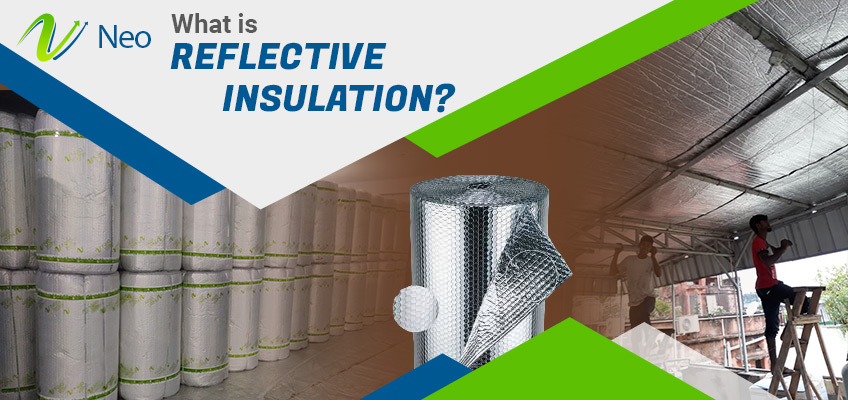
Reflective insulation, as its name suggests provides a barricade against the transfer of radiant heat between the surface of the object and the surroundings. It reflects away the unwarranted radiant energy and brings down the unnecessary heat loss and gain (through the surface of an object) to a significant level. This, in turn, diminishes the extra energy requirements and lowers the utility costs.

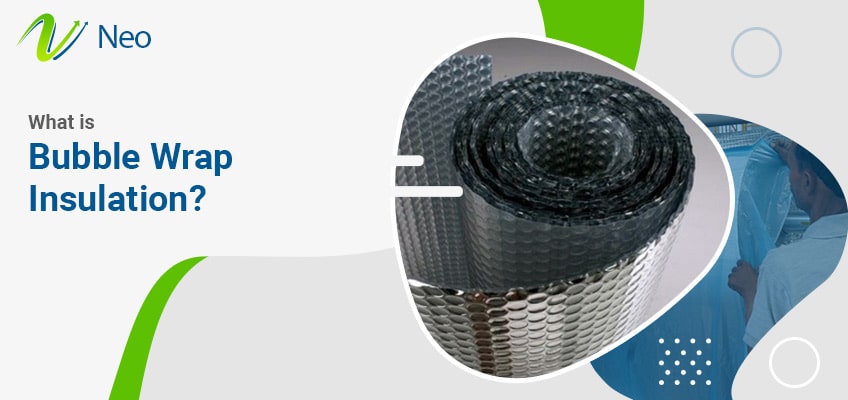
To reflect away radiant heat effectively, reflective insulation materials comprise reflecting surface (aluminum foil or any other metallic foil) with high reflective properties, sandwiched between the two layers of low-conductivity material like polyethylene bubble wrap, foam, or air with the aid of modern lamination techniques or an adhesive. This overall arrangement comes out as a clear winner against thermal energy transfer, as it creates a successful barrier against radiant heat and restricts its movement between the surface and the surroundings.

In comparison to other insulating materials like fiberglass, foam, or mineral wool, the “E” value of reflective material is very low, making it more effective against heat transfer. With an “E” value of 0.03, reflective insulation is more competent than other insulating techniques. For extreme climates, it is one of the best methods for insulating an establishment for better thermal efficiency.

Reflective Insulation: How Does It Work?

Reflective insulation is one of the most valuable materials for sustainable thermal insulation solutions. The prime objective of the insulating material is to curtail heat transfer emitted in the form of electromagnetic waves between the object and its surroundings. It is not like traditional insulation techniques that focus on slowing down conductive heat transfer. In its true sense, it is a treasure for viable insulation practices.

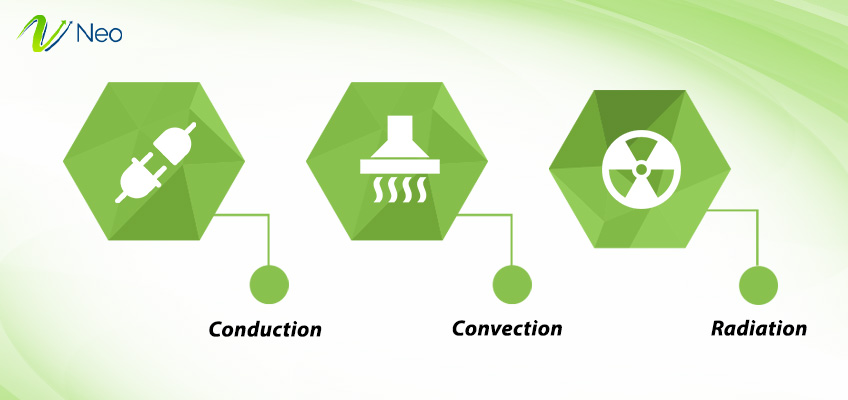
Transfer of heat between an object and its surroundings takes place in three ways:

  • Conduction: When heat transfers from a hot object to its surroundings through physical contact, this is known as conduction. Here, thermal energy requires a medium (solid or fluid) to flow from a hot surface to cool. Example: transfer of heat from the hot exterior walls of a house to the interiors.
  • Convention: When air moves from high density to low density, convention takes place. Under this, the transfer of heat takes place with the help of physical air movement. When hot air rises, cool air rushes to take its place. Example: rising air from the chimneys of industrial plants and homes.
  • Radiation: When the transfer of heat takes place through space and a vacuum, it is known as radiation. Infrared rays move from one medium to another without the help of any medium or material. Example: the sun’s energy reaches the earth and is absorbed by the earth’s atmosphere.

Radiant barrier insulation manages the flow of radiant heat between the surface of an object and its surroundings. It uses highly reflective material, such as aluminum or any other metallic foil, to reflect away radiant heat when it strikes the reflective surface and prevents it from penetrating through the insulated surface.

Additionally, this insulation comprises a layer of air bubbles sandwiched between the layers of metallic foil (commonly, aluminum foil) to strengthen insulating properties or low-conductivity material to create a hindrance for heat transfer through conduction or convention.

Radiant barrier insulation works best when it is placed perpendicular to the radiant heat striking the surface. Furthermore, heat reflective sheets provides greater results when the temperature difference between the sides of the reflective material is higher.

Beat the Heat and Cold with Reflective Insulation

Types of Reflective Insulation Materials

There are different types of reflective insulation present to fulfill all kinds of application and installation prerequisites. The major types include:

Reflective Heat Insulation

Reflective Heat Insulation provides comprehensive protection against heat transfer between the surface of an object and the surroundings. It is specially designed to reflect away the radiant heat and to keep buildings cooler in hot temperatures. Materials like aluminum foil, when put together with foam, plastic, or fiberglass (low-conductivity material), offer resistance to thermal energy transfer. Ideal for hot climates, it helps reduce overall energy consumption by restricting heat movement between the object and the surroundings.

Advantages:

  • It lowers the energy consumption costs.
  • It is durable, lightweight, and flexible suitable for installation in attics, walls, and ceilings.
  • Helps in maintaining suitable indoor temperature in hot climates.

Reflective Insulation Roof

A reflective Insulation Roof is the best fit for restricting radiant heat from entering the indoors of a building through roofs. Suitable for hot climates, it curtails the transfer of heat between the roof of a building and its surroundings and helps in reducing energy consumption by air conditioners. In places where roofs are unprotected from direct sunlight, it becomes beneficial when it is put under the roof sheathing or between the roof columns for maintaining desirable indoor temperature.

Advantages:

  • It helps block harmful ultraviolet rays from entering the building.
  • It improves overall thermal energy efficiency.
  • It protects the roofs, increasing their lifespan.

Reflective Insulation Bubble Wrap

Reflective Insulation Bubble Wrap consists of bubbles of air or any other material sandwiched between the two layers of reflective materials (metallic foil). Due to its composition, it not only resists the transfer of heat between the surface of an object and the surroundings but also protects against moisture. Its flexibility and durability make it a fit for insulating crawl spaces, attics, walls, and roofs. It is easy to install and provides all-round protection from radiant heat transfer and moisture.

Advantages:

    It is flexible and durable, making it the right material for insulating irregular surfaces with tight space.

  • It provides resistance against moisture.
  • It is very easy to install and maintain.

Protect your Home from Temperature Extremes with Reflective Insulation

How to Use Reflective Insulation?

How-to-Use-Reflective-Insulation

Reflective insulation increases energy efficiency and fulfills thermal requirements with low operating and installation costs. It offers structural stability and sustainability.

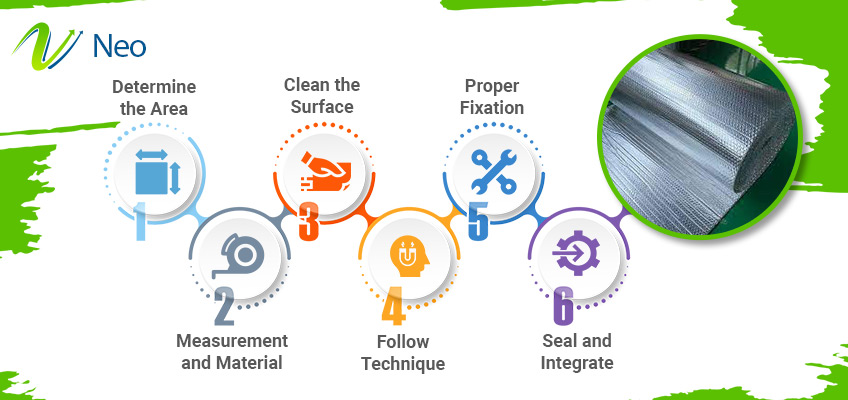
  • Determine the area: Before applying reflective insulation, determine the area of your commercial, industrial, or residential building for potent radiant heat reflection like attics, roofs, walls, HAVC ducts, etc.
  • Measurement and Material: Do a thorough assessment of the required area where the radiant heat barrier is going to be installed. This thorough assessment will help in procuring the right quantity of material for the best output.
  • Clean the surface: It is necessary to clean the surface minutely before putting in insulation material. Make sure to dry, clean, and remove any kind of obstruction, containment, or dust particles for optimal adhesion and results.
  • Follow technique: Proper installation techniques must be followed to mitigate radiant heat transfer between the surface and surroundings. Precision in cutting the material, fitting, and covering the required surface is essential.
  • Proper Fixation: It is important to imply proper fixation methods for the firm affixing of insulation material to the surface. Use staples, nails, and adhesive properly to avoid any gaps and misalignments that hamper effectiveness.
  • Seal and Integrate: Proper sealing and integration methods should be followed to create a perfect barrier against radiant heat. Every joint, gap, seam, and edge must be properly covered using insulation tapes or other compatible materials.

Apart from the above-mentioned steps, it is necessary to accurately determine the climate and environmental conditions of the area where reflective insulation is going to be installed. Regions where the temperature is high and the climate is hot have this insulation that curtails heat gain by reflecting radiant heat away from the surface. On the contrary, in cold climates with low temperatures, thermal insulation prevents radiant heat loss from inside to improve thermal efficiency and reduce heat loss.

Additionally, put a vapor barrier before placing insulating material on the surface in a climate of high humidity. The vapor barrier stops moisture accumulation on the insulated surface. Humidity in the air creates a hindrance to effective thermal insulation.

Don’t let heat or cold disrupt your comfort Install Reflective Insulation Now

Where to Use Reflective Insulation?

Where-to-Use-Reflective-Insulation

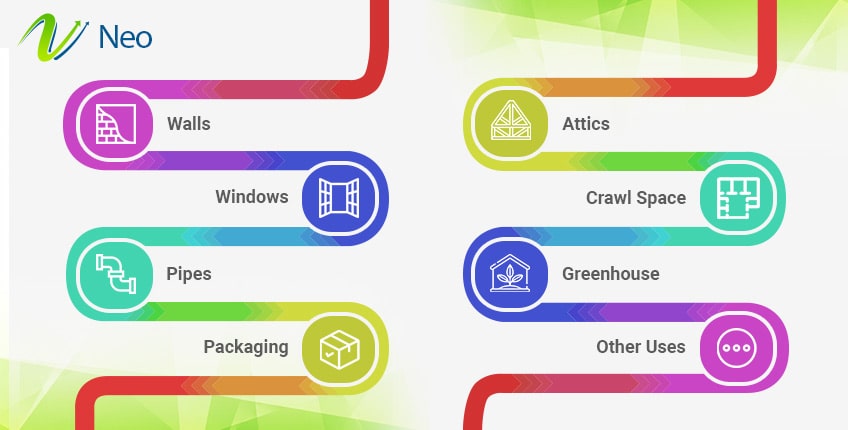
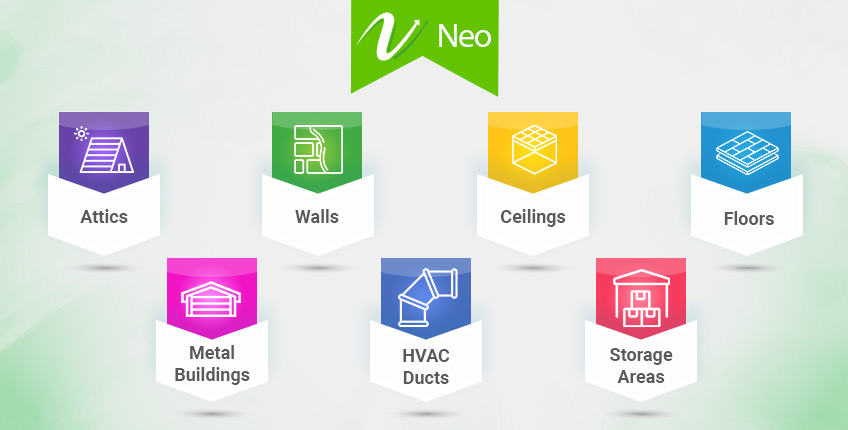
Thermal reflective insulation has a variety of applications, from attics to walls, as well as floors and HVAC ducts. This insulation material offers versatile solutions. It is efficiently used in residential, commercial, and industrial buildings to create a blockade against radiant heat transfer and reduce energy consumption. It is lightweight, flexible, and easy to install, making it a sustainable solution for thermal insulation requirements.

It can be judiciously used in various places to increase thermal efficiency:

  • Attics: The attic in our home is the place that is in direct contact with the outside. This insulation creates a blockade and prevents radiant heat from entering during the summer and escaping during the winter.
  • Walls: reflective thermal insulation can be easily used on walls as well. It is important to cover walls because a large amount of heat escapes through walls. It helps you attain desired thermal insulation and control temperature fluctuations, saving you money on monthly bills.
  • Ceilings: Uncovered ceilings can become a black sheep, helping heat escape rooms faster than you think. It is highly advisable to insulate ceilings with thermal reflective insulation material to maintain a consistent temperature.
  • Floors: A lot of heat is lost through the floor. If you overlook this area, it will cost a very high price. Floor insulation is essential not only to get the desired temperature but also to reduce energy consumption costs.
  • Metal buildings: It is really important to insulate metal buildings like warehouses, barns, and other industrial facilities to curtail radiant heat transfer and maintain temperatures.
  • HVAC Ducts: In many cases, HVAC ducts become an easy path for heat energy loss and gain during the air distribution process. Insulating HVAC ducts ensures efficient heating and cooling, which leads to less energy consumption and lower utility costs.
  • Storage Areas: In certain industrial establishments, it is necessary to maintain temperature and protect materials from heat fluctuation. Reflective insulation is one of the best ways to protect these temperature-sensitive products.

How to Install Reflective Insulation?

It is easy to install reflective insulation, all you require is the right technique and precision. The mentioned steps will help you obtain optimal efficiency and performance.

1. Identify and Clean the Place

It is very important to identify the right place for installing reflective insulation. Check out the building and find the place where installing insulation will lead to maximum results. Clean that area, and remove dust, dirt, or any other impurity present on the surface. Cleanliness is essential for better adhesion and operational efficiency.

2. Do the Right Measurement.

After cleaning the surface, the next step is to measure the total area. Measure the required area precisely, the right measurement will lead to minimal material waste and ensure that insulation material fits in the place properly.

3. Cut Down the Material According to the Measurement.

Make sure that you will cut down the insulating material in the proper measurements you have taken. For smooth cutting of the material, use a sharp knife or scissors. Remember right and clean cut is necessary for the proper fitting of the reflective insulation.

4. Place the Insulation Material Meticulously.

Place the reflective insulation material with precision over the surface. Ensure to put the reflective side towards the heat source while placing the material. For example, if you place insulation material in attics, put the reflective side facing downwards to the living space to restrict the movement of the radiant heat.

5. Fix the Insulation Material Properly.

Use adhesive, nails, or staples to properly place the insulating material over the insulating surface (depending upon the type of surface material). For example, if the insulating surface is made up of wood or has metal framing, then nails and staples will work fine. However, for insulating surfaces like concrete or other materials, adhesive can be the right choice for operational effectiveness.
6. Secure the Seams and Edges.

It is essential to accurately seal the edges and seams (if any are present) of an insulating material. If any gap remains present it will lead to continuous heat transfer and hamper the overall thermal efficiency. To ensure proper sealing use foil tapes on the edges and seams.

7. Inspect the Area After Installing Reflective Insulation Material.

Once installation is done do not forget to inspect the whole area. Assure that no gaps or uncovered areas are present. If you find any loose area immediately fix it and re-secure the insulating surface for perfect fit.
The proper installation of reflective insulation material is necessary. It will not only reduce costs on energy consumption but also provide longer life to the building material by protecting it from unwarranted damage and deterioration.

Conclusion

When it comes to thermal energy requirements, reflective insulation is standing at the podium. It offers not only environment-friendly but sustainable solutions to modern building thermal insulation needs and practices. To get the best results out of this contemporary insulation method it is essential to understand what is it and its different types. Additionally, proper installation of the material is crucial. To make an informed decision it is imperative to understand the reflective insulation technique.

FAQ

1. Is Reflective Insulation Good for Walls?

Reflective Insulation is good for walls. It restricts the movement of the radiant heat between the indoors and the surroundings leading to overall energy efficiency and reduction in electric utility costs. It is one of the best methods to satisfy modern thermal requirements.

2. How Thick is Reflective Insulation?

The thickness of reflective insulation material lies between 3/16 inch and 1 inch. The thickness of the reflective insulation is primarily based on the material used. For example, reflective insulation bubble wrap is thin when compared with other insulation materials. However, more thickness means better insulation and thermal efficiency.

3. How Long does Reflective Insulation last?

The life of a reflective insulation material lasts between 10 to 50 years. Factors like material, quality, and environmental conditions also play vital roles in deciding the life of a reflective insulating material.

4. Does Reflective Insulation Require Maintenance?

The best part about reflective insulation is, that it requires minimal maintenance and holds high durability. After you install it properly, it does not ask for any special maintenance. However, it is necessary to regularly inspect the insulating surface for unwarranted wear and tears, moisture build-up, dust, and dirt.

5. Is reflective insulation Good for Winter?

The reflective insulation is good for winter, as it helps in curtailing the movement of heat from inside to outside. It helps in maintaining indoor temperature reducing dependence on electric appliances.

6. What is the R-value of Reflective Insulation?

The R-value of the reflective insulation depends upon a variety of factors. The range varies between R-1 to R-7. Different R-value represents different degree of thermal performance.

7. What is Reflective Insulation Used for?

Reflective insulation curtails the radiant heat transfer between the insulating surface and the surroundings. It helps in maintaining the thermal efficiency of a building and reduces excessive energy use.

What is Industrial Insulation?(Meaning, Benefits, Applications & Materials)

Nowadays industrial insulation is commonly practiced in the industrial sector via which companies and factories can save energy in multiple domains and sub-domains like manufacturing, power generation, oil refining, etc. Hence, be it food processing, power generation or stabilizing and controlling process temperatures, thermal insulation solutions play a critical role in the modern industrial space

Insulation is not a new phenomenon as in ancient times mud was one of the largely used industrial thermal insulation materials known for its cooling properties for building homes. People used to put straw and mud between logs to insulate their houses.

Over the years, insulation has evolved extensively, and nowadays we use a variety of industrial insulation materials ranging from bulky fiber materials such as cellulose and fiberglass to sleek foils to rigid foam boards, etc. Every material has its unique properties and usage. That’s the reason the insulation industries market is so humongous as it has something valuable to offer to everyone.

To cut a long story short, a business can avail of insulation services from any of the trusted industrial insulation suppliers and manufacturers to save energy and cost and create a safe and pollution-free environment for its workforce.

Industrial Insulation: An Overview

Industrial Insulation

Industrial Insulation in simple words is used to control or regularize temperature. It is used around the globe in power generation plants, refineries, and manufacturing units. When a building is constructed, factors such as global warming and limited energy resources must be considered. The focus should be on constructing buildings that are energy efficient.

Thermal insulation is one such way that can optimize the use of available resources to save and conserve energy. Insulation is a great way to save more than half of the energy to provide good and stable interior conditions.

The thermal insulation industry is making millions by installing effective insulation systems within organizations to protect and safeguard the internal environment. Insulation industries use modern insulating materials that have the characteristic to control and maintain any building’s internal environmental conditions by minimizing its operational energy load.

Protect Your Equipment and Workforce with Premium Industrial Insulation.

Applications of Industrial Insulation

Pipe insulation

NEO Thermal Industrial Pipe Insulation Solutions are the ideal choice when it comes to addressing issues like providing thermal and sound insulation or protecting from fire with the help of a single product. They are the perfect choice for a full range of applications and temperature changes.

Tank and Vessels Insulation

Industrial Storage Tanks and Vessels are available in a wide range of shapes, sizes and temperatures. The type depends on the needs of the process; however, one common thing is the need for effective insulation that meets all process requirements to ultimately protect personnel from uneven temperatures and surfaces.

Industrial Ovens and Kilns

An industrial oven is a device used for creating high temperatures to condition metals, heat treat parts, and cure metal coatings. The Kiln is also a high-temperature thermal processing device used specifically when there is a need to burn or harden any sample. Neo Thermal has years of experience in installing Industrial ovens and kilns in various industries.

Acoustic Insulation

Acoustic Insulation greatly helps protect occupants from noise pollution so that one can feel a sense of comfort and privacy. It is typically designed to minimize the noise transfer inside and outside your home or office.

Chimney Insulation

Thermal Insulation of Industrial Chimneys is a great way if one wants to prevent corrosion of the internal steel channels. With Neo Thermal Industrial Chimneys, you get quality-driven products at affordable prices for your office and residential spaces.

HVAC System

Cellulose, rock wool, spray foam and fiberglass are the most common types of HVAC Insulation. Each type has its own benefits and limitations, for example, the property to resist fire and thermal insulation.

Equipment Insulation

With sustainable and eco-friendly equipment insulation solutions of Neo Thermal, you can incorporate effective thermal performance to save energy and increase efficiency. They aim to offer top-notch equipment installation services for acoustic performance.

Boiler Insulation

Neo Thermal offers budget-friendly insulation services for boilers to be used in various industries. The best part is that the task of installation is performed by our experienced professionals who are well-versed in their craft.

Reduce Heat Loss and Improve Workplace Comfort with Industrial Insulation Solutions.

Benefits of Industrial Insulation

Benefits of Industrial Insulation

It is impossible not to talk about the plethora of benefits Industrial Insulation has to offer in the areas of chemical processing, manufacturing, or other industrial-specific applications. So, let’s go through some of the major benefits and analyse how the Industrial Thermal Insulation Market is driven by that:

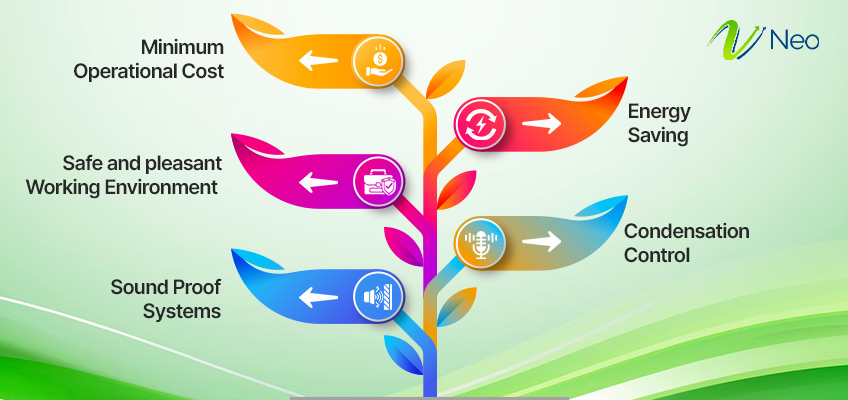
Minimum Operational Cost

A well-insulated environment is the seed of low operational cost. As the environment is suitable for the workforce, it performs at an optimum level regardless of the shift timings. Therefore, the insulation industry market can highly benefit in terms of operational cost control.

Energy Saving

Another mind-blowing benefit of Industrial Building Insulation is the fact that it helps in saving energy to a whole new level. Good insulation helps minimize heating and cooling costs resulting in saving valuable energy resources.

Safe and pleasant Working Environment

We all agree that human resources is the most important asset for any company. Industrial building insulation helps create an environment that is free from all sorts of negative effects of uncontrolled temperatures and industrial processes.

Condensation Control

Excess condensation can be controlled if pipes and vessels are properly insulated. If you can eliminate drastic temperature fluctuations then you can avoid potential damage to your sensitive mechanical or electrical components.

Sound Proof Systems

Unnecessary noises and disturbances always hamper the productivity of the workforce. This is due to thin walls or structures that cannot stop the penetration of noises from one room to another. Industrial building solutions can also help in such a scenario by installing systems to integrate effective sound control.

Common Types of Industrial Insulation Materials

Here is the list of the most commonly used Industrial Insulation Materials

Fiberglass Blanket

Talking about the types of Industrial Insulation, the most widely used is Fiberglass Blanket. Also known as batt or roll insulation, a fiberglass blanket is built with layers with an outer shell of paper or cardboard. The insulation material is mostly applied between joists and beams.

Fiberglass Board

Fiberglass Board is one of the most common industrial insulation types which is used widely in industries such as warehouses and factories. A combination of resin with fiberglass creates a rigid insulation panel. As far as the application is concerned, fiberglass board is typically used for insulating HVAC ductwork.

Rockwool

Third on the list of Insulation Materials is Rock wool. Rock wool is prepared from minerals (diabase, or basalt) that are melted and spun into fibers. The highlights of Rock wool include its high durability, fire retardant nature, and resistant property to mold and mildew. It is used in hot water tanks and pipes.

Spray Foam

One of the most widely used Industrial Insulation Materials to reduce noise is Spray Foam. Foam insulation acts as a barrier to airborne sounds, hence reducing airborne sound transfers through different structures. It’s an alternative to fiberglass and is made by mixing two materials – isocyanate and polyol resin.

Loose Fill Insulation

The ability to conform to any space without disturbing structures or finishes make Loose Fill Solution an ideal fit for retrofits and locations where installing other sorts of insulation would be difficult. “Loose Fill Insulation” is available as either fiberglass pellets or cellulose and can fill small or inaccessible spaces.

How to Install Industrial Insulation?

Installing industrial insulation typically involves several steps to ensure proper coverage and effectiveness. Here’s a rundown on how to do it right:
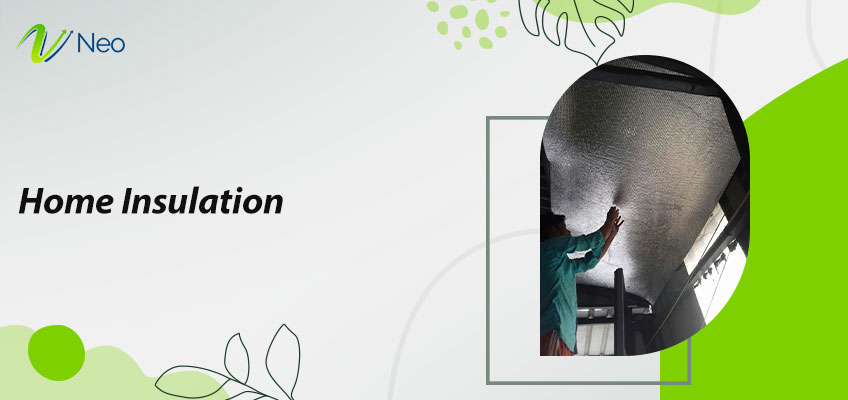
Step 1 – Check Your Industrial Space

First things first, take a good look around your industrial area. Figure out where you need insulation, spots where heat might be sneaking in or out, and if there are any spots that need fixing up.

Step 2 – Pick Your Suitable Insulation Material

Choosing the right insulation material is crucial for the success of your insulation project. Think about how hot or cold it gets in the space, if there’s any moisture to deal with, and what fits your budget. There are different types like fiberglass, mineral wool, foam board, and reflective insulation, so pick what suits your needs best.

Step 3 – Get Necessary Materials and Tools

Before you start, make sure you’ve got everything you need. Grab your insulation, any barriers you need, adhesive, safety gear and tools like knives or scissors. Having it all ready saves time later.

Step 4 – Prep Your Industrial Area

Clean up your area before you get started. Make sure it’s dry, tidy and there’s nothing in the way. Fix up any leaks or gaps to keep the air where it should be. If moisture’s an issue, you might need a vapor barrier to keep things dry.

Step 5 – Insulating Pipes, Ducts, and Industrial Equipment

Now it’s time to get insulating! Proceed with insulating essential components such as pipes, ducts, and industrial equipment within your facility. Utilize insulation materials specifically designed for these applications, considering factors like temperature fluctuations and exposure to chemicals or harsh environments. Wrap pipes and ducts snugly with insulation, ensuring complete coverage and minimal heat loss or gain during operation. Pay close attention to intricate areas and connections to prevent thermal bridging and maintain insulation integrity. Properly insulating pipes, ducts, and industrial equipment is crucial for optimizing energy efficiency, preventing condensation, and ensuring the reliable operation of your industrial processes.

Step 6 – Regular Maintenance and Monitoring

Once you’re done, don’t forget about your insulation. Check on it regularly to make sure it’s holding up. If you spot any problems, fix them up or let you thermal insulation provider fix it fast to keep your place comfy and efficient.

Follow these steps, and you’ll have your industrial insulation sorted, making your space more comfortable and saving energy along the way.

Why Buy Industrial Insulation from Neo Thermal?

Neo Thermal Insulation is ranked among the top Industrial Insulation Companies in India and is known for providing tailor-made and cost-effective thermal insulation solutions. We at Neo Thermal believe in revamping business spaces with our energy-saving thermal insulation materials and devices.

We are one of the leading Insulation Suppliers in India. Our services cater to a wide range of industrial sectors like manufacturing units, warehouses, commercial and residential properties, health and fitness centers, malls and a lot more.

Our wide range of services includes thermal insulation installation services for roofs, complete building insulation, ceiling insulation, floor insulation, Aluminum foil insulation, thermal insulation wall installation, and many more.

In simple words, we offer all sorts of energy-efficient industrial insulation services for optimum thermal performance. Contact us and get the best thermal insulation services suitable according to your geographical location and property structure.

Conclusion

In the end, let us all agree that Industrial Insulation is greatly helpful when it comes to creating a pleasant and workaholic environment. This is because you can maintain and regularize temperatures in the best possible manner. As this is a serious job, you need the assistance from an expert. We at NEO Thermal Insulation have experts who can install effective thermal insulation systems in your company to give you the desired results.

As far as this article is concerned, we have tried our best to give you insights into the thermal insulation industry and how you can make it work for you. By availing of Industrial Thermal Insulation Services, you can get a lot of benefits, for example, your electricity bill can be lowered, you can save natural resources and of course, you can save energy.

Frequently Asked Questions

1. What is the best industrial insulation?

The best industrial insulation depends on the place you’re adding it, the desired R-value, and your overall budget. In general, Fiberglass insulation is the best insulation as it provides great thermal resistance and is non-inflammable. Hence, it is considered the safest in terms of usage in industrial facilities.

2. How does industrial insulation contribute to energy efficiency?

It helps in reducing heating and cooling costs and protecting your facility from heat loss. Building envelope insulation helps in maintaining a stable temperature throughout the facility. Secondly, it protects your building from losing heat so that it becomes more energy efficient.

3. Why are Insulation Industries Important?

There are many reasons why insulation is very important but the most important reason would be that there is a huge amount of loss in terms of the indoor heat through the ceiling and insulation helps in protecting that. Installing insulation in your homes and office spaces helps provide resistance to heat flow and lowers your cooling and heating costs. Hence, your overall comfort is enhanced.

4. Which are the best industrial insulation Suppliers in India?

Neo Thermal Insulation is among the top manufacturers and suppliers of insulation materials in India. They are the pioneers of the insulation industry and are ranked among the top industrial insulation companies in India. They work to bring comfort to your homes and workplaces by providing premium quality thermal insulation materials at highly affordable prices.

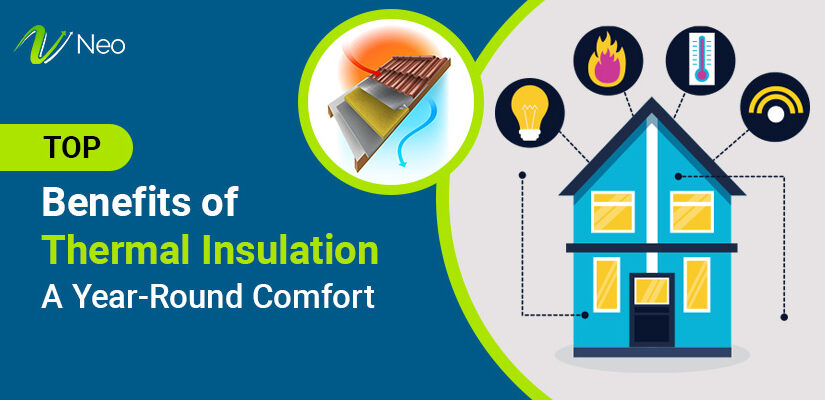
Top Benefits of Thermal Insulation: A Year-Round Comfort

Nowadays, thermal insulation plays a vital role in homes and buildings and there are various benefits of thermal insulation. Thermal Insulation, you may have seen it but you may be unaware of what it is. Heat insulation is applied between materials, machines or blocks to reduce the transaction of heat or thermal energy. These insulation materials are made up of low thermal-conductive material. There are a few thermal insulation materials suppliers whose materials you should use. In this blog, we will explore the top advantages of thermal insulation and how it is important for homes.

What is Thermal Insulation?

Thermal Insulation plays a crucial role in minimizing heat exchange between surfaces or areas with disparate temperatures.

The application of thermal insulation extends to the regulation of indoor temperatures in buildings, prevention of heat dissipation from pipes and equipment, and mitigation of extreme temperatures in industrial operations. Given that inadequate insulation has the potential to compromise energy efficiency, leading to escalated energy expenses, the benefits of thermal insulation become evident in maintaining these factors within optimal parameters.

In 2022, the worldwide market for thermal insulation reached a valuation of approximately USD 29.75 billion, and projections indicate an anticipated surge to about USD 48.69 billion by 2032. This trajectory suggests a steady compound annual growth rate (CAGR) of 5.1% throughout the forecast span spanning from 2023 to 2032. Specifically focusing on the United States, the market size for building thermal insulation stood at USD 9.6 billion in 2022.

Schedule Thermal Insulation Installation For Your Home Now!

Benefits of Thermal Insulation Materials

So now that you are aware of what thermal insulations are let’s know the benefits of thermal insulation and why we are using them.

1. Reduces Heating Costs

Reduces Heating Costs

For comfortable living conditions, you need a house or building that creates better thermal conditions. Well, without the right thermal insulation materials, these building blocks or houses are not fully thermal insulated. When these areas are insulated thermally well the loss of thermal energy is reduced by a lot of percentages. Now that the block is insulated well, the use of an external heat source will be reduced. This will reduce the consumption of fuel and power.

If we take a rough measure of this then you can see that with thermal insulation materials, you are saving approx. 45-60% of the energy.

2. Maintain Comfort Condition

Maintain Comfortable

The air temperature is the one thing that needs to be controlled when you are trying to create thermal comfort conditions. This comfort condition also depends on the temperature of the surrounding surface. If the room is not insulated well then it will be hard to control the level of comfort even when the air temperature is high. Unlock the high comfort with the advantage of thermal insulation.

This happens when the hot air passes through near the cold surface and creates a draft. Using heat insulation material these surfaces can be made warm and then the temperature will be slightly lower than the air temperature.

3. Fire Safety and Protection

Fire Safety and Protection

The best benefits of thermal insulation is fire protection. One of the widely adopted materials for fire resistance is Rockwool. In case of a fire outbreak, non-combustible insulation, like Rockwool, acts as a barrier, impeding the rapid spread of flames. Notably, Rockwool insulation stands out for its ability to prevent the production of harmful toxic smoke, a critical factor considering that smoke inhalation poses a greater risk to individuals than the actual fire. Beyond its fire-resistant properties, Rockwool insulation boasts exceptional thermal and acoustic characteristics, making it an excellent all-encompassing choice for home thermal insulation.

Read Also: Thermal Insulation In Buildings: Science, Benefits & Materials

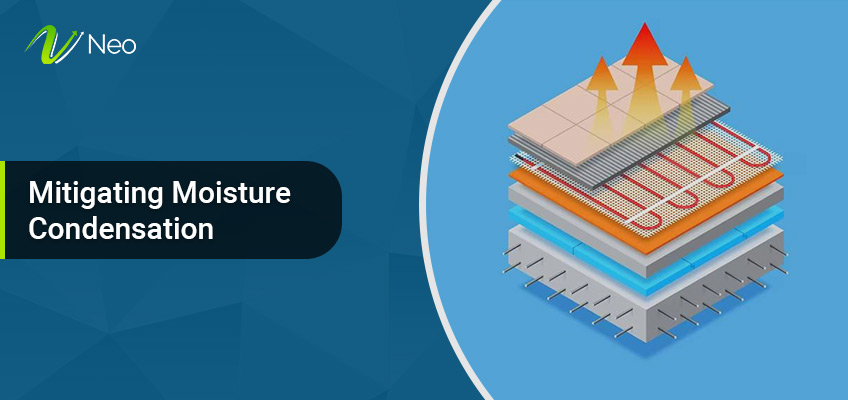
4. Mitigating Moisture Condensation

Mitigating Moisture Condensation

First thing first, what is this condensation here? This phenomenon appears when the cold walls start absorbing vapors from the environment. This vapor touching the cold wall starts condensing and this will leave a grey spot on the wall and considered one of the best benefits of thermal insulation. The introduction of insulation serves as a deterrent against both heat gains and losses, ensuring a consistent temperature. This stability prevents surfaces from falling below the dew point, effectively averting condensation.

Now, if the external thermal insulation material was applied on the wall then this variance in the temperature will not take place. With this, there will be no condensation, and with no condensation…. you got the idea, right?  While air barriers and vapor control wall wraps play a role in minimizing condensation, insulation goes a step further by maintaining optimal wall temperatures and mitigating the risk of condensation occurrence.

5. Save Energy and Save Bills

Save Energy and Save Bills

With the thermal insulation, you are not only making room temperature stable but you are also making it comfortable for all seasons. With an insulation layer, you do not need heaters or ACs. Even if there is a case when you want to use these, you are saving a lot of money. So you can easily save money and energy savings with the benefits of thermal insulation.

Thermal insulation makes sure that there is no kind of loss of energy to the block it is applied. So if there is no loss of energy the heater and AC will eat up less power to reach the desired temperature. So using less AC and heater is surely going to be seen in your electricity expenses.

6. Environment Friendly

Environment Friendly

So as we talked about just right now how do things get changed when you start using heat insulation material? So now you are not required to use that much AC and heater to artificially control the temperature of the room.

Using less and less of these devices will make sure you are reducing the consumption of electricity. Now you are not just saving electricity, you are also making the environment safer. Heaters and AC exert CO2 gases to work on their principles. Without insulation, you are emitting a lot of CO2 into the atmosphere.

But now as you have applied thermal insulation material you emitting 45% less CO2 into the environment. It is just the factor of one person. By applying it to big buildings this emission of CO2 can be reduced by a lot.

7. Reduce Noise Pollution

Reduce Noise Pollution

These thermal insulation materials are not just stopping the heat from getting leaked but they are also making sure that there is low insertion of noise into the building block. The benefits of thermal insulation can be achieved using fibrous insulation materials like glass wool or stone wool. This reduces the noise and increases the sound insulation of the building elements.

Read Also: Types of Materials for Sound Insulation for buildings

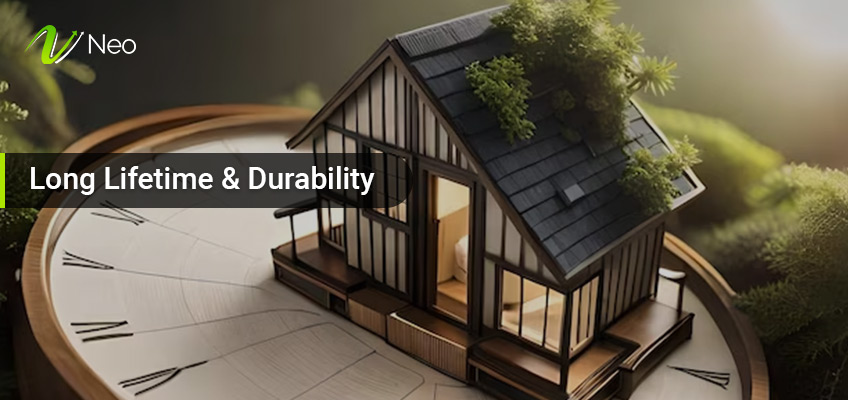
8. Long Lifetime and Durability

Long Lifetime and Durability

Crafted for durability and longevity, insulation comes with extended warranties from reputable brands. When installing insulation, it’s crucial to ensure a meticulous, gap-free application to safeguard the optimal performance of your insulation.

These are the advantages of thermal insulation that you get when you install thermal insulation material in your buildings. With these, you are not just saving money for yourself but you are saving the environment too. It is time to think smart and build smart.

Get Your Home Insulated With Thermal Insulation Today!

Conclusion

A significant portion of the energy costs associated with typical commercial structures is allocated to heating and cooling. The benefits of thermal insulation serve to diminish both energy consumption and related costs, all while ensuring a consistent and comfortable indoor environment for homes and buildings. Neo Thermal Insulation is a supplier of thermal insulation materials and is considered one of the top thermal insulation manufacturers in India. Ensure your building is shielded from external elements with our thermal insulation services. Our team of experts conducts thorough inspections, tailoring a customized plan to meet your specific needs.

Frequently Asked Questions

1. What do you mean by Thermal Insulation?

Thermal Insulation minimizing heat transfer among solid objects, fluids, or gases is achieved through thermal insulation, which introduces a barrier between them and has lots of benefits of thermal insulation. Industries such as energy, industrial, medical, and others find insulation crucial, as it plays a vital role in ensuring optimal thermal environments for efficient performance in complex applications.

2. What are the most thermal insulation materials used?

The most common thermal insulation materials are Glass wool, Polyester and Rockwool, each distinct in nature yet all serving as effective insulation materials that contribute significantly to enhancing the comfort of your home.

3. What are the benefits of thermal insulation?

The advantages of Thermal insulation creates a barrier to heat flow, insulation enhances home comfort in winter and reduces the heat in summer. Through insulation, you can notably decrease heating and cooling expenses, contributing to a reduction in greenhouse gas emissions.

4. Where to buy the thermal Insulation Materials?

Count on Neo Thermal Insulation for top-tier thermal insulation materials. We’ve successfully addressed insulation requirements across diverse sectors, including warehouses, manufacturing, commercial and residential properties, apartments, malls, fitness centers, and beyond, offering tailored insulation solutions.

Home Insulation: Types, Benefits and Insulation Areas

The importance of proper home insulation lies in ensuring that every home has it, as it is a key aspect of energy efficiency and cost-effectiveness. Poorly insulated homes result in heat escaping during winter and seeping in during summer, causing heating and cooling systems to work overtime. This leads to high energy bills and increased carbon dioxide emissions. However, effective insulation provides a thermal barrier that keeps indoor temperatures stable and minimizes the load on HVAC equipment. It reduces expenses by preventing heat exchange and saving a significant amount of energy required to maintain favorable climatic conditions inside your house, thus limiting the ecological impact.
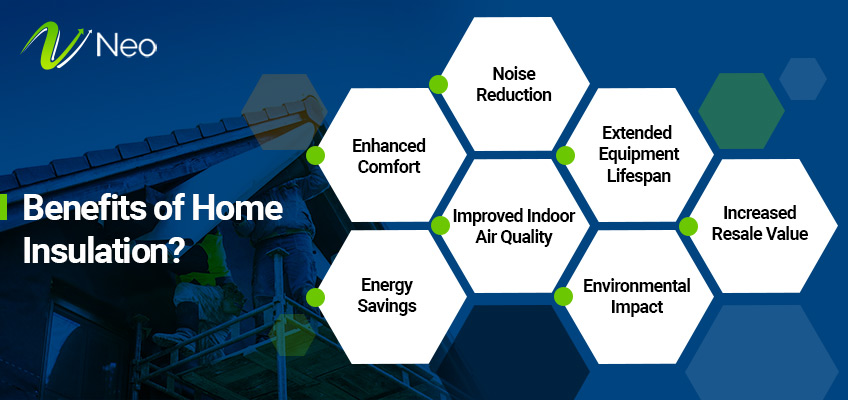
Whether you’re constructing a new house or retrofitting insulation into your existing home, you’re in the right place. In this blog, we will explore how appropriate home insulation can help you reduce your bills and energy consumption.

What is Home Insulation?

What is Home Insulation

When speaking of home insulation, it means materials and methods by which a thermal barrier is created inside of a house’s walls, roof, floors, etc. The main objective of home thermal insulation is limiting the amount of heat transferred inside versus outside of a structure. Insulating materials work by blocking out any kind of heat flow within the building to keep temperatures at a more even level.

Examples of common insulating materials are; fiberglass, foam boards, cellulose, and spray foam. These heat insulation materials are set up on walls, roofs, and floors with a view preventing heat transfer thereby maintaining houses warm in winter and cool in the summer period. Insulation is effective by improving comfort, which is vital for energy efficiency as well. This minimizes unnecessary heating and cooling hence low electricity bills and reduced damage to the environment. Listed the majority of people who participate in informal games are uninhibited by rules or any other restraints. House Insulation should be properly designed and installed as well as regularly checked to sustain a comfortable and efficient environment in your dwelling place.

How Does Home Insulation Work?

Insulation aims to stop the transmission of heat between the inside and outside of a construction. This principle is based on a fundamental notion of reducing heat transmission rate. Therefore heat naturally finds its way from warmer places towards the cooler. During the winter season, the insulation keeps heat within a home, and in summer, it stops unwanted heat from flowing in.

This is a result of low thermal conductivity in some home insulation material. This results in pockets of air that are trapped within the structure of each fibre, acting like an insulator. For instance, there is a good example of fibreglass insulation made of silicate glass and consisting of tiny fibres, which hold well-trapping air, and thus act as a thermal barrier. Heat also flows through other material such as foam boards which uses its cellular structure.

The effectiveness of insulation depends on several factors, which include the thickness and types of insulation. The higher the thickness/density of insulation the greater its ability to resist heat transfer/conduction. Installed well in walls, ceilings, and floors, insulation promotes consistency of inside temperature thereby minimizing the extra requirement of heating or cooling which results in saving on energy and feeling comforted at home.

Get Home Insulation Installation Now To Save Bills And Enjoy Comfort!

What are the Benefits of Home Insulation?

By upgrading your Thermal insulation, you can enjoy its benefits year-round and throughout your lifetime. Here are some key advantages:

benefits of home insulation

1. Energy Savings

The home insulation is like a thermal barrier with reduced heat transfer in and beyond the house. Insulation keeps your home warm during winter, and cool in summer thus significantly reducing load on your heating & cooling systems. To elaborate further, it will consume a lesser amount of energy to sustain a given temperature and with this saving, you will be able to realize reduced energy consumption bills on a long-term basis as far as this is concerned.

2. Enhanced Comfort

Effective insulation helps to maintain stable indoor temperatures regardless of external conditions. In winter, you will not experience cold gusts and in summer, you will not suffer from high temperatures. Such consistency in temperate helps make the living environment comfortable around the year to the pleasure of you and your friends and relatives.

3. Noise Reduction

Using certain house insulation material, especially those that have some damping abilities for sound, you can limit the amount of noise from outside entering your house or business premises. It translates to fewer cases of car noise, barking dogs, and other disruptions coming from the outside leading to less intrusive noise getting in or sound transfer between two spaces reducing the amount of background noise within the home.

4. Improved Indoor Air Quality

There is more than one reason why house insulation is vital for controlling room temperatures. For instance, insulation prevents draughts, dust, allergens, and outdoor pollutants from entering a room or house. As such, this creates cleaner indoor air which minimizes the cases of respiratory problems and allergies within your house, thus ensuring good health and welfare for your home.

5. Environmental Impact

This results in insulated houses that use less energy for heating and cooling, resulting in a reduced carbon emission level. Reduced use of energy helps reduce emissions of greenhouse gases promoting environmental sustainability and combating global warming.

6. Extended Equipment Lifespan

The insulation will also help reduce your HVAC system’s workload. Insulation of a building reduces the need for systems to be operational all the time, thereby extending their lifespan. This also helps in cutting down on maintenance costs, repair jobs, and replacing your HVAC machines early.

7. Increased Resale Value

Most people value well-insulated homes and usually have options for them. Compared to conventional technologies people perceive them as more energy-efficient, cost-effective, and comfortable. Therefore, this helps make your property more desirable among buyers in the real estate business and therefore increases its resale value thereby making it an ideal investment for the future.

8. Long-Term Savings

There may be an initial investment in home insulation but the long-term savings on energy bills can outweigh the costs. Insulation helps maintain a consistent indoor temperature, reducing the need for excessive heating or cooling throughout the year.

Types of Insulations Material Used in home

When it comes to insulating your home, there are several insulation materials to consider, each with its own benefits and drawbacks. Here are six common types of home insulation material:

Fiberglass Insulation

This insulation material is made from fine glass fibers and is one of the most popular choices due to its affordability and effectiveness. It’s typically found in rolls or batts and is known for its excellent thermal performance and soundproofing qualities.
Foam Board Insulation

This consists of rigid panels that provide high insulating value with minimal thickness. It’s great for insulating foundation walls, basement walls, and certain types of roofs. Foam boards are resistant to moisture and are easy to install.

Insulation Sheets

Insulation sheets are large, flat pieces of insulation material that can be cut to fit various spaces. They come in different materials, such as air bubble sheets, aluminum and provide a continuous layer of insulation. These sheets are ideal for insulating walls, roofs, and floors.

Spray Foam Insulation

Spray Foam Insulation is a versatile option that can be sprayed into walls, ceilings, and floors. It expands to fill gaps and cracks, providing an airtight seal. This type of insulation is highly effective at reducing air leakage and improving energy efficiency.

Cellulose Insulation

Made from recycled paper products, Cellulose Insulation is an eco-friendly choice. It’s treated with fire retardants to improve safety and is often blown into attics and wall cavities. Cellulose insulation provides good coverage and is effective at reducing airflow.

Mineral Wool Insulation

Also known as rock wool or slag wool, mineral wool insulation is made from molten rock or industrial waste products. It offers excellent fire resistance and soundproofing properties. Mineral wool is available in loose-fill or batts and is often used in areas requiring high-temperature insulation.

If you want to know in each type of insulation check out this detailed article: Types of Insulation.

How to Choose the Type of Insulation For Your Home?

It’s crucial to bear in mind that the effectiveness of your home insulation hinges on two main factors: how well it’s installed and how well-suited it is to your specific location and climate. Therefore, as we delve into the various insulation types, let’s keep these three critical considerations in focus:

1. Which Part of Your Home Needs Insulation?

Different insulation types are tailored to different areas of your home. For instance, if you’re insulating a new wall, blanket batts or rolls (discussed below) are great options. However, if you’re insulating a roof or ceiling, thermal insulation sheets are the best options.

2. What’s the Ideal R-Value for Your Region?

The R-value of insulation indicates its resistance to conductive heat flow. The higher the R-value, the more effective the insulation. Keep in mind that recommended R-values can vary depending on your specific climate and location.

3. What’s Your Budget?

When considering insulation, your budget plays a significant role. Insulating a substantial portion of your home can lead to significant cost differences between insulation types. While cost is a factor, remember that most insulation pays for itself over time through energy savings on heating and cooling bills. Additionally, some pricier insulation options offer health benefits that make them worthwhile investments.

Other factors to take into account include the insulation material’s longevity, ease of installation, the percentage of recycled content, and its impact on indoor air quality. Fire safety is another crucial factor; certain insulation types are more fire-resistant than others, and we’ll discuss this aspect in detail for each type.

Places you can Install Insulation in Your Home!

The right method of installation of insulation inside a home ensures a sufficient amount of comfort and energy efficacy. Here are key areas to install insulation:

Attic

One of the best ways to improve efficiency in your attic is by insulation. In the winter, it prevents heat from escaping while in summer, it prevents heat from entering. Option for such materials as fibreglass batts, blown-in cellulose, or foamed board insulation./

Walls

The outer walls are insulated to ensure that indoor temperatures remain constant. The walls of houses can be insulated by inserting home insulation walls in wall cavities or fitting rigid foam boards.

Basement and Crawlspaces

These areas are insulated so that the floors above remain warmer. In such areas, you can use foam board or spray foam insulation.

Floors

An example of this is insulating floors above unheated spaces like garages and crawlspaces to preserve heat. Employ ‘batt’ or ‘foam board’ insulation.

Doors and Windows

Sealing gaps and adding weather strips on doors and windows although this cannot be termed a traditional type of insulation is crucial to avoid drafts.

Pipes and Ducts

This is due to reduced energy loss from insulated pipes and HVAC ducts that maintain hot water temperature.

Roof

Insulate your roof if you have a flat or low sloppy one and you will save on energy costs. More so, it would assist you in improving your savings and energy use.

Read Also: Ultimate Guide to Metal Roof Insulation: Benefits, Types, and Uses

Insulation should be installed properly in these locations because it leads to great energy savings as well as enhancement of comfort at homes.

Tips to Consider During Home Insulation

  • Prioritize insulating key areas in your home first, such as the attic, outer walls, and crawl space, as these are the primary areas of heat transfer.
  • To curb energy loss and save on costs, insulate your water heater. Seek out pre-cut jackets or blankets with an insulating value of at least R-8. Adding insulation to your water heater can slash standby heat losses by 25 to 45 percent, resulting in savings of approximately 4 to 9 percent on water heating expenses.
  • Prevent freezing and maintain hot water by wrapping your hot water pipes with tubular insulation. Opt for high-quality pipe insulation wrap. Insulating hot water pipes minimizes heat loss and can elevate water temperature by 2 to 4 degrees Fahrenheit compared to non-insulated pipes, allowing you to use a lower temperature setting.
  • Enhance efficiency and reduce noise by insulating heating and air conditioning vent ducts. Properly insulating air ducts situated in unconditioned areas, such as attics, crawl spaces, garages, or unfinished basements, can significantly boost your home’s energy efficiency.

Why Choose Neo Thermal For Your House Insulation?

There are an ample number of reasons that make Neo Thermal Insulation an excellent choice when selecting your home insulation solutions provider. Its staff consists of experienced specialists who have worked in this sphere for many years. Through their expertise, they offer efficient installations, optimizing the gains of insulation. They specialize in enhancing the energy efficiency of your home, with a particular focus on providing solutions that minimize thermal bridging, thus optimizing your monthly utility costs.

Schedule Your Home Insulation Installation Today!

They know that each house has its specific features and they provide individual insulation options either for attics, walls, or any other parts, thereby enhancing efficiency. They employ top-quality wall insulator materials reputed for toughness and efficiency thereby guaranteeing you a lasting solution and profits within a short period.

Also, this home insulation contractor understands that they have an impact on the environment and therefore may offer energy-efficient options that will lessen your carbon footprint and make our Earth green. If you select Neo Thermal as your insulation installer, you can be assured of professionalism and dependability all through the way, from start to finish, without any problem or delay. Neo Thermal is an ideal option that will save you money on energy costs while providing optimum comfort.

Conclusion

There is no doubt that effective home insulation saves you money and power. A properly insulated home becomes a great barrier in blocking heat transfer toward a constant and bearable house temperature indoors. Insulation during the winter limits the loss of heat while keeping out much of the summer’s unwanted infiltration, which eases up the HVAC’s job a lot. As a result, the company will realize actual energy savings and reduced electricity bills.

In addition, the practice of insulation supports both financial and ecological stability. Lower energy expenditure implies lower levels of carbon emissions, making your house environmentally friendly. This translates to more comfortable environments, enhanced indoor air purity that minimizes allergies, and improved durability of your HVAC equipment.

The importance of proper home insulation in a world focused on conserving energy and operating efficiently cannot be overstated. This is an attempt at making your dwelling more eco-friendly and friendly to your pocket, thus improving your lifestyle for sure.

Frequently Asked Questions

1. What is the Best Home Insulation?

The best insulation for your home depends on various factors such as your climate, budget, and the specific area you want to insulate. However, if you’re looking for an overall good option, insulation sheets are highly recommended. They are versatile and come in various types to suit different needs.

2. What Is Home Insulation?

Home insulation refers to the utilization of different elements of technology to develop a heat shield inside a homestead. Specifically, it is designed to regulate heating between inside and outside, ensuring constant air conditions within the building.

3. Where Is House Insulation Most Important?

House insulation is most important in areas subjected to high-temperature fluctuations like the attic, wall, and roof. These are among of the areas where proper insulation can result in great energy efficiency and comfort.

4. How Can Home Insulation Save Your Bills?

Home insulation reduces heat transfer hence, avoids heat loss during winter while preventing the entry of heat, which happens during summer. As a result, there is less dependence on thermal units causing a decrease in utilities and bills.

5. What Part Of The House Is Best To Insulate?

The attic is often considered one of the best areas where insulation could make a major difference in terms of making living spaces energy efficient. Also important in achieving overall insulation is insulating walls, floor over an unheated space, and sealing gaps around doors or windows.

How To Use Bubble Wrap To Insulate Windows?

Have you ever considered using bubble wrap to insulate windows on your walls and questioned its effectiveness? Is it just a passing trend, or a practical and viable solution for maintaining the desired temperature? During winter, employing bubble wrap insulation for windows has been a common practice. The most effective way to minimize heat loss and reduce heating expenses is to apply bubble wrap sheet to your windows.

If you’ve ever employed interior temperature sensors placed on walls or windows, you’re likely aware of how rapidly the temperature drops when the focus is on windows. Indeed, windows can be a significant contributor to heat loss. Therefore, using bubble wrap to insulate windows can help you achieve your goal.

How Does Bubble Wrap Insulation For Windows Work?

Certainly! After the evaluation of using bubble wrap insulation for windows by applying a bubble sheet roll to north-facing windows, it is analyzed that it is an excellent insulator. So, what are we here to guess? Bubble wrap insulation cover works great! Gary from the Build it Solar test shows that the efficiency of bubble wrap insulation for windows gets amazed by its simplicity and its short payback time frame.

The sole drawback is that the vision through the insulated window may be slightly blurry; nevertheless, this does let in too much sunlight. Bubble sheets also aid in keeping you protected from harmful dirt particles.

If you are not clear how to insulate walls, check why we believe that bubble wrap is a great low-budget option for home insulation:

  • Good insulator to single air pockets, due to its structure
  • Made from plastic which can rapidly heat up
  • Cost efficient-Cheap or even free when recycled/reused
  • Easy to install, it only takes sprayed water
  • Will last many years for your windows
  • Short term payback
  • Easily uninstall, peel through one corner or save until next year.
  • Last and not the least: this leaves no fingerprints on the bottle and sticky scotch tape leftovers.

Get Year-Round Comfort With Bubble Wrap Insulation For Windows!

How To Install Bubble Wrap To Insulate Windows?

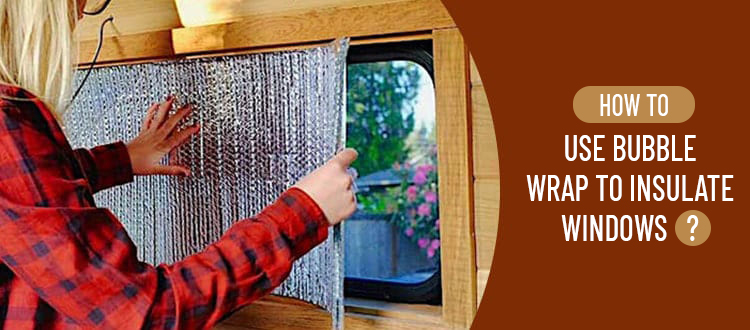
Insulating windows with a bubble wrap roll is a cost-effective and energy-efficient way to keep your home cozy during the cold winter months. Bubble wrap, readily available at most stores, provides excellent insulation by trapping heat and preventing drafts. This simple and accessible bubble wrap insulation for windows not only helps in maintaining warmth but also proves effective in preventing drafts and reducing heating costs. Here’s a step-by-step guide on how to install bubble wrap to insulate windows and enhance their energy efficiency:

Materials You’ll Need:

  • Bubble wrap roll
  • Scissors or utility knife
  • Measuring tape or ruler
  • Spray bottle with water (optional)

Step 1: Measure the Window

Start by measuring the dimensions of the window you want to insulate. You’ll want to cut the bubble wrap slightly larger than the window frame to ensure a snug fit.

Step 2: Cut the Bubble Wrap

Using scissors or a utility knife, carefully cut the bubble wrap to the measured dimensions. If you have a large window, you may need to cut several pieces to cover the entire surface.

Step 3: Wet the Window

If you’re working in a dry climate, consider spraying a thin layer of water onto the window’s surface. This will help the bubble wrap adhere to the glass.

Step 4: Apply the Bubble Wrap

Press the bubble wrap, bubble side facing the window, onto the glass. Make sure it adheres smoothly and covers the entire windowpane. You can use a damp cloth to press out any air bubbles and ensure a tight seal.

Step 5: Trim Excess

Trim any excess bubble wrap around the edges using scissors or a utility knife. Be careful not to damage your window frame.

Step 6: Repeat for Multiple Windows

If you have more windows to insulate, repeat the process for each one.

Step 7: Enjoy the Benefits

Once your bubble wrap insulation is in place, you’ll notice a significant reduction in drafts and heat loss. During the summer months, you can easily remove the bubble wrap to let in natural light.

Additional Tips:

  • Consider using double-sided tape to make the installation of bubble wrap insulation for windows even more secure.
  • Remove the bubble wrap in the spring and store it for future use.
  • Bubble wrap to insulate windows is a temporary solution, so it may need to be replaced over time.

Also Read: – Facts About insulation Service

Bubble Wrap To Insulate Windows: Buying Tips

Insulating your windows with bubble wrap can be a smart decision for both energy efficiency and cost savings. However, navigating the market to find the right bubble wrap for your needs can be a task in itself. Whether you are seeking affordability, durability, or specific features, these tips will serve as a valuable resource in your search for an optimal bubble wrap to insulate windows solution.

Roll Size

The cost of bubble wrap is typically influenced by the size of the roll, with larger rolls commanding a higher price. Smaller rolls are ideal for occasional use, offering convenience for smaller projects. In contrast, larger rolls prove to be more cost-effective for those with frequent packaging needs, providing ample material for multiple applications.

Bubble Size

Bubble wrap with larger bubbles is often priced higher because of its enhanced protective capabilities. The larger bubbles create a thicker layer of insulation, providing increased protection while still allowing ample natural light to filter through.

Quality

Premium bubble wrap, designed for heavy-duty or industrial applications, often comes with a higher price tag. Despite the elevated cost, it offers superior protection, making it an excellent choice for safeguarding valuable or delicate items during shipping or storage.

Quantity

Purchasing bubble wrap in bulk frequently leads to cost savings, as retailers often provide discounts on multi-roll packages. This approach is advantageous for those with larger packaging needs, offering both convenience and economic benefits.

Brand

Established and well-known brands often come with higher price tags compared to generic or lesser-known alternatives. While recognized brands may bring a certain level of trust and quality, consumers should weigh the brand reputation against their budgetary considerations when making purchasing decisions.

Measure carefully before buying

Measure the overall length of your windows when ordering bubble wrap packs, considering that unless the roll is excessively narrow, it may not adequately cover your window panes. It is advisable to opt for a larger size rather than a smaller one. Ensuring that the wrap you order is sufficiently large can reduce the need for extensive cutting or the inconvenience of piecing together multiple sheets to cover your windows.

Think twice before ordering perforated wrap

For more convenient usage, rolls of bubble wrap insulation for windows often come with perforated sections for easier panel separation. However, it’s essential to understand the length (height) of each piece in perforated rolls before making a purchase. While opting for perforated sections can be a practical idea to facilitate panel separation, it’s crucial to note that most rolls have perforations at approximately 12-inch intervals.
This may be impractical if your windows are not particularly tall. The entire concept is remarkably simple, making bubble wrap user-friendly and eliminating the need for tape. So, why go through the hassle of cutting additional pieces when you can easily assemble panels that align with your window dimensions?

Removing Bubble Wrap Insulation For Windows

When the summer season comes to an end, removing the bubble wrap insulation for windows is a simple task. Start peeling off each sheet from a corner, and the sheets come off easily without any sticky tape to handle. This effortless procedure ensures a smooth removal of the bubble wrap, leaving your windows free and clear.

Storage Tips For Future Use

Store the bubble wrap to insulate widows neatly in a closet or designated space where they will remain undisturbed until the next heating season. This ensures that the bubble wrap is kept in good condition and readily available for reuse when needed.

Make Your Home Winter Ready. Invest in Bubble Wrap To Insulate Windows!

Conclusion

Bubble wrap sheets used in window kits for insulation are notably thicker than standard thin plastic. The enhanced rigidity of this material makes it much easier to handle compared to thin plastic, which tends to stick and cling due to friction. By employing the methods mentioned above, you can effectively attach the bubble wrap to insulate windows without the need for splitting or tapping. This approach eliminates the requirement for thick plastic, thereby avoiding issues related to blow drying. Consequently, you save on potential expenses for window replacements. The method of bubble wrap insulation for windows discussed here is not only easy and fast but also hassle-free.

FAQ’s

1. Can I insulate windows with bubble wrap?

Yes, you can insulate windows with bubble wrap. By adhering bubble wrap to the glass, you create an insulating barrier that helps reduce heat loss and drafts.

2. Can I use bubble wrap as insulation?

Bubble wrap can indeed be used as insulation. When applied to windows or other surfaces, it traps air and acts as an effective insulator against temperature changes.

3. Does bubble wrap insulation really work?

Yes, bubble wrap insulation can be effective for temporarily reducing heat loss through windows by creating a layer of trapped air. It is most useful during colder months and is a cost-effective, DIY solution. However, its effectiveness depends on factors such as the type of bubble wrap, window quality, and proper installation. Bubble wrap may slightly impact visibility and natural light, making it a more suitable choice for single-pane or poorly insulated windows.

4. Is bubble wrap a good insulator for windows?

Bubble wrap is a cost-effective, temporary solution that can reduce heat loss through windows. It provides insulation by creating a trapped air layer. While not as effective as permanent solutions, it can be useful, especially for single-pane windows during colder seasons.

5. How do you insulate windows with foam board?

To insulate windows with foam board, measure, cut the foam board to fit the window frame, and secure it in place using double-sided tape or removable adhesive. This provides excellent insulation.

6. How do you install foil bubble wrap insulation?

Installing foil bubble wrap insulation for windows involves measuring and cutting the material to fit the desired area, ensuring the foil side faces outward. It can be attached using adhesive or staples, providing an effective radiant barrier and insulation.

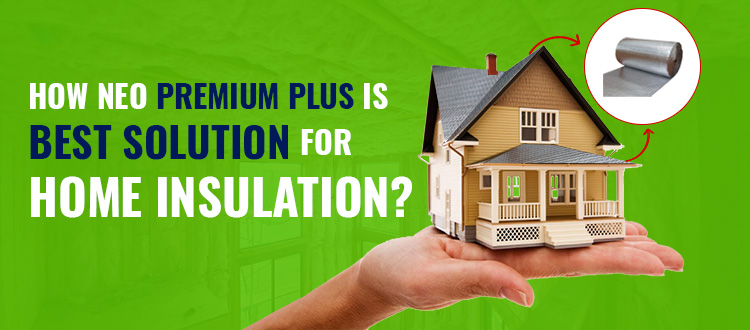
Why Is Neo Premium Plus the Best Solution for Home Insulation?

You might have heard about the term thermal insulation but ever wondered what it is? Thermal insulation is a modern technology that helps reduce the consumption of energy in buildings. Thermal insulation creates a building envelope which prevents loss or gain of heat. It is a type of a construction material which generally has thermal conductivity 0.1 W/mk or even lesser. The main job of a thermal insulator is to save energy and provide comfort to people. These are often used on the walls, floors and roof of the building.

Neo Premium Plus is a thermal insulator which is made up of a high resistance foil. It also has anti-corrosion properties which makes it an ultimate thermal insulation solution.

Product Options Provided by Neo Thermal Insulation

We also have a wide variety of insulation options available that you can choose from. Some of our products are:

● Neo single
● Neo Single Plus
● Neo Double
● Neo Double Plus
● Neo Premium
● Neo Premium Plus
● Neo Triple Advance
● Neo superior
● Neo Reflective Foil Tape

Neo Premium Plus is one of the best insulation options that we provide. Its features make it one of the best insulation options in India. Its premium quality, high resilience, and anti-corrosive features attract customers. It is the home insulation solution that you should go for right away but before moving into anything else, let us know why home insulation is essential.

Why Is Home Insulation Essential?

Home insulation is a perfect way to save energy. Yes, I am not talking about installing expensive solar panels or heat pumps to save energy. Simple insulation can help you save a lot of money. If you feel that you have been getting massive electricity bills, you should consider getting home insulation done. Home insulation controls the flow of air moving in and out of your house, thus acting as a thermal resistor. Insulation is one of the most efficient ways to save electricity bills. It will keep your home cold during the summer seasons and warm during the winter season. Hence your consumption of AC during summers and heaters during winters will reduce a lot. Therefore, you can save your valuable money.

There are other perks of home insulation, too, like it reduces outdoor moisture and noise. It also decreases the possibility of ice dam formation. With so many benefits, you should indeed consider installing a home insulation system. If you are still not sure about that, then go through this article. We have attempted to provide detailed information to help you make an informed choice.

Reasons Why Neo Premium Plus Is the Best Home Insulation Solution

The all-new Neo Premium Plus is manufactured from a non-corrosive, high resistance and defective foil. On both sides of the foil is a non-toxic closed cell fiber with extra thickness. There are also two layers of air bubbles present in between the foil. Here are a few reasons that make Neo Premium Plus the best insulation option available in the market:

Non-corrosive Foil

Corrosion in the insulation system has evolved as a familiar yet notorious problem, leading to cracks and damaging insulation. This problem usually occurs in places with high humidity or during the rainy season. Why will you want to invest in an insulation foil that will ultimately damage? It is the reason we have come up with a non-corrosive feature in the neo-Premium Plus. It is done using modern technology, which will protect the insulation system from corrosion even during the rainy season.

Thickness

Neo Premium Plus insulation foil has several benefits. It comes with a thickness of 20mm and is the thickest foil that we manufacture. The thickness of our other sheet ranges from 4mm to 12 mm. A thicker insulation sheet will always provide more protection to your building than a comparatively thinner sheet.

Reflectivity

An insulation sheet with good reflectivity has a lot of benefits. During summers, it will reflect heat from your building, thereby keeping your house cool. During winters, it reflects the heat in the direction of your office or home, thereby keeping your house warm. This feature of a Reflective insulation sheet will reduce your electricity bills drastically.

Therefore it is vital to go for an excellent Reflectivity insulation sheet. It is better than Neo Premium Plus, which has a reflectivity percentage of 97.

Read now:- Advantage and Benefits of Thermal Insulation

Operating Temperature

Make sure the insulation foil you select operates in the temperature conditions of your area. There is no use investing in an insulation foil that cannot handle your area’s weather conditions and temperature. Neo Premium Plus has a wide operating temperature range. It can comfortably operate in temperatures ranging from – 40 degrees to 90 degrees. Thus, this insulation sheet will work in Kashmir as well as Rajasthan!

Air Bubble Thermal Insulation

The Neo Premium Plus comes with a layer of air bubbles in between, making it an excellent insulator. The air in the air bubbles acts as a cheap and natural insulator. It also acts as a radiant barrier. And a radiant barrier reduces the transfer of heat by radiation.

Other Great Features of Neo Premium Plus Are

● Emissivity is of 3%
● R-value of 3.80 m 2 degree C/W.
● Standard roll width of 1.25 meters.
● Fire Retardant(BS 406 PART 6, PART 7)-Class 0-1
● It has been designed keeping in mind the hot Indian sun.
● Experts test the product.
● It also comes with a warranty to make your investment risk free.

Final Words

At Neo Thermal Insulation, we use the latest insulation technology to present the country’s best insulation options. Our every product is of high quality. Also, we strictly supervise our products at the time of manufacturing. We have used the latest technology to design and manufacture our neo premium plus. Our experts have tried to solve the issues faced by obsolete insulation options by using the world’s best insulation technology. Do not miss the experience of our top-notch services and make your office or home insulated.

Agricultural Building Insulation Guide-Things to Know About It

Are you looking for insulation of top-notch quality and the best services? Make sure that you are paying for some optimum quality products for your company. There are many heat insulators readily available in the market, therefore choosing the best and according to your need may be confusing. Please read this article carefully to understand more about the heat insulators in farms, its uses, and other insulating machines.

How do Heat Insulators Help Farms?

All farmers keep in mind the maximum capacity of their storage and carry out farming. It won’t be beneficial if you do not have a big storage area that has insulating services. Without insulation, the produce will rot within no time. Insulators help keep the storage area’s temperature in control so that the fruits or vegetables are good for present and future sales.

In the present situation, there are no storage areas without insulating services. With its help, you can easily store your vegetable for future sales and profit from the entire season. In winters, the insulators will increase the temperature in the storage, and in summers, it brings down the heat. That allows you can check the decay period of fruits and vegetables. Even during the off-season, there remains a need for specific fruits and vegetables. You can sell them at more increased prices, thus incurring profits.

Now you must know that several types of equipment to control temperature are available in the market at a low price. Remember to install only those who are professionals in this sector and provides the best services and machines.

How does Insulating Farm Works?

You can install insulating roofs in your farms that will keep the temperature in check and forbid the decay or rotting of vegetables. Farmers worldwide carry the burden of maintaining the right temperature, which is harder during season change.

The winter veggies and fruits need a cold temperature to survive; therefore, insulating roofs are necessary. The insulation does not allow the warm weather to affect the storage and keeps them safe from rotting at any given point.

The insulating cavity seals the storage area and retains the conditioned air, providing the perfect temperature for months or several years. Farmers carrying out intensive farming need these types of advanced equipment the most. Vegetables, such as potatoes and tomatoes, are common and required throughout the year in many countries and regions. Though it needs cold temperatures to survive, which is not possible around the year, you can produce potatoes all around the year with the insulating farms.

Optimum insulating material saves more than 30% to 45% of the energy required to cool or heat the storage sections. However, you must remember to choose only the best materials from the market at a reasonable price. Sometimes a customer thinks over-priced material will render the best result, but they are mistaken.

Where can you Install Insulating Materials?

Poultry farms, greenhouses, cold storage sections, pork sheds, farmhouses, wherever you need to control the temperature artificially, insulation is possible. It would help if you kept in mind that the insulating materials help to preserve the temperature. If you need to cut down the cost of providing energy in your farmhouses, roof insulation is the best option. It saves more energy when compared to the insulating floors and walls.

It has several scientific reasons- as the warm air is lighter than the cold air, it tends to exit from above (roofs). Therefore insulating the roof with optimum material from reputed companies is wise.

Read Now:- How to keep home cool in summer

Types of Insulating Materials According to Agricultural Needs

There are different types of unique and advanced insulating material for all purposes. Some of them are mentioned below:

1. Spray Foam Insulations

Farms that need to store edibles for mid-season can opt for spray foam insulations as they fulfill the requirements for a short period. The spray foam is mainly soy-based and sometimes also petroleum-based in liquid form. These materials are heated or mixed in large containers to apply on the insulating surfaces. After using the foam, it automatically expands on the surface, filling all the existing cracks on walls or floors.

It creates a radiant barrier and maintains the required temperature. Depending upon the need, the density of the foam insulations differs. Generally, they are closed-cell or open-cell (high or low density, respectively). Farmers use this process to ensure there is no moisture in the storage section and obstruct air circulation.

2. Insulation Boards

Generally, the insulating material is cut into composite boards according to the required size to insulate the area. Material such as extruded polystyrene renders better strength and is rigid. Professionals cut out the panels and fix them on the required sites with caulk or foam.

3. Insulation Batts

It contains materials such as fiberglass, sheep’s wool, and rock wool from the volcanic rocks. These materials work as a blanket fixed on the required surface.

4. Reflective Insulations

You can efficiently insulate the roof of your storage area with the help of insulating roofs. These are mainly foil-type insulations that retain the temperature within the confined space. If you can provide reflective insulations and the insulation batts or boards, it will render the best results.

About Neo Thermal Insulations

Neo Thermal Insulations have changed the entire insulating business. They have set their benchmark set at such a level that few companies can even reach. The vast customer base all across the globe speaks for itself about its products and dauntless services. Neo is one of the best thermal insulation material suppliers in India.

The company provides top-notch products with effective services, making them reach and survive at pole positions. Therefore, choose Neo Thermal Insulations for the best work and longevity.

Conclusion

Through this article, you will understand the need and efforts of insulating farms. Keep in mind to choose only the best for quality products and services. If you have any queries about Neo Thermal Insulations, do not forget to check their website. Do not hesitate to call or email them for more information.

How does Insulation Work?

Thermal insulation is a great solution for people worldwide who prefer comfortable living spaces. An alternative to eclectic cooling and heating systems, thermal insulation packs the house, office, warehouses, machines and almost everything to prevent the impact of external temperature.

Still, have you ever wondered “how insulation works” and how it keeps our home warm or cool despite the external temperature? Today in this blog, we will talk all about the working mechanism of insulation and its types and benefits.

What is Insulation?

What is Insulation?

Thermal insulation is basically the solution that comes in various forms like spray, blocks, sheets, foam, and much more. The core purpose of insulation solutions is to prevent external heat or cold from entering the space and maintain a comfortable living temperature without the use of any energy-based heating or cooling system. This solution basically keeps the inner and outside temperatures disconnected so that they don’t interfere with each other.

As per Precision Business Insights, the thermal insulation market was valued at $28.6 billion in 2022, which is all set to grow with a CAGR of 7.2% between 2024-2030. The market is all set to achieve a valuation of $35.6 billion by 2029. Having gone through the ever-growing market and increased adoption of insulation products around the world, let’s understand the definition and how does insulation works.

Want to know How Insulation can Transform your Comfort?

How does Insulation Work?

To make the insulation work, sheets or blocks are installed over/under any surface. These layers restrict heat loss and heat movement. So, the outside temperature is trapped inside the wall only and does not enter the room. Similarly, inside temperature is kept inside the space only. This mechanism enables the insulation solutions to keep the room warmer, cold or a comfortable temperature as per personal preferences.

Thermal insulation can even reflect radiation as well as decrease the conduction potential and convection. Materials with a low conduction rate are used in the insulation which prevents the heat from flowing from one surface to another surface. Some insulation sheets, depending on personal choices and quality, even help to deal with moisture risk, fire hazards, and noise disturbance.

There are different parts of the house of any property that need to be insulated to maintain the efficient temperature throughout the property. Here are the main types of insulation that enable the owners for a comfortable living.

Types of Insulation

Roof Insulation

Roof insulation sheets, as implied by their name, are primarily deployed in the roof section of a building. Insulating materials with reflective properties are used for the same that reflect back the sunlight and don’t allow the external heat to enter the premises.

Wall insulation

Wall insulation sheets are installed inside or outside the wall of the house. These sheets trap the heat inside the wall and thus maintain a comfortable temperature inside the room or any space.

Ceiling insulation

Attic insulation or ceiling insulation is installed in the inner upper layer of the house that doesn’t allow the heat or cold to enter the house from the top area.

Floor insulation

Floor insulation is mainly used in the winter to keep the floor warm. The insulation sheets are installed beneath the floor that prevent the low temperatures from entering the room via the floor.

What is the Process of Insulation?

Insulating a particular area or surface requires utmost care and the professionals have to follow a certain procedure to ensure that the thermal insulation process is efficiently carried out. Here are the main steps that help in the process of insulation.

Process of Insulation

Measuring the Area

First of all, the professional measures the area of wall, roof, ceiling, floor, or any surface that has to be insulated. Width between the stud and measuring the wall gaps is the standard practice of measurement which ensures that insulation works efficiently.

Choosing the Right Insulation

In this step, the installation professionals choose the right insulating material after assessing the area that needs to be insulated as well as the requirement of the client. Majorly, the R-value plays a significant role in determining the right material.

Using the Right Tools and Equipment

It is very important that whoever installing the thermal insulation uses the right tools and equipment along with a PPE kit if necessary during the process. It makes sure that person-in-charge doesn’t get injured.

Fitting the Batts into Studs

Having measured the surface, the batts of insulation are cut down in the perfect shape and sizes. These batts are then fitted into the studs to insulate an area.

Secure the Batts

To ensure that batts don’t come out of the studs, a staple gun is used to attach the paper lining every 7 inches.

Applying Vapour-Retardant Barriers over Batts

In the end, a vapor-retardant barrier film is applied over the insulation which helps to maximize the thermal potential of the insulation and achieve better results.

Types of Insulation and Their Working

There are different types of thermal insulation with different qualities, costs, purposes, and the way insulation works. Here are the main types of insulation that are used widely by people in their houses, offices, warehouses and other spaces.

Types of Insulation

Blanket: Batts and Rolls

This insulating material is made up of fiberglass mineral (slag or rock) wool, natural fiber, and plastic fibers. This insulation is mainly used in new construction projects for acoustic benefit. Talking about homes, it is mostly used in attic insulation for better temperature maintenance.

Concrete Block Insulation

Concrete block insulation is made up of foam boards that are fitted outside of the wall or inside of the wall during construction. Mostly, air is incorporated into this insulation to increase its R-value. This insulation is helpful in waterproofing during backfilling.

Foam Board or Rigid Board

Foam boards or rigid boards are made up of polystyrene, phenolic, or polyurethane. These are mostly used in unfinished walls, floors, or ceilings. It is applied in commercial and residential buildings that prevent the air from entering the premises.

Insulating Concrete Forms

Made up of foam boards and foam blocks, this insulation is used for the foundation walls in new constructions. Along with maintaining the temperature comfort, this insulation is used widely to incorporate strength into the structure.

Reflective System

As the name suggests, this solution reflects back the heat and doesn’t allow the temperature to enter inside the premises. It is made up of cardboard, polyethylene bubbles, and plastic films. This insulation is used in buildings with high sunlight exposure.

What is The R-value of Insulation?

Insulation work involves understanding how insulation functions. R-value simply refers to the capability of the material to prevent the surface from heat and reflect back or lock the high temperature inside the surface only. The higher the R-value, the better will be the resistance, and thus more effective the material to prevent the internal temperature from getting affected by the external temperature.

The requirement of R-value during insulation differs from area to area on the basis of their regular day temperature. Different insulating materials have different R-values and the customers choose the right insulation material after analysing factors like requirements, area, budget and personal preferences.

Explore our Range of Insulation Solutions Today!

Benefits of Thermal Insulation

There are a range of benefits that thermal insulation can provide to the building. Here are some of the advantages that you can leverage by choosing the right thermal insulation for your place:-

  • Thermal insulation helps save a lot of energy by preventing the external heat or cold from entering the house. The reliance on electric heating and cooling systems decreases which reduces the utility bills.
  • The dependence on the electricity supply decreases into fractions which saves you a lot of money.
  • Electrical heating and cooling systems cause a range of negative impacts like global warming and carbon footprints to the environment. Thermal insulation solutions, on the other hand, are environmentally friendly.
  • Thermal insulation has been proven very effective for its acoustic properties as it doesn’t allow outside noise to enter the premises.
  • Most of the thermal insulation products are fire resistant which makes sure that your property is not exposed to fire hazards.
  • Thermal insulation prevents moisture and condensation in a building which helps to maintain a stable and comfortable temperature.
  • Thermal insulation products come with a long-life warranty that brings down the maintenance costs into fractions.

Choosing The Right Insulation For Your Home

While there are ample range of insulation products that will help you get a comfortable living, what is more important for you is to choose the right insulation provider. You need not to worry about how does insulation works as Neo Thermal Insulation is there for you to answer all the questions and suggest the right insulation material according to your needs. All of our products are of high quality and require least maintenance. Moreover, we provide our services pan India along with door-to-door assistance post-installation. So, choose Neo Thermal Insulation for all your insulation needs.

FAQ for Insulation Work

What is the Purpose of Insulation?

The foremost purpose of insulation is to restrict the outside temperature inside the house and maintain a comfortable living temperature. However, there are many other purposes like acoustic benefits, fire resistance, water leakage and more that come with thermal insulations.

What is the basic Principle of Insulation?

Thermal insulation restricts the movement of heat through the surfaces. So, the outside temperature can not move inside the house and vice-versa. Thus, it helps to keep the house or any space cool or warmer for a longer time.

Which type of insulation is best?

Foam insulation is considered the best one that creates the air seal in your space. Thus, maintaining the same temperature for a longer time saves you a lot in electricity and energy utility bills.

How Insulation Works in Your Home?

Answer- Insulation when applied in your home, doesn’t allow the external temperature to come in contact with the inside temperature. As there is no connecting point between the external and internal atmosphere, the space remains at the temperature that you prefer for a longer time.

How can Roof Insulation Solution help to keep the heat In?

The roof is one of the prime supporting structures of the building. So, if you are trying to implement an ultimate insulation solution, then, you must ensure that your roof is heat-proofed. Additionally, it must be sturdy as the roof stays exposed to harsh natural calamities. Colour coated sheets act as great insulation for your roof. Additionally, they add to the aesthetic look of your building and increase the lifespan of the roof. So, in this article, we are going to discuss the best Roof Insulation Solution for your building.

Types of heat insulation roof sheets:

Tiled heat insulation sheet
Corrugated heat resistant sheet
Troughed heat insulation sheet

Before we move on with the various types of roof sheets, we must discuss the advantages of Roof Insulation Solution:

Durability

These sheets are very durable. For instance, they will last up to 10 years without any form of maintenance. So, these sheets will help you to reduce all the unnecessary maintenance costs.

Flexibility

They are very flexible and can transform into various shapes. Thus, you have different customization options to enhance the look of the building. So, these sheets are the best choice for the renovation of old buildings.

Corrosion Resistant

Roof materials suffer from two types of corrosion: galvanic corrosion and crevice corrosion. So, Heat insulation sheets are made of aluminium to be completely corrosion resistant. Additionally, you can paint them to keep them isolated from parts of the building that might have already corroded. Moreover, corrosion can also occur when salt, sand, or dirt gets between the two layers of the roof sheet but the acrylic paint on heat insulation sheets prevent all these activities.

Thermal Insulation

The primary aim of this article is to find the best Roof Insulation Solution for any building. So, these sheets are one of the leading industrial insulation solutions. For instance, this sheet not only prevents heat loss from the building but also don’t allow excessive heat gain from the atmosphere. Additionally, they help to save your energy consumption bill as you don’t have to make up for any loss of heat energy. For example, these sheets can reduce up to 50% heat absorption during summers and up to 40% heat loss during winters.

Attractive

These sheets come in various shapes, sizes, and colors. Additionally, you have the choice to customize them according to your taste or building type. So, a colour-coated heat insulation sheet will help to uplift the aesthetic looks of your building.

Completely recyclable

These sheets are either made from aluminum or a special polymer that has high reusable abilities. Additionally, they are recyclable without any garbage production. So, they are very environment friendly and doesn’t harm the natural balance around us.

Other possibilities for a proper Roof Insulation Solution

Many people might consider heat insulation sheets to be a generic insulation solution. However, there is various other Roof Insulation Solution that is unique and gives good results. So, let us take a look at some other insulation solutions.

Shade the Roof

During the hot summer days, when the heat gets unbearable, a human looks for a shade under a tree or umbrella. This instinct justifies that if there is something to prevent direct contact of sunlight, then you can reduce the total heat absorption. So, if you can create shade above your building then you can increase the insulating abilities of it. Additionally, you can plant some trees on the roof to enable the absorption of heat. You can use the GI Sheet, Mangalore Tiles or canvas for making the roof shade.

Top Insulation

This is a common insulation practice in cold areas. People cover the roof with flexible heat insulation layers that trap the heat inside the roof. Some other names for this type of insulation are blanket insulation or bat insulation. This insulation process uses materials such as animal hair, cotton, woollen fibre, etc. Moreover, the sheets are 12 to 80mm thick to ensure that they serve as an excellent heat absorption medium. The insulation process is useable for all types of roofs, and you can even customize the sheets to match the style of your building. Additionally, you can use these sheets for the walls of your building to ensure complete insulation of your house.

Inbuilt insulation

It is a modern insulation process. While the building is under construction, you can integrate the insulation process within the roof. You can do this by filling the entire roof with Hollow clay panels and lightweight foam concrete panels. This insulation process has three primary benefits. They are:

You can reduce the total consumption of the building as you will fill the mixture with insulating materials.

Due to less concrete, the overall weight of the building will be comparatively low. So, your building is safe against most natural disasters.

As the insulating material is present within the concrete, the insulation ability of the roof will increase drastically.

Another term for these insulating roofs is Filler slab roofs. So, this is great for Roof Insulation Solution.

Conclusive news on Roof Insulation Solution

Thermal insulation of a building is necessary to save the environment. For instance, if we can reduce the total heat emission from every building, we will be able to bring global warming under control. Moreover, you will save a lot of money that you have been wasting on your excess energy bills. Additionally, many governments recommend that buildings constructed before 1980 must get repaired with proper insulation process. It will help to reduce the average carbon footprint. Thus, we can conclude that a decent Roof Insulation Solution is very crucial for us and the environment.

Process to Thermal Insulate Buildings with Pre-engineered Building Manufacturers India

The natural condition of the earth is in huge danger due to our activities. In other words, global warming is disturbing the ecological balance of the earth. Heat emissions cause an increase in the average atmospheric pressure and harms the nature. Buildings all around the world are one of the prime thermal emitters. There are various companies like Pre Engineering Building Manufacturers India that help to curb the thermal emissions from all types of buildings. So, in this article, we are going to discuss the various method to thermally insulate the buildings.

Role of companies like Pre Engineering Building Manufacturers India

No individual can insulate his house on his own. Moreover, the story is a lot more complex when it comes to a large building like a factory. Thus, you need experts who have years of experience in this field to have effective insulation. So, companies like Pre Engineering Building Manufacturers India, are the best choice for this job. Now, it’s time to take a look at all the best thermal insulation practices.

Slab or block Insulation

This is the most common and cost-effective insulation practice. Here, you have to fix the insulator slabs to the walls of the roof. These slabs help to control heat loss or gain and thus maintain the optimal temperature in the building. You can use materials like mineral wool, corkboard, cellular glass, and cellular rubber or sawdust for this purpose.

Blanket Insulation

This is the complete opposite of slab insulation. In blanket insulation, you have to put the insulating sheet directly over the roof of the building. These sheets are usually very flexible and can adapt to almost all roof types. You can use material such as animal hair, cotton, woolen fiber, etc for this purpose. These sheets are usually 12 to 80mm thick and serve as excellent heat absorption medium.

Loose-Fill Insulation

This is an advanced insulation process. A stud space is provided between the two layers of the wall. Now, you can fill this space with some insulating material. Thus, the heat will get trapped between the two layers of the building wall. For loose-fill insulation, you can use rock wool, wood fiber, cellulose, etc. This insulation is most commonly used in cold regions.

Read Also: – How to insulate window using bubble sheet roll

Bat insulating materials

Bat insulation is very similar to blanket insulation. The only difference is that bat inclusion sheets are thinker than the blankets. You can use cellulose, woolen fiber, for bat insulation. Additionally, just like blanket insulation, these are also spread over the walls and roof of the building.

Insulating boards

You can use pulpwood or cane to make insulating boards. The pulp is pressed with pressure under a certain temperature to turn it into sheets. Now, you have to attach these sheets to the inner side of the building to block your room temperature from being emitted through the walls. These boards are very cheap to make and thus they are very cost-effective. Companies such as Pre Engineering Building Manufacturers India make these sheets to allow insulation on a budget.

Reflective Sheet Material

Aluminum sheets, gypsum boards, steel sheet have high reflective and heat resistance capacity. This means that when this sheet will come in contact with solar heat, it will reflect it straight back. So, these materials are best for houses or buildings that are located in tropical areas with high average temperatures. These sheets can also be used to maintain a low temperature in large refrigeration units.

Lightweight Materials

This is a very easy insulation practice. During the construction of the building, certain insulating materials such as blast furnace slag, vermiculite, burnt clay aggregates, etc are mixed with the concrete mixture. These increase the heat resistance of your house and don’t need to do any sort of separate insulation in your house.

Proving a proper roof shading

If you can block the direct sunlight on your roof then, you can increase the heat efficiency of your house. Thus, you can construct a shade on your roof for this purpose. Moreover, you have to ensure that the angle of the shade is accurate to the direction of the sun. Companies such as Pre Engineering Building Manufacturers India provide innovative ideas for roof shading. They also have various customization options to help the shade blend in with the aesthetic of your building.

Conclusive view on insulation practices by Pre Engineering Building Manufacturers India

So, we can conclude that the thermal insulation of a building is very crucial to saving the environment. Additionally, it will save a lot of your energy bill that you have been wasting to make up for the heat loss due to non-insulation. Pre Engineering Building Manufacturers India has been doing building insulation for years., So they know everything there is to know in this field. Thus, you can blindly rely on them to provide you with the best insulation. Moreover, many governments have made it mandatory to have some sort of insulation in all buildings.

Talk to us?

Download Brochure