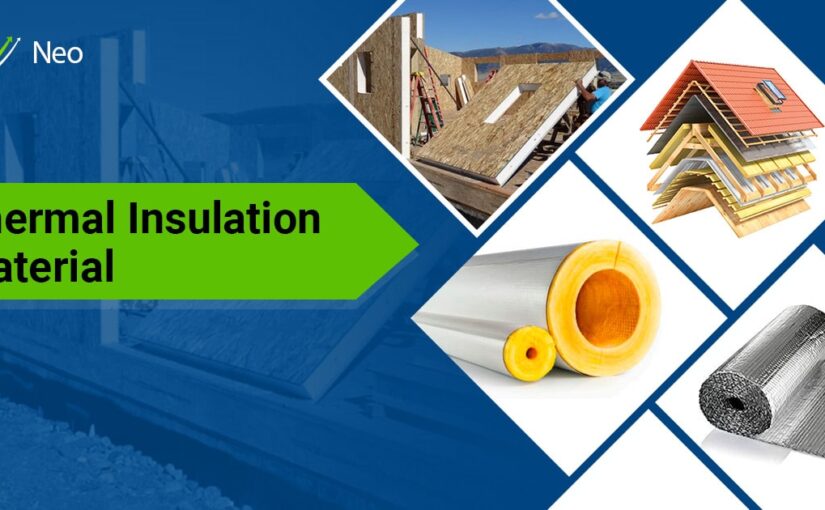
In the rapidly evolving industrial and construction sectors, thermal insulation plays a pivotal role in improving energy efficiency, reducing operational costs, and ensuring environmental sustainability. As industries across India increasingly focus on energy conservation and green building practices, the demand for high-quality thermal insulation materials has surged. This has led to the rise of some of the most innovative thermal insulation manufacturers in India, who are shaping the future of smart infrastructure.
Understanding Thermal Insulation and Its Importance
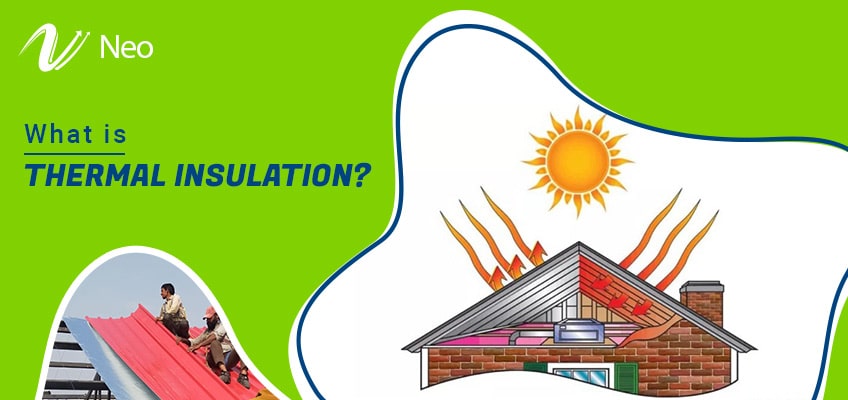
Thermal insulation refers to the process of reducing heat transfer between objects or environments of differing temperatures. In practical terms, it means maintaining indoor comfort by keeping heat out in summers and trapping it in during winters. Whether it’s residential buildings, commercial establishments, industrial plants, or cold storage facilities, insulation is vital for energy efficiency and thermal comfort.
In India, with its diverse climatic zones from extreme heat in Rajasthan to frigid temperatures in the Himalaya the need for advanced insulation solutions is more pronounced than ever. This makes the role of thermal insulation manufacturers in India critical to addressing regional and industrial thermal management needs.
Innovations by Thermal Insulation Manufacturers in India
Modern thermal insulation manufacturers in India are no longer just suppliers of conventional materials like fiberglass or rock wool. Companies such as Neo thermal Insulation have redefined industry standards by focusing on innovative insulation technologies that are eco-friendly, long-lasting, and tailored to specific applications.
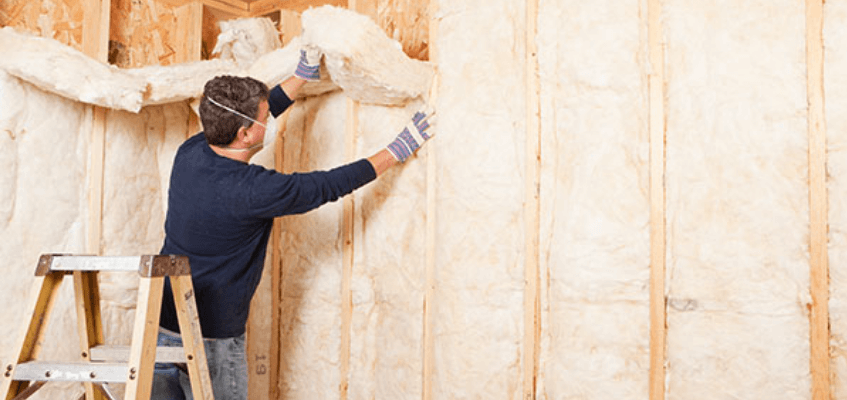
These manufacturers offer a wide range of products, including
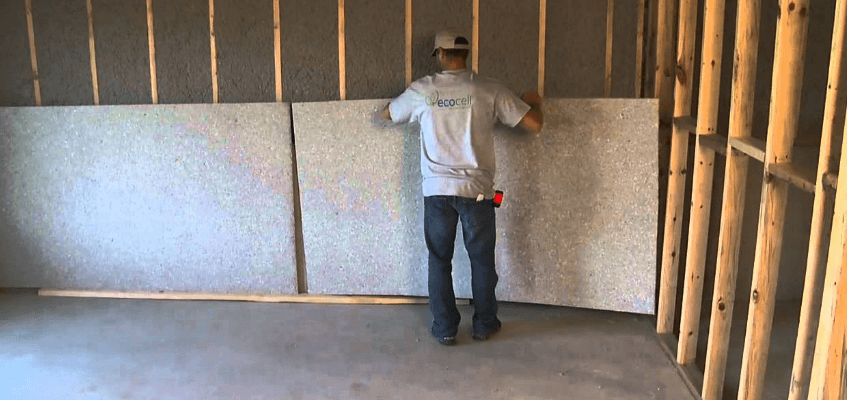
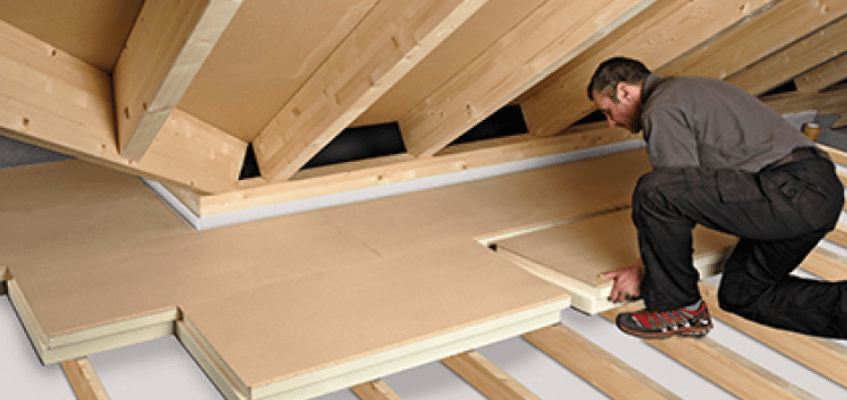
Rigid and flexible insulation boards
Pipe insulation solutions
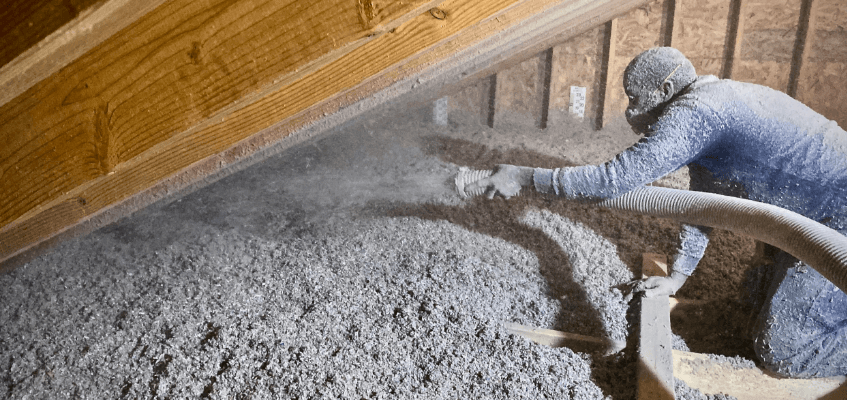
Spray foam and reflective insulation
Acoustic and thermal hybrid materials
What sets leading manufacturers apart is their commitment to R&D, quality assurance, and compliance with global standards such as ISO, ASTM, and IGBC green building norms.
Key Sectors Driving the Demand for Thermal Insulation
Several sectors in India are contributing to the rising demand for insulation products:
1. Construction and Real Estate
With the rapid urbanization and the growth of smart cities, builders are turning to thermal insulation to meet energy efficiency benchmarks and reduce HVAC costs.
2. Industrial Applications
Industries such as cement, steel, oil & gas, and pharmaceuticals rely heavily on thermal insulation to maintain process temperatures, reduce energy loss, and enhance worker safety.
3. Cold Storage and Food Processing
Thermal insulation ensures the integrity of temperature-sensitive goods and minimizes refrigeration energy usage an essential factor in India’s growing cold chain logistics.
4. Automotive and Aerospace
As India becomes a hub for automotive and aerospace manufacturing, thermal and acoustic insulation solutions are becoming critical in enhancing vehicle performance and passenger comfort.
Why Choose Indian Manufacturers?
India is emerging as a global hub for insulation material production due to:
Cost-effective manufacturing
Skilled labor and engineering expertise
Growing domestic demand
Strong export potential
Companies like Neo thermal Insulation offer high-performance, durable, and environmentally responsible insulation products that can compete with international brands at a fraction of the cost.
Sustainable Practices and Eco-friendly Materials
The global emphasis on sustainability has influenced Indian manufacturers to adopt eco-conscious production methods. Many now offer recyclable, non-toxic, and zero-VOC insulation materials. These innovations support India’s commitment to reducing its carbon footprint and achieving net-zero emissions by 2070.
Green certifications, LEED compliance, and partnerships with energy-efficient building programs demonstrate how these manufacturers contribute to sustainable construction and industrial practices.
Choosing the Right Thermal Insulation Partner
When selecting a thermal insulation provider, it’s crucial to evaluate:
Product range and customization
Quality certifications and test reports
Installation support and after-sales service
Track record in similar industry segments
Neo thermal Insulation, for instance, provides a consultative approach, helping clients choose the right product mix, perform thermal audits, and optimize insulation designs. Their technical expertise ensures that each project meets thermal performance goals efficiently.
Future of Thermal Insulation in India
The future looks promising for the thermal insulation manufacturers in India. With increasing energy regulations, growing awareness about sustainable practices, and technological advancements, the industry is set to grow at a CAGR of over 5% in the next five years.
Government initiatives like the Energy Conservation Building Code (ECBC) and industry incentives for sustainable manufacturing are further fuelling the growth of insulation technologies. Moreover, as infrastructure projects scale up, both in public and private sectors, thermal insulation will become an integral part of all construction and industrial planning.
Conclusion
In a climate-conscious world, where energy efficiency is no longer optional but essential, thermal insulation manufacturers in India are playing a transformative role. Their focus on quality, innovation, and sustainability not only meets the needs of diverse industries but also contributes to India’s vision of a greener, more energy-efficient future.
If you’re seeking reliable, efficient, and forward-thinking insulation solutions, partnering with a top-tier manufacturer like Neo Thermal Insulation ensures your project achieves both performance and environmental goals.
Frequently Asked Questions (FAQs)
1. What is thermal insulation and why is it important for the future? Thermal insulation reduces heat transfer, improves energy efficiency, and supports sustainable construction, making it essential for future-ready buildings.
2. Why are Indian thermal insulation manufacturers gaining global attention? Indian manufacturers offer high-quality, cost-effective, and innovative insulation solutions that meet international standards.
3. What types of thermal insulation products are commonly manufactured in India? Products include air bubble insulation, reflective insulation, glass wool, rock wool, and industrial insulation solutions.
4. How does thermal insulation help in energy savings? It reduces cooling and heating loads, lowers electricity consumption, and cuts long-term operational costs.
5. Which industries benefit most from thermal insulation in India? Warehouses, factories, power plants, cold storage, commercial buildings, and residential projects benefit significantly.
Are you looking for a smart way to keep your indoor temperature balanced without skyrocketing energy bills?
Well, That is where radiant roof insulation comes in. It is designed to reflect heat rather than absorb it. Which keeps the home cooler in the summer and warmer in the winter naturally and reduces energy costs.
The demand for this energy-efficient solution is increasing and homeowners prefer radiant roof insulation. Because of its energy efficiency, cost savings and eco-friendly benefits.
If you are planning for radiant roof insulation in your new or existing home, this guide will be helpful.
In this guide, we will understand everything about radiant roof insulation, how it works, its benefits, types, common myths, and the proper installation process to get the max out of it.
What is Radiant Roof Insulation?
Radiant roof insulation is also known as a radiant barrier. It is a smart way to keep your home cooler in summer and warmer in winter. By reflecting heat instead of absorbing it.
It uses thin aluminum sheets or reflective materials to block heat from entering or escaping. Which keeps the indoor temperature balanced and comfortable in all seasons.
Unlike traditional insulation, which slows down heat transfer. Radiant insulation completely stops heat before it gets in.
Plus, when combined with regular insulation. It makes your home more comfortable and energy-efficient. Plus saving money on electricity bills.
How Does Radiant Roof Insulation Work?
Radiant roof insulation is a sheet that acts like a barrier. It reflects heat away instead of absorbing it. This helps keep your home cool in summer and warm in winter. Which reduces the need for air conditioning and heating. Let us understand the science behind it:
Heat moves in three ways:
Conduction: Heat travels through solid materials (like a hot roof warming up your attic).
Convection: Heat moves through the air (like warm air rising in a room).
Radiation: Heat spreads in the form of invisible energy (like the sun heating your roof).
Traditional insulation (like fiberglass or foam) slows down heat transfer. But it still absorbs heat. Radiant insulation reflects heat instead of absorbing it. Which keeps your home cooler.
When it comes to checking the effectiveness in different climates:
Hot Climates: Very effective and reduces cooling costs by keeping heat out.
Cold Climates: Helps retain warmth but works best when combined with regular insulation.
Mixed Climates: Useful all year round for improving energy efficiency.
Benefits of Radiant Roof Insulation
Here are some key benefits of radiant roof insulation:
Energy Efficiency
Radiant insulation helps lower energy use. By blocking heat from entering in the summer and keeping warmth inside in the winter. This means your air conditioner and heater do not have to work as hard. Which reduces your electricity bills.
Improved Indoor Comfort
By reflecting heat away, radiant insulation prevents rooms from getting too hot in summer. In winter, it helps keep the warmth inside. So your home stays at a more comfortable and steady temperature all year. Without sudden temperature changes.
Eco-Friendly Solution
Since radiant insulation lowers energy consumption. It reduces the amount of fossil fuels burned to generate electricity. This means less pollution and a smaller carbon footprint. Which makes it a greener choice for the environment.
Extended Roof Lifespan
Excessive heat can damage roofing materials over time. Which causes cracks, warping, and faster wear and tear. Radiant insulation reduces heat build-up. It helps your roof last longer and reduces the need for frequent repairs or replacements.
Cost-Effective Investment
While installing radiant insulation requires an upfront cost. It saves you money in the long run by cutting down on cooling and heating expenses. Over time, the energy savings add up. Which makes it an innovative and cost-effective investment for homeowners.
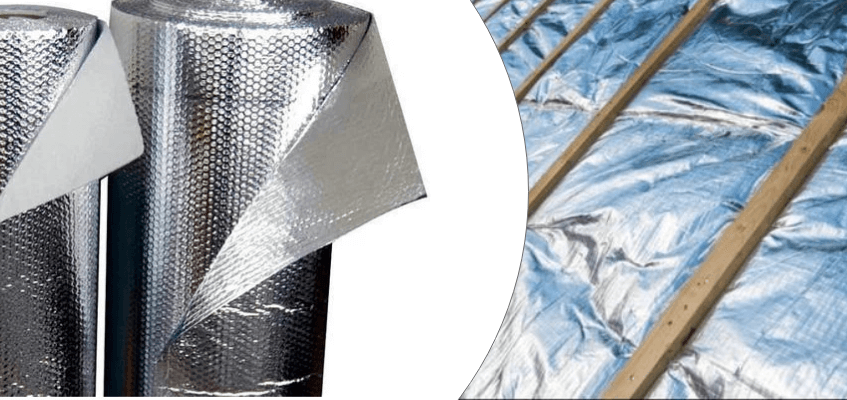
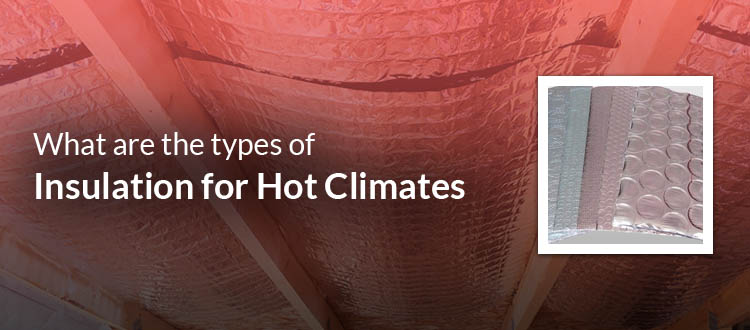
Foil-based radiant barriers are thin aluminum sheets. They are attached to materials like paper or plastic. They are installed under the roof or in the attic to reflect heat away. Which prevents it from entering your home. This type works best in hot climates to reduce cooling costs. And needs an air gap for maximum effectiveness.
2. Reflective Insulation with Air Gaps
Reflective insulation combines shiny foil layers with materials like bubble wrap or foam. Which provide both heat reflection and insulation. The built-in air gaps slow down heat transfer. And making it useful in both hot and cold climates. It can be installed on roofs, walls and ceilings for better energy efficiency.
Installation Process of Radiant Roof Insulation
There are two ways to use radiant roof insulation:
DIY Insulation
Professional Installation
Let us understand both ways and their pros and cons!
DIY Insulation
Some homeowners have basic handyman skills. And they prefer to install radiant barriers themselves instead of hiring an expert. But, proper knowledge and safety precautions are required. The process of DIY installation typically involves attaching the reflective insulation to the underside of the roof, on attic rafters, or over existing insulation. DIY installation is cheaper but requires careful handling to avoid mistakes that reduce effectiveness.
Professional Installation
Hiring professionals ensures the radiant insulation is installed correctly and efficiently. Experts assess the attic space, ventilation, and existing insulation to determine the best placement for maximum performance. They also use specialized tools and techniques to minimize installation errors and get the work done perfectly. Plus, they take complete responsibility for the installation.
If you are experienced in home improvement projects and comfortable working in attic spaces, DIY installation may be an option. However, for larger homes, complex roof structures or long-term performance, professional installation is recommended.
Best Placement for Maximum Efficiency
To get the most out of radiant insulation, the best placement is key. Here are some of the best places to install radiant roof insulation:
Under the Roof Deck: You can install it on the underside of the roof rafters to reflect heat before it enters the attic.
Attic Insulation: Placed on top of existing insulation. It helps trap indoor heat during winter, preventing radiant heat loss and keeping the home warmer.
On Walls or Ceilings: Installed behind drywall or inside walls. It adds an extra thermal barrier, improving insulation in both hot and cold climates when combined with other materials.
Common Mistakes to Avoid
Here are some common mistakes to avoid:
Blocking Ventilation: Do not cover attic vents or block airflow. This can trap heat and moisture, which leads to more significant problems. Try always to keep vents clear.
No Air Gap: Radiant barriers need space to reflect heat. If they are pressed against wood or insulation, they would not work. Leave at least a ¾-inch gap for best results.
Leaving Gaps or Overlapping Too Much: Too many gaps or excessive overlapping reduces efficiency. Seal edges with foil tape and follow installation guidelines for proper coverage.
Using the Wrong Type of Insulation: One-size-fits-all does not work here. Foil-based insulation is excellent for hot climates. Double-layered reflective insulation is better for colder regions. Pick what suits your weather.
Thinking It Replaces Traditional Insulation: Radiant barriers reflect heat. But they do not trap it like fiberglass or foam. For maximum energy savings, use both together.
Common Myths About Radiant Roof Insulation
Here are some common myths about radiant roof insulation:
Myth: Radiant barriers make roof shingles too hot. Fact: They only increase shingle temperature by a few degrees. Which is not enough to cause damage.
Myth: Radiant barriers can replace regular insulation. Fact: They work best with traditional insulation by reflecting heat, not stopping heat transfer like fiberglass or foam.
Myth: Radiant barriers only help in very hot climates. Fact: While more effective in hot areas, they also help reduce summer heat gain in milder climates.
Myth: Dust makes radiant barriers useless. Fact: Dust can slightly reduce effectiveness, but proper installation and attic ventilation help prevent build-up.
Myth: Thicker radiant insulation works better Fact: Unlike traditional insulation, thickness does not matter; instead, a proper air gap is key to performance.
Conclusion
Radiant roof insulation is a smart way to keep your home cooler in summer and warmer in winter. Plus cutting down on energy costs. It works best when installed properly. While radiant barriers alone would not replace traditional insulation, they work together to maximize energy savings and comfort. We hope this guide helps you understand radiant roof insulation, its types, benefits, myths and installation ways.
Now, suppose you are looking for a reliable and trusted roof insulation manufacturer. In that case, Neo Thermal Insulation is a leading name that is known for offering high-quality and certified insulation materials at affordable prices.
Ready to upgrade your space with radiant roof insulation? Connect with our experts!
FAQs About Radiant Roof Insulation
1. Is radiant roof insulation suitable for all types of roofs?
Yes, it works with most roof types. But the installation method may vary based on the roof structure.
2. How much can I save on energy bills with radiant insulation?
You can save from 5% to 15%. It depends on your home’s insulation, climate and energy usage.
3. Can I install radiant barriers along with traditional insulation?
Absolutely! Radiant barriers work best when combined with traditional insulation to improve energy efficiency.
4. Does radiant roof insulation require maintenance?
Minimal maintenance is needed, just occasional checks for dust or damage to ensure optimal performance.
5. Is radiant roof insulation effective in winter?
Yes, it helps retain indoor heat, making it beneficial in winter when used with other insulation.
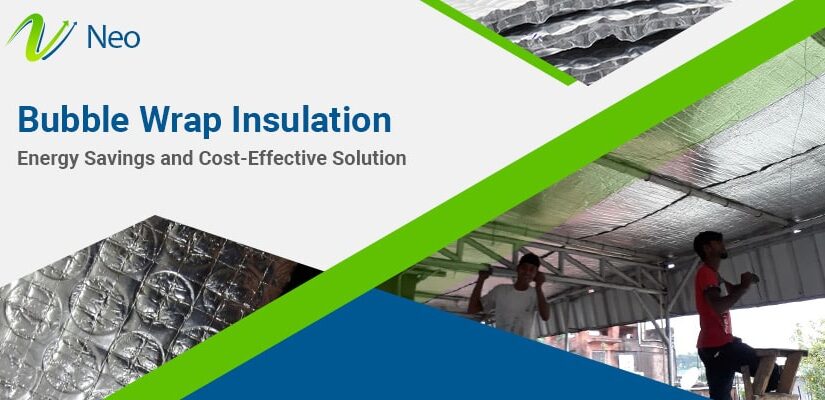
Just like many other discoveries, an accident led to the discovery of bubble wrap insulation. When two engineers were sealing the two plastic curtains together, air got trapped between them, leading to the innovation named bubble wrap.
Bubble insulation is now one of the most effective ways to insulate residential and commercial buildings with low cost and high reliability. This material offers sustainable as well as environment-friendly solutions to those who are looking for affordable insulation.
In this article, we will cover every aspect related to bubble wrap. You will get to know, what is air bubble insulation, how it is made, the benefits of using it, the different types of bubble insulation and how to install the insulation.
What is Bubble Wrap Insulation?
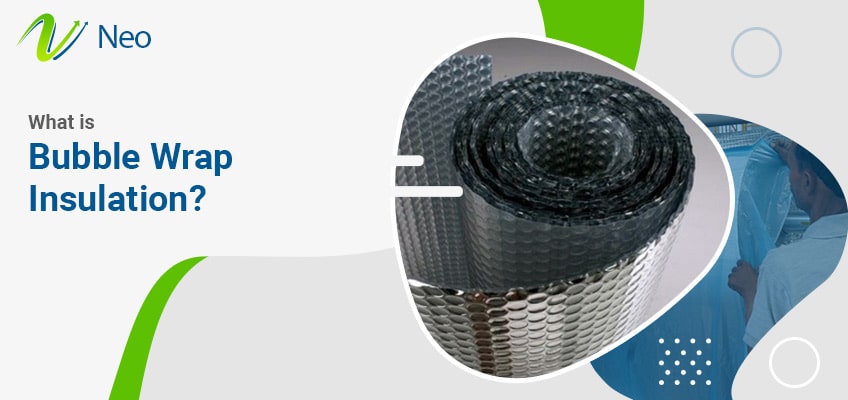
Air bubble insulation is a sustainable and environment-friendly solution for modern thermal insulation requirements. The insulation material is an amalgamation of reflective surfaces with and air bubbles present between the reflective layers. The air bubble acts as a thermal barrier that traps heat and prevents heat transfer through conduction and convention between an object and the surroundings. The air bubbles sandwiched between the layers create small air pockets that act as an insulator for thermal insulation.
Bubble wrap can be used both in summers and winters as it diminishes heat loss during winters and heat gain in summers. The R-value of bubble wrap insulation lies between R-3 and R-5 per inch, depending upon the thickness and composition of the material used in the process. In addition to this, it is lightweight, flexible, malleable, inexpensive and easy to install, making it a perfect fit for duct pipes, roofs, ceilings, walls, pole barns, crawl spaces, metal buildings, ware houses and freezers.
What makes bubble insulation a popular choice is its ability to offer energy-efficient solutions. It is efficient in controlling indoor temperature. It is convenient for use in commercial and residential spaces.
Bubble Insulation: How is it Made?
Air bubble insulation , commonly known as bubble wrap foil insulation, is made up of different types of insulation materials, like low-density polyethylene. In the process, plastic films are combined with the layers of air bubbles to create air pockets for thermal resistance.
Here are the steps to follow to make this insulation material:
Plastic films and air are the main components of bubble wrap insulation. A durable and flexible polymer (polyethylene) is used to manufacture plastic films.
Temperature has a very important role in the manufacturing process of bubble insulation. The process begins with the melting of polyethylene at a high temperature (around 450 degrees Celsius) to form a thin plastic film. The thickness of this film depends on the required insulation properties.
After the conversion of polyethylene pellets into plastic films, these films are passed through several rollers with small and heated pins. The pins are used to create small-size hemispherical holes for air bubbles to trap air within them. The whole process is done with the help of pressure applied on the plastic film.
After creating air bubbles in the plastic film with the help of pressure, the next step is to apply another layer of plastic film to add durability and flexibility. Thus sealing and creating air tight pockets of air. It increases the insulation properties of the material and curtails heat transfer.
To curtail material from expanding unnecessarily, the perforation process is done. Under this, extra air is removed from the material.
For enhancing performance and durability, when required, certain additives like flame retardants, UV stabilizers, reflective coatings, etc. are added to the insulation material.
In the last, the bubble insulation material is cut down into sheets of different sizes and rolled to make them suitable for transportation.
Benefits of Using Bubble Wrap Insulation
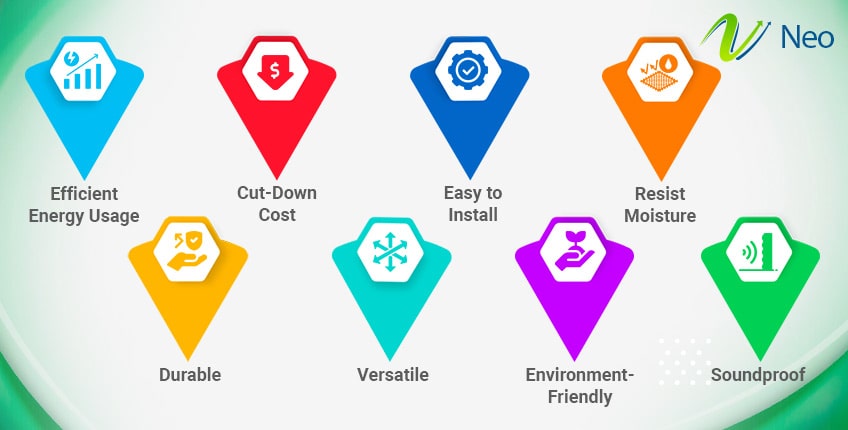
There are various types of benefits to using foil bubble wrap insulation. It is a perfect fit for homeowners, commercial, and industrial establishments’ energy requirements:
Efficient Energy Usage: Bubble thermal insulation curtails heat loss and heat gain during the summer and winter climates, respectively, and helps in maintaining the desired indoor temperature. It helps energy appliances run efficiently and resist any unwarranted energy load on them without any extra cost. It leads to efficient energy use and lower bills.
Cut-Down Cost: In comparison to other insulating materials, bubble wrap insulation is not only less expensive but also requires a minimum cost for installation. It is one of the best options for those who have a restrained budget and are looking for reliable and thermally efficient insulation options.
Easy to Install: The material used in the manufacturing process of bubble wrap made it lightweight, flexible, durable, and easy to install. If one opts for the right installation technique and has all the required tools, one can easily install it. It can be cut into different sizes as needed without any difficulty. It is a perfect material for insulating wall insulation, ceilings, floors, crawl spaces, attics and underfloor insulation.
Resist Moisture: Bubble wrap insulation is anti-humid and increases the lifespan of building materials by preventing the accumulation of moisture inside and outside the insulated material. It also creates a barrier for condensation in cold climates, thus providing 360-degree protection.
Durable: The insulation material is resistant to wear and tear and offers long-lasting durability. It means that once applied, it will insulate materials for the long term.
Versatile: This is a versatile material and can be used for different purposes. It can also easily roll down into sheets of various sizes due to its flexibility. It is compatible with both residential and commercial building requirements.
Soundproof: It is a soundproof material. It is used to absorb and restrict sound transmission between the surface and the surroundings.
Environment-Friendly: Recycled material is used in the manufacturing of bubble wrap insulation to protect the environment. It restricts the use of hazardous materials and offers environment-friendly insulation options.
Make Your Home More Energy-Efficient With Bubble Wrap Insulation
Single bubble wrap insulation is one of the most common insulations used for thermal efficiency. As its name suggests, the material consists of only one reflective surface with bubbles of about 3/8 inch in diameter. It creates small air pockets to reduce heat transfer between the surface and the surroundings. It is efficient when moderate insulation is required without any specific requirements. The single air bubble insulation is resistant to moisture and versatile in use.
Applications:
Use where moderate insulation is required.
Use in crawl spaces, handles and doors of garages.
Use as packaging material and as a protective covering for fragile items.
Advantages:
It is both cost-effective and affordable.
It is easy to install.
It offers resistance against moisture and UV radiation.
It is lightweight, durable, and flexible.
Double Bubble Wrap Insulation
Double bubble wrap insulation is a combination of two insulating layers of bubble wrap and reflective foil (commonly aluminum) that acts as a separating material between two bubble wrap layers. In this material, multiple air pockets are created between the layers, which increases thermal efficiency for better insulation. Double bubble wrap insulation is more effective than single bubble wrap.
Applications:
Use for walls, attics, and crawl spaces.
Use for underfloor insulation.
Use for ductwork and pipes
Use for greenhouses.
Use for shipping and packaging.
Advantages:
It enhances the thermal performance of the material several times.
It offers effective resistance against moisture and condensation.
It is easy to install and versatile.
It is lightweight, durable and flexible.
Reflective Bubble Insulation
Reflective bubble insulation is an amalgamation of bubble wrap and metallic foil to reduce radiant heat transfer. It consists of aluminum foil combined with layers of bubble wrap to enhance thermal efficiency and lower utility costs. It prevents heat transfer through conduction and convection between the insulated surface and the surroundings. Inside bubble wrap reflective insulation, bubble wrap layers are sandwiched between the metallic foil that curtails heat from penetrating interiors. These layers induce small air pockets that reduce heat transfer.
Applications:
Use for insulating roofs and attics.
Use in metal buildings where temperature fluctuation and condensation are important issues.
Use in radiant floor heating.
Use in transportation, such as transport trucks and cold-storage trucks.
Use in cold storage facilities.
Advantages:
It has a high thermal-resistance material.
It is lightweight, flexible, and durable
It is versatile and offers resistance against moisture and condensation.
It is easy to install.
Bubble Wrap with Foam
Bubble wrap with foam is a combination of bubble wrap and foam material like expanded polystyrene (EPS) or polyethylene. The extra layer of foam in the insulation material offers supplementary thermal efficiency and curtails heat transfer through conduction and convection. The material present in bubble wrap with foam insulation adds additional R-value and improves overall insulation efficiency. The foam material helps bubble wrap layers to create small air pockets that act as an insulator.
Applications:
Use to insulate walls and attics.
Use for underfloor insulation.
Use in packaging and shipping.
Use in providing cushioning and protection to fragile items.
Use in making thermal blankets.
Advantages:
It has good thermal performance.
It can act as a soundproofing material.
It is easy to install and versatile.
It is flexible, durable and moisture-resistant.
Bubble Wrap with Woven or Non-Woven Fabric
Bubble wrap with woven or non-woven fabric is an effective insulating material. The material is prepared by placing layers of bubble wrap material between the layers of woven and non-woven fabric, determining enhanced insulation ability and improved thermal resistance. The woven fabric is obtained from yarns and threads, while the non-woven fabric is made of artificial fibers. The woven or non-woven fabric in bubble wrap with woven or non-woven fabric insulation provides strength, flexibility, and durability to the material. It protects bubble wrap layers from any additional damage during installation.
Applications:
Use for exterior walls.
Use in metal buildings.
Use in shipping and packaging.
Use to insulate outdoor sheds.
Use to create thermal covers for outdoor furniture.
Use to make a protective layer for gardening tools.
Advantages:
It increases the durability and flexibility of a material.
It improves the tear resistance of a material.
It is a good soundproofing material.
It provides extra protection against dust particles.
It is a versatile material
Different Ways to Use Air Bubble Insulation?
Bubble wrap insulation is one of the best insulating materials for enhanced energy efficiency and thermal insulation requirements in residential, commercial and industrial buildings.
Here are a variety of places where bubble wrap used as insulation:
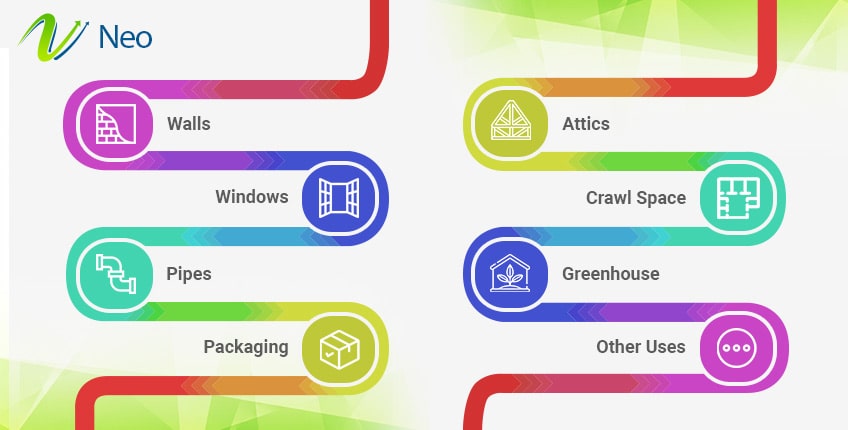
Walls: Walls are the parts of a building from where maximum heat gain and heat loss take place; hence, it is necessary to insulate walls for economical energy bills; bubble wrap on walls and between wall studs helps reducing transfer of heat and maintains a desirable indoor temperature without excessive utility costs.
Attics: Insulating attics with bubble insulation is a better option than insulating them with traditional insulating materials. Attics are places where a large amount of heat escapes to the surroundings, resulting in energy loss. In winter, bubble wrap is used as insulation for insulating attic floors and between rafters.
Windows: Windows bubble wrap insulation is not only necessary but also desirable for your house’s thermal insulation efficiency. The windows are necessary for warmth and light; however, a large amount of heat escapes from them, ensuring energy loss. Window bubble wrap prevents heat loss and gain by creating small thermal buffer zones when used from inside; it enhances the energy efficiency of a building.
Crawl Space: Creating a thermal barrier between crawl spaces and their surroundings is necessary. Providing bubble wrap insulation around floor joists and between the ground and the space above prevents heat transfer of heat and increases overall insulation.
Pipes: Bubble wrap forpipe insulationis used to minimize the incidence of water freezing during cold climates. The bubble wrap protects pipes from unnecessary wear and tear and provides a long life.
Greenhouse: Bubble wrap insulation can be used to insulate the interior walls of greenhouses. It helps to trap the sun’s energy and maintain an optimal temperature for plant growth. The insulation provides additional benefits for better plant growth.
Packaging: Bubble wrap used as insulation to provide protection to fragile items like glass materials, electric appliances, and other precious items during shipping and storage. Bubble wrap has excellent cushioning properties and saves products from damage and loss.
Other Uses: You can employ bubble wrap in a variety of different places, like water tanks, dog- houses, water-heaters and various DIY projects for insulation. It has majestic properties that make it suitable for unconventional uses.
The above mentioned cases show how bubble wrap used as insulation for better insulation, thermal efficiency and comfort in daily life.
Upgrade Your Home Cozy and Save Energy With Bubble Wrap Insulation!
How to Install Bubble Insulation in Your Buildings
Bubble wrap installation in residential or commercial buildings will ameliorate overall thermal efficiency and result in improved energy savings.
Here is a guide on how to install it.
It is necessary to inspect and clean the surface before applying bubble wrap insulation. If any kind of debris, dust particles or any other substance is present on the surface, it will hamper the proficiency of the insulating material, thus leading to improper results.
Before applying insulation, gather the required tools for proper fitting. Materials like tape, scissors, a utility knife, adhesive spay and other essential tools must be kept ready.
Take the proper measurement of the area where insulation is going to be installed, like windows, attics, crawl spaces or any other place. Cut the bubble wrap to the proper size and measurement. Make sure that the insulating material covers the surface properly for effective results.
Be careful while placing bubble wrap insulating material on the surface of the object. Ensure that the insulation “droops” between points of attachment, and there must be 1 inch of air space between the insulated surface and the wrap.
After installing insulation, check for any uncovered gaps or any other fault. This may be the case when insulation is not done properly. Carefully find out the faults or gaps and seal them to ensure the best outcome.
Conclusion
Installing bubble wrap insulation will result in lower utility costs, consistent thermal efficiency, the desired indoor temperature and comfort. In this article, we discussed important aspects of bubble wrap and made you aware of its benefits and versatile usage.
Bubble insulation is a profitable solution for those who are looking for an affordable and sustainable thermal insulation solution. It is an efficient solution for residential, commercial, or industrial buildings. It not only results in the better thermal performance of a building but also reduces energy bills. Bubble wrap insulation offers long-term and environment-friendly benefits for thermal insulation needs.
Frequently Asked Questions
1. What type of material is bubble wrap insulation?
It is made up of plastic films such as polyethylene. There are also special type of bubble wrap insulation material which consists materials like aluminum foil, foam (made up of expanded polystyrene (EPS) or polyethylene), woven or non-woven fabric.
2. What is the R-value of bubble wrap?
The R-value of bubble wrap insulation depends upon various factors like thickness, material contents, and number of layers. For example, the R-value of 3/8 inch bubble wrap is close to 1.3; on the other hand, the R-value of 3/8 inch bubble wrap foam is 1.6. It is important to note that the higher the R-value, the higher the thermal resistance.
3. How thick is bubble wrap insulation?
It comes in different kinds of thicknesses. The thickness of the standard size insulation varies from 3/16 inch to 5/16 inch. However, there may be more variation in thickness than the standards mentioned, depending on the material used.
4. Is bubble wrap insulation good for windows?
Window bubble wrap insulation is very effective and offers great help in achieving thermal insulation efficiency. The bubble wrap, when put on windows, traps air in small pockets and curtails heat transfer between the window and the surroundings. In addition to this, the insulation is not only easy to install but also easy to remove when needed.
Temperature differences throughout the year can be observed in most of the regions of India. For the same, people rely heavily on electrical appliances air conditioners, heaters, blowers, geysers and many more which contribute significantly to the increased electricity bills. So, thermal insulation comes as a great solution that helps to maintain the temperature inside any building, commercial space or residence, without the use of any heavy electrical appliance. As per the Research and Markets, the building thermal insulation market of India was valued at INR 2,189.8 crores which is all set to achieve the valuation of INR 3,674.9 crores by 2028. Let’s explore this flourishing market and talk about some benefits that you can leverage with the insulation concept.
What is Thermal Insulation?
Thermal insulation is the mechanism that reduces the heat transfer between solid substances, liquid surfaces, or gases by installing a barrier between them. As long as the heat is not being transferred from one object to another, the surroundings will not have any temperature impact. Be it any industry or place, thermal building insulation can be installed anywhere to ensure that the heat doesn’t travel from the house’s roof and walls to increase the inside temperature.
However, the same needs to have optimal thermal environments to perform efficiently.
How Does Thermal Insulation Work?
As we interpreted in the earlier section, thermal insulation acts as the obstacle between two surfaces so that the high temperature of the outside surface does not travel to the inside layer of the premises to maintain the optimal temperature. Similarly, if the heat is coming directly from the roof area, the roof insulation will not allow the heat to travel inside the room and thus maintain the lower temperature.
Material with the lowest thermal conductivity is used for the insulation that minimizes the heat transfer between the surfaces. However, it is not all about thermal conductivity but there is a range of other factors which are considered when selecting the best thermal insulation. The factors are but not limited to density, thickness, thermal resistance, thermal diffusivity, heat capacity, etc.
When talking about popular types of thermal insulation, include fiberglass, mineral wool, polystyrene and polyurethane foam. Aerogel, pyrogel and advanced vacuum insulation are some of the most preferred thermal insulators by most industries.
Benefits of Proper Thermal Insulation in Your Homes
Thermal insulation doesn’t only maintain the optimal temperature inside a residence but it has a lot of other advantages as well. Be it a sustainable option for healthy living or saving a lot of money by cutting into the electricity bill, thermal insulation benefits are huge. Let’s have a glance over some of the insulation advantages in residential places.
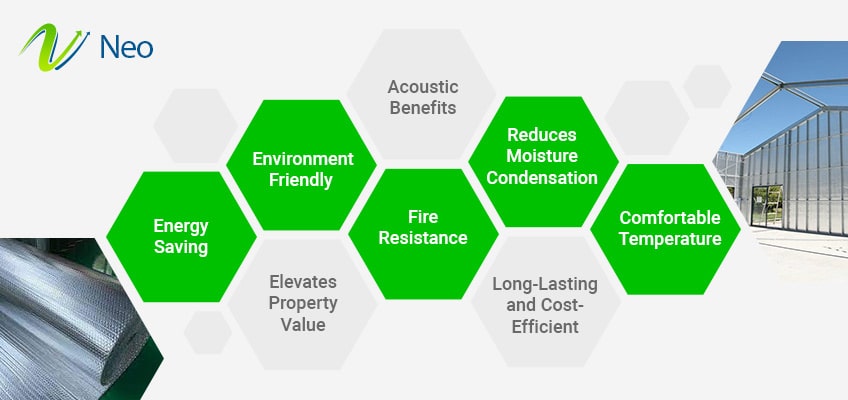
1. Energy Saving
The foremost benefit is undoubtedly the big energy saving as installing insulation between the walls will not allow the outside heat to enter the premises. It reduces the reliance on heavy electrical appliances which ultimately contributes to reducing electricity bills. However, there are certain considerations when choosing thermal building insulation for your house. For example, suppose you are buying a property that is already protected with thermal insulation. In that case, it is better to monitor the insulation to ensure that it doesn’t have any holes, gaps, ceiling cavities, or other similar issues.
2. Environment Friendly
Another major benefit of insulation is sustainability and environment friendly. Thermal insulation significantly reduces the dependence on natural gas and coal which reduces the emission of carbon dioxide, sulfur dioxide, and other harmful greenhouse gases. At the same time, the elimination of these chemicals is also safe for the ozone layer which contributes to overall environmental health. Less use of air conditioners and heaters also reduces the chances of global warming and climate change. At the same time, there are even eco-friendly thermal insulation that have no negative impact on the environment even in the manufacturing process.
3. Acoustic Benefits
Acoustic sheets are a type of thermal insulation that not only restricts high temperatures from entering the premises but at the same time, it also prevents sound from entering the space. Acoustic thermal sheets are much denser than the normal insulation sheets and thus it is more capable of restricting both heat and sound from entering the surface. Soundproofing insulation can easily be installed in the external and internal walls and mid-floor in multi-story dwellings. So, you can even create quiet zones in your house by installing acoustic insulation sheets.
Fire resistance is one of the greatest benefits of installing insulation on a property. Thermal insulation like Rockwool are designed specifically to stop the flames from spreading and that stop the fire inside a particular space only. Moreover, another benefit of using this type of thermal insulation is that it doesn’t emit harmful smoke on burning which ensures that the people inside the house don’t inhale the toxic smoke. Rockwool insulation even has great heating resistance and acoustic properties.
5. Reduces Moisture Condensation
Thermal insulation sheets help maintain the optimum temperature by preventing heat loss and heat transfer inside a space. So, the optimal temperature maintained in residence keeps the surface above a dew point which eliminates the chances of moisture condensation. The air barriers and vape control wall wrap can also be chosen to reduce moisture condensation. Still, they can not be used to reduce the heat transfer and maintain optimal temperature.
6. Comfortable Temperature
You must remember that thermal insulation is not a substitute for AC or heaters. Rather, it is just the health-friendly concept that helps to maintain the comfortable temperature inside the space by reducing heat loss. The use of electrical appliances reduces after insulation which leads to an overall healthy lifestyle. Also, the temperature is maintained throughout the day without switching anything on or off.
7. Elevates Property Value
Having a property that has an inbuilt mechanism to beat the heat as well as prevent the extreme cold can be a great highlight that increases the value of the house automatically. It is rare in India and telling the buyer about the core competencies of thermal insulation can instantly increase their interest in buying the property. At the same time, the optimal temperature inside the house will shape the buyer’s decision by providing them with a chilling environment as soon as they enter the house.
8. Long-Lasting and Cost-Efficient
Another thermal insulation benefits is that these solutions are long-lasting. With very little maintenance and care, you can use the same insulation for decades. Also, the maintenance cost of thermal insulation is very low when compared to the benefits it delivers.
There are different types of thermal insulation that you can choose for your residence. The choice of insulation entirely depends on the personal preferences, overall purpose, and budget of the project. For example, you can only choose thermal insulation material after finalizing the area where you want to install the insulation. Similarly, the R-value you want to achieve with insulation is also a big determinant factor in choosing the right one. Here are the types of thermal insulation along with their respective core competencies.
1. Aerogel
Aerogels are basically ultralight materials derived from a gel where the liquid component of the material is replaced by the gas without affecting the overall gel structure. As a result, we get a solid with extremely low density and low thermal conductivity. This material can be made by using a variety of chemicals. This is one of the most used thermal insulation types for the walls and surfaces which can not heavy weights for a longer time duration. At the same time, this technique is also widely used for heat management in electronics.
2. Cellulose
Cellulose insulation is one of the oldest forms of home insulation which is being used by people around the world even today. Cellulose insulation is loose-fill insulation that can be used for new and existing homes to prevent heat from entering the premises. Being a fiber insulation, these are used in the existing walls, unfurnished attic floors and new walls. However, Cellulose is considered one of the most cost-efficient forms of insulation as it is made up of recycled cardboard, paper, and other similar materials.
3. Fiberglass Insulation
Fiberglass insulation is mostly used in modern times because of the reasons of how it is made. This insulation material is made by effectively plashing the glass into insulation. However, the handling of this insulation is one of the most difficult tasks as professionals need to wear proper protective gear when installing it. Otherwise, it can cause serious damage to the lungs, heart, eyes, and skin. Fiberglass can reduce the heat transfer immediately. This is a non-flammable insulation where the R-values range between R-2.9 to R-3.8 per inch.
4. Mineral Wool
Mineral wool is not one type of thermal insulation. On the contrary, it might refer to a range of insulation materials like fiberglass manufactured from recycled glass, Rockwool made from basalt, and more. Similarly, it can also refer to slag wool which is made from the slag obtained from steel mills. This insulation can be purchased in the form of batts or loose materials. However, the mineral wools don’t have any additives to make them fire-resistant. On the other hand, they are non-combustible material which prevents the spread of fires up to 1400 degrees Fahrenheit.
5. Polyurethane Foam
Polyurethane Foam is an excellent form of insulation as it uses the non-chlorofluorocarbon gas as a blowing agent. This concept helps significantly to prevent any damage to the ozone layer. Also, Polyurethane Foam is comparatively very light, which weigh only two pounds per cubic foot. At the same time, they have an R-value of approximately R-6.3 per inch of thickness. It is easy to install in the corners and hidden areas as all it has to do is spray the foam which will get thicker as soon as it comes into contact with the air.
6. Polystyrene insulation
This is basically a waterproof thermoplastic foam that prevents sound and heat from traveling from one surface to another. Polystyrene insulation comes in two forms which include expanded (EPS) and extruded (XEPS). Both of them are entirely different from each other in terms of cost, rating, and performance. XEPS has an R-value of R-5.5 while EPS stands at R-4. However, one of the downsides of polystyrene insulation is that it is flammable and thus needs to be coated with fire-resistant chemicals like Hexabromocyclododecane.
7. Earth wool Insulation
Earth wool insulation is very different from those of general categories of insulation. It is manufactured using the ECOSE technology which is sustainable, renewable, and doesn’t contain any formaldehyde. At the same time, petrol-based chemicals are also not used in the manufacturing process. This insulation is mostly used for residential, commercial, and industrial purposes. This form of insulation is available in different product types like wall, ceiling, floor, and acoustic products. There are different benefits of earth wool insulation which include environment-friendly, availability of acoustic products, low irritant products, high thermal performance, non-combustible, and much more.
8. Spray foam insulation
As the name suggests, this is the types of insulation that is installed using a blowing machine. This insulation is typically more expensive than the other insulation options and requires a well-trained professional to install it. This insulation is considered the best option for sealing air leaks, preventing mold growth, and avoiding any chances of water leakage. So, the chances of damage to the insulation are very low in spray foam insulation. There are two types of spray foam insulation viz. Open-cell foams and closed-cell foams. There are a range of benefits for using spray foam insulation including reduced energy consumption, eliminating air draughts in homes, eco-friendly products, long life span, and much more.
How to Choose the Right Thermal Insulation Material For Your Needs?
In the above section, we interpreted the different types of thermal insulation materials that you can use in your residence, commercial, or industrial properties. However, the final decision of choosing the best thermal insulation depends entirely on different factors. So, here are some of the key considerations that you must ensure when choosing the right insulation materials for your home.
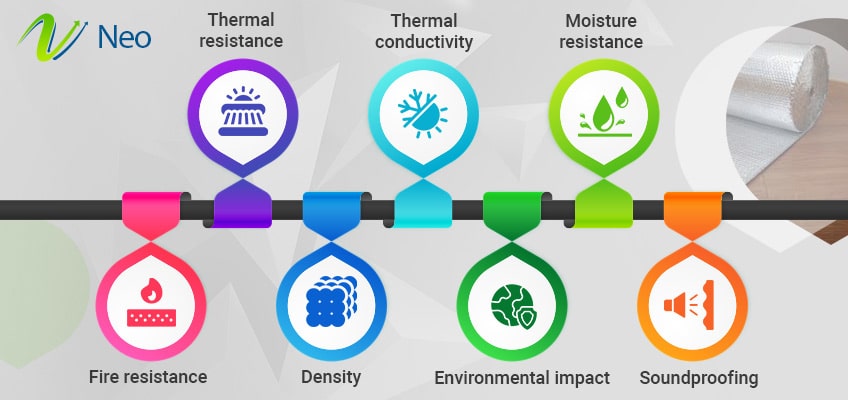
1. Thermal Resistance
The biggest purpose behind the use of thermal insulation is to prevent heat from entering the surface and keep the internal temperature comfortable. For the same, you must choose a insulation material that has good thermal resistance. To ensure that your insulation choice has good resistance to heat, you must analyse the R-value of the material. The higher the R-value, the better will be the thermal resistance.
2. Thermal Conductivity
Your thermal insulation material should have the lowest thermal conductivity to act as a good insulator. Touching a material and if it feels cold than the normal temperature, it means that the material has lower thermal conductivity. On the other hand, if the temperature of the material is increasing over touching, it means that the material has higher thermal conductivity and will not be a good choice for insulation.
3. Moisture Resistance
The insulation material must have good moisture resistance. It will make sure that the materials are not absorbing the water which can negatively affect the overall insulating properties of the material. For example, you can choose materials like XPS which carry high moisture resistance.
4. Fire resistance
Having fire-resistant insulation installed at your home can be one of the great things that you can choose. Fire-resistant insulating materials provide you an assurance that the flames don’t spread in case of any incident at the place. Good fire resistance thermal insulations like Rockwool stone wool boards can save your home, commercial space, or factory from big losses by automatically controlling the fire.
5. Density
It is generally observed that the materials with higher density are a good choice because they are water resistant, carry greater hardness, and thus exhibit better-insulating properties. So, if an insulating material with less density is being used, the chances are that the water will enter and damage the overall insulation. At the same time, the lower insulating properties will not be able to prevent heat enter and leaving the surface. So, the inside temperature will gradually increase.
6. Environmental impact
It is very important to ensure that we are not causing any negative impacts on the environment when installing insulation at our place. So, you can go for eco-friendly materials when choosing the thermal insulation. Mineral wool is one of the best and most preferred insulation that you can choose as an eco-friendly material choice.
7. Soundproofing
Moving ahead, if you want to make your space more comfortable so that the outside noise doesn’t disturb you, choosing a soundproof thermal insulation material can be a good idea. For example, the Rockwool insulation is one of the soundproof insulation that makes sure you have an overall good environment at your place.
Say goodbye to energy waste.cut the costs! Choose thermal insulation now.
Applications of Thermal Insulation in Various Industries
Thermal insulation is being used in a range of industries for its capability of maintaining the optimal temperature inside a space and preventing the outside environment affect the inside of a house. Let’s explore some of the industries that have the maximum usage of thermal building insulation for different purposes.
Commercial and Residential Building – It takes a lot of energy and money to maintain the optimal temperature inside the buildings with the help of electrical appliances. At the same time, this system is a big cause behind global warming. So, thermal insulation is a great choice that keeps the building at a comfortable temperature without any energy requirements.
Mechanical Insulation – Machines generate a large amount of heat when functioning for a long time. This heat can be transferred to other spaces via pipes or other mediums. So, pipe insulation is used to prevent heat transfer and control the overall temperature.
Electronic Appliances – It is used in different electrical appliances to prevent the transfer of heat from one part to another. For example, there is a heat pump in refrigerators along with a thermally insulated chamber.
Spacecrafts and Automobiles – Similar to those of mechanical applications, thermal insulation is used in spacecraft and automobiles as well. It helps to keep the heat trapped inside a surface only that doesn’t impact the temperature in other areas of machinery.
Education – Schools, colleges, and universities are continuously adopting thermal insulation practices as they provide a better learning environment to the students. At the same time, the campuses of educational institutes are generally very big which makes it too costly to install electric systems for temperature maintenance. So, it is one of the tactics that keeps the premises cool.
Healthcare – Thermal insulation is used widely in the healthcare industry buildings. First of all, it helps keep a comfortable temperature for the patients. Moving ahead, it improves the air quality by reducing the amount of air infiltrated into the buildings. Thus, thermal insulation is a great choice for patients’ health as well.
Techniques of Thermal Insulation
Different techniques are used for thermal insulation. The technique can only be chosen by monitoring the causes of heat transmission. Here are the different thermal insulation techniques used worldwide-
Roof Thermal Insulation
This is the thermal insulation for the roof which is installed when most of the heat is entering through the roof only. The insulation can be done from the inside as well as outside of the roof. The thermal insulation is often installed above the slab. The following are the techniques that can be used for roof thermal insulation-
Heat-insulating material can be put over the roof under a waterproof course only.
A false ceiling made up of insulation material can be installed on the interior ceiling.
Reflective insulative materials can be positioned on the rooftop.
Asbestos sheets can be used over the bricks to create air holes over rooftops.
Misting the rooftop with water can stop heat flow.
Insulating Thermally Exposed Walls
The thermal insulator can be created to some extent by increasing the thickness of the wall. However, this method is very expensive.
Hollow walls act as an excellent thermal insulator.
Heat-insulating materials can be used with other building materials while constructing the wall.
Heat insulators can be installed on both sides of the wall to lessen the thermal transmittance.
Batten sheathing or hardboard can be installed on each side of the partition in order to create air gaps.
Why Choose Neo For Thermal Insulation Installation?
Thermal insulation and related materials are a long-term investment as the insulation can not be performed every now and then. So, it becomes important that you choose a reliable and experienced professional for your project. There are chances of a lot of delay or over-budgeting that might affect the overall outcome of your project. Neo Thermal Insulation, on the other hand, is a well-known brand in the industry. We have served a huge client base coming from different niches and industries. Our consultation services ensure that the client chooses the right insulation material according to their particular requirements and budget.
At the same time, Neo Thermal makes sure that the installation is being done efficiently in the least time so that the client doesn’t have to face any kind of inconvenience. We complete the project within the defined budget so that the client doesn’t have to compromise with their monetary budget planning.
Conclusion
So, it can be concluded that effective thermal insulation is a great technique that enables people to maintain optimum temperature inside their space without relying heavily on electronic appliances. Also, there are different budget requirements and timelines of the project that the customer has to choose according to specific needs. Neo Thermal Insulation, in this industry, carries a prestigious presence that enables us to deliver high-quality services to our clients.
Frequently Asked Questions
1. Is thermal insulation installation a DIY project?
Answer- Installing the thermal insulation entirely depends on the type of insulation material. Insulation types like fiberglass or mineral walls can be installed by anyone with little care. On the other hand, spray foam insulation, requires a professional to work on the project.
2. Why is thermal insulation used in buildings?
Answer- There are multiple purposes for using insulation in buildings. It includes maintaining a comfortable temperature, soundproofing, preventing water leakage, reducing electricity bills, installing a sustainable and environment-friendly solution to the building, and much more.
3. What are some common types of thermal insulation?
Answer- Some common types of thermal insulation materials are but not limited to mineral wool, cellulose, fiberglass insulation, polystyrene, spray foam, ceramic fiber, etc.
4. Does thermal insulation reduce noise transmission?
Answer- There is acoustic insulation which is designed specially to prevent the sound from entering a particular space. This insulation ensures that neither the heat nor the sound moves from surface to surface.
5. Is thermal insulation environmentally friendly?
Answer- Yes, thermal insulations are completely environmentally friendly as they don’t cause carbon emissions, contribute a lot to energy saving, and reduce environmental pollution.
Nowadays, thermal insulation plays a vital role in homes and buildings and there are various benefits of thermal insulation. Thermal Insulation, you may have seen it but you may be unaware of what it is. Heat insulation is applied between materials, machines or blocks to reduce the transaction of heat or thermal energy. These insulation materials are made up of low thermal-conductive material. There are a few thermal insulation materials suppliers whose materials you should use. In this blog, we will explore the top advantages of thermal insulation and how it is important for homes.
What is Thermal Insulation?
Thermal Insulation plays a crucial role in minimizing heat exchange between surfaces or areas with disparate temperatures.
The application of thermal insulation extends to the regulation of indoor temperatures in buildings, prevention of heat dissipation from pipes and equipment, and mitigation of extreme temperatures in industrial operations. Given that inadequate insulation has the potential to compromise energy efficiency, leading to escalated energy expenses, the benefits of thermal insulation become evident in maintaining these factors within optimal parameters.
In 2022, the worldwide market for thermal insulation reached a valuation of approximately USD 29.75 billion, and projections indicate an anticipated surge to about USD 48.69 billion by 2032. This trajectory suggests a steady compound annual growth rate (CAGR) of 5.1% throughout the forecast span spanning from 2023 to 2032. Specifically focusing on the United States, the market size for building thermal insulation stood at USD 9.6 billion in 2022.
Schedule Thermal Insulation Installation For Your Home Now!
So now that you are aware of what thermal insulations are let’s know the benefits of thermal insulation and why we are using them.
1. Reduces Heating Costs
For comfortable living conditions, you need a house or building that creates better thermal conditions. Well, without the right thermal insulation materials, these building blocks or houses are not fully thermal insulated. When these areas are insulated thermally well the loss of thermal energy is reduced by a lot of percentages. Now that the block is insulated well, the use of an external heat source will be reduced. This will reduce the consumption of fuel and power.
If we take a rough measure of this then you can see that with thermal insulation materials, you are saving approx. 45-60% of the energy.
2. Maintain Comfort Condition
The air temperature is the one thing that needs to be controlled when you are trying to create thermal comfort conditions. This comfort condition also depends on the temperature of the surrounding surface. If the room is not insulated well then it will be hard to control the level of comfort even when the air temperature is high. Unlock the high comfort with the advantage of thermal insulation.
This happens when the hot air passes through near the cold surface and creates a draft. Using heat insulation material these surfaces can be made warm and then the temperature will be slightly lower than the air temperature.
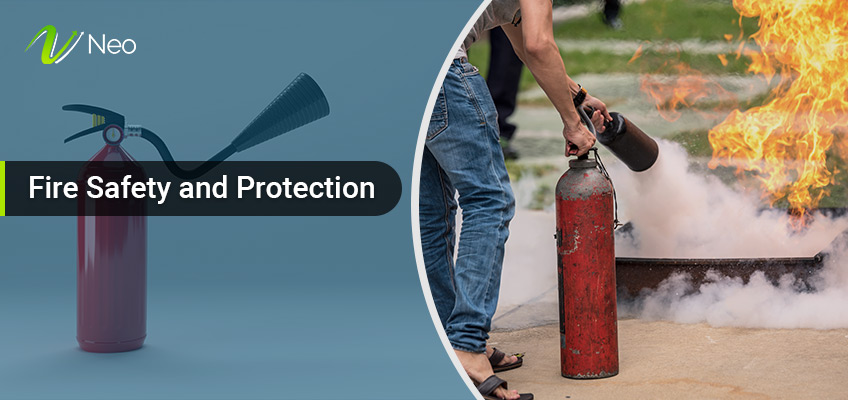
3. Fire Safety and Protection
The best benefits of thermal insulation is fire protection. One of the widely adopted materials for fire resistance is Rockwool. In case of a fire outbreak, non-combustible insulation, like Rockwool, acts as a barrier, impeding the rapid spread of flames. Notably, Rockwool insulation stands out for its ability to prevent the production of harmful toxic smoke, a critical factor considering that smoke inhalation poses a greater risk to individuals than the actual fire. Beyond its fire-resistant properties, Rockwool insulation boasts exceptional thermal and acoustic characteristics, making it an excellent all-encompassing choice for home thermal insulation.
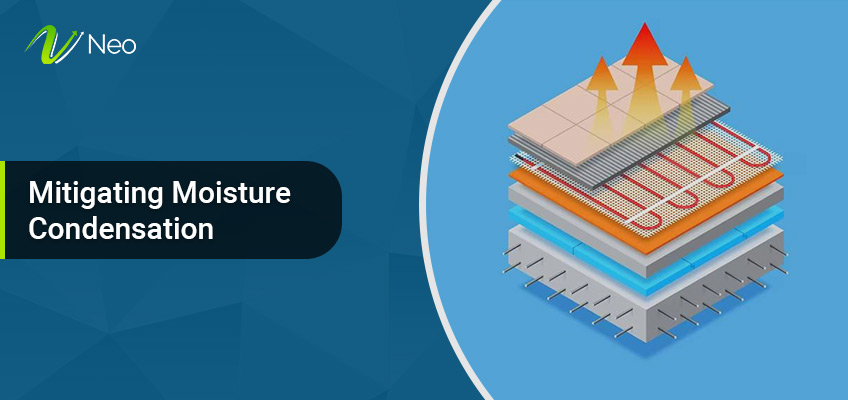
First thing first, what is this condensation here? This phenomenon appears when the cold walls start absorbing vapors from the environment. This vapor touching the cold wall starts condensing and this will leave a grey spot on the wall and considered one of the best benefits of thermal insulation. The introduction of insulation serves as a deterrent against both heat gains and losses, ensuring a consistent temperature. This stability prevents surfaces from falling below the dew point, effectively averting condensation.
Now, if the external thermal insulation material was applied on the wall then this variance in the temperature will not take place. With this, there will be no condensation, and with no condensation…. you got the idea, right? While air barriers and vapor control wall wraps play a role in minimizing condensation, insulation goes a step further by maintaining optimal wall temperatures and mitigating the risk of condensation occurrence.
5. Save Energy and Save Bills
With the thermal insulation, you are not only making room temperature stable but you are also making it comfortable for all seasons. With an insulation layer, you do not need heaters or ACs. Even if there is a case when you want to use these, you are saving a lot of money. So you can easily save money and energy savings with the benefits of thermal insulation.
Thermal insulation makes sure that there is no kind of loss of energy to the block it is applied. So if there is no loss of energy the heater and AC will eat up less power to reach the desired temperature. So using less AC and heater is surely going to be seen in your electricity expenses.
6. Environment Friendly
So as we talked about just right now how do things get changed when you start using heat insulation material? So now you are not required to use that much AC and heater to artificially control the temperature of the room.
Using less and less of these devices will make sure you are reducing the consumption of electricity. Now you are not just saving electricity, you are also making the environment safer. Heaters and AC exert CO2 gases to work on their principles. Without insulation, you are emitting a lot of CO2 into the atmosphere.
But now as you have applied thermal insulation material you emitting 45% less CO2 into the environment. It is just the factor of one person. By applying it to big buildings this emission of CO2 can be reduced by a lot.
7. Reduce Noise Pollution
These thermal insulation materials are not just stopping the heat from getting leaked but they are also making sure that there is low insertion of noise into the building block. The benefits of thermal insulation can be achieved using fibrous insulation materials like glass wool or stone wool. This reduces the noise and increases the sound insulation of the building elements.
Crafted for durability and longevity, insulation comes with extended warranties from reputable brands. When installing insulation, it’s crucial to ensure a meticulous, gap-free application to safeguard the optimal performance of your insulation.
These are the advantages of thermal insulation that you get when you install thermal insulation material in your buildings. With these, you are not just saving money for yourself but you are saving the environment too. It is time to think smart and build smart.
Get Your Home Insulated With Thermal Insulation Today!
A significant portion of the energy costs associated with typical commercial structures is allocated to heating and cooling. The benefits of thermal insulation serve to diminish both energy consumption and related costs, all while ensuring a consistent and comfortable indoor environment for homes and buildings. Neo Thermal Insulation is a supplier of thermal insulation materials and is considered one of the top thermal insulation manufacturers in India. Ensure your building is shielded from external elements with our thermal insulation services. Our team of experts conducts thorough inspections, tailoring a customized plan to meet your specific needs.
Frequently Asked Questions
1. What do you mean by Thermal Insulation?
Thermal Insulation minimizing heat transfer among solid objects, fluids, or gases is achieved through thermal insulation, which introduces a barrier between them and has lots of benefits of thermal insulation. Industries such as energy, industrial, medical, and others find insulation crucial, as it plays a vital role in ensuring optimal thermal environments for efficient performance in complex applications.
2. What are the most thermal insulation materials used?
The most common thermal insulation materials are Glass wool, Polyester and Rockwool, each distinct in nature yet all serving as effective insulation materials that contribute significantly to enhancing the comfort of your home.
3. What are the benefits of thermal insulation?
The advantages of Thermal insulation creates a barrier to heat flow, insulation enhances home comfort in winter and reduces the heat in summer. Through insulation, you can notably decrease heating and cooling expenses, contributing to a reduction in greenhouse gas emissions.
4. Where to buy the thermal Insulation Materials?
Count on Neo Thermal Insulation for top-tier thermal insulation materials. We’ve successfully addressed insulation requirements across diverse sectors, including warehouses, manufacturing, commercial and residential properties, apartments, malls, fitness centers, and beyond, offering tailored insulation solutions.
Maintaining the temperature inside a space with energy-consuming appliances like air conditioners and heaters is a traditional way that requires a lot of energy and cost. At the same time, the maintenance costs overtake everything with these approaches. Effective thermal insulation in buildings increases energy efficiency and comfort. So, Thermal Insulation technology has emerged as the new solution that helps people maintain the temperature balance between two spaces without any energy-required appliance or machinery. At the same time, being an environment-friendly product, it doesn’t carry any side effects.
Thermal Insulationis a great choice for commercial as well as residential purposes. So, in this blog, we will talk all about what this solution is and how it can change the way you choose comfort in different climates.
A glance over the thermal insulation market
According to Fortune Business Insights, the global thermal insulation market was valued at USD 31.15 billion in 2021 which is all set to achieve a valuation of USD 42.5 billion by the end of 2029. The thermal insulation market around the world is expected to show a CAGR of 4.5% during the forecasted period (2022-2029).
So, it can be predicted that the insulation market is only expected to show an upward curve due to its efficiency in controlling temperature in multiple weather conditions.
What is Thermal Insulation?
Thermal insulation basically refers to the material or process that helps to reduce the heat transfer between two surfaces or areas of different temperatures. For example, this technique makes sure that the external temperature doesn’t impact the temperature inside your residence. Thermal and Roof Insulation is a great way to maintain the desired temperature inside a space as per the preferences without much energy requirements.
Due to the efficiency of this technology, Thermal Insulation in buildings is being used in a range of industries and landscapes. Be it maintaining the temperature inside the buildings, preventing heat loss from pipes and equipment, or protecting something from the extreme outside temperature, Thermal Insulation covers it all.
Purpose of Thermal Insulation in Buildings
Thermal Insulation is a prominent technique, been used by people for a long time for their different needs. With exposure to the technology, almost all industries are leveraging its benefits on their own scale, according to their own usability. Here are some of the core purposes of using thermal insulation in buildings–
The foremost purpose of using thermal insulation is to maintain a steady heat or temperature inside a particular premises.
Thermal insulation keeps the interior temperature warm in winter and cool in summer. It provides comfort for working in living in the space with increased productivity.
Eliminates the cost of heavy energy consumption in winter and summer to maintain the temperature.
Thermal insulation is a great way to prevent moisture from condensing on ceilings, windows, and interior walls.
Prevent the chances of heat loss from the hot water system and water freezing in pipes.
Thermal Insulation in buildings is using insulation materials and design adaptations in buildings to slow down the heat transfer through the enclosure to control heat loss and gain. The temperature difference between outdoors and indoors is responsible for heat transfer. The heat transfer can be caused by convection, conduction or radiation. The transmission rate is closely linked to the propagating medium.
When heat is transmitted through the walls, ceilings, doors, windows and floors, it gets gained or lost. This uneven reduction and acquisition of heat are not appropriate for any building structure. On one hand, it increases the load on the HVAC system resulting in more energy waste, and on the other hand, it also reduces the thermal comfort of the people living in the building.
Insulating a building thermally is best for achieving thermal comfort for its occupants. Unwanted heat loss or gain can be reduced by using insulation in buildings and it can also decrease the energy demands of cooling and heating systems. Thermal insulation doesn’t directly relate to influencing sound insulation or the issues of adequate ventilation.
The thermal insulation material also has a good resale value which means that having used the technique for a long time, the owner can get a good amount by selling the insulation to another party.
Social benefits
The buildings that are properly insulated are more comfortable in terms of good health, controlled temperature, and minimum noise pollution.
Structures like office spaces and residential buildings can be highly benefitted as the insulation can provide an ideal environment resulting in greater productivity and lesser building and maintenance costs.
Building insulation is a great way to cut the noise transfer to a significant extent. So, it makes building insulation a great technique to enhance the comfort level in libraries, hospital rooms, and more.
Types of thermal insulation material and methods
There are multiple forms of thermal insulation material available in the market to meet the different needs and preferences of the people. Here are some of the most known and usable thermal insulation building materials–
1. Slab or Block Insulation
These blocks are made of mineral wool, cellular glass, corkboard, and cellular rubber fixed to the wall or roof to prevent heat loss and thus maintain the preferred temperature. These sizes are available in 60 cm x 120cm with a thickness of 2.5 cm.
2. Blanket Insulation
As the name indicates, blanket insulation materials are manufactured in blanket shapes or paper rolls. These sheets are directly distributed across the wall or ceiling. Blanket thermal insulation sheet carries thickness varying from 12mm to 80mm. These sheets are made up of animal hair, wood fibers, or cotton.
3. Loose-fill insulation
Loose-fill insulation is generally the thermal insulation material that is filled in the stud space of walls where doors or windows are to be opened. This material generally consists of rock wool, cellulose, wood fiber wool, etc.
4. Bat Insulating Material
Bat insulation material in thermal insulation in buildings is also available in the form of blanket rolls but comparatively are thicker than blanket-type materials. Like blanket type, bat insulating material is also spread over the wall.
Made up from pulp of wood, cane, and other materials, Insulating boards are a prominent type of insulating option. Pressing hard with some stress at the right temperature makes the insulating board hard in order to install. These boards are available in several sizes and thus are also used for the interior lining of wall or partition walls.
6. Reflective sheet materials
This thermal insulation sheet is known majorly for its high reflectivity and low emissivity. Reflective sheets are made up of different materials like aluminum sheets, steel sheets, and gypsum boards. As it reflects solar energy, it carries high heat resistance. Thus, this is a great option to stop heat from entering a particular space.
7. Lightweight Materials
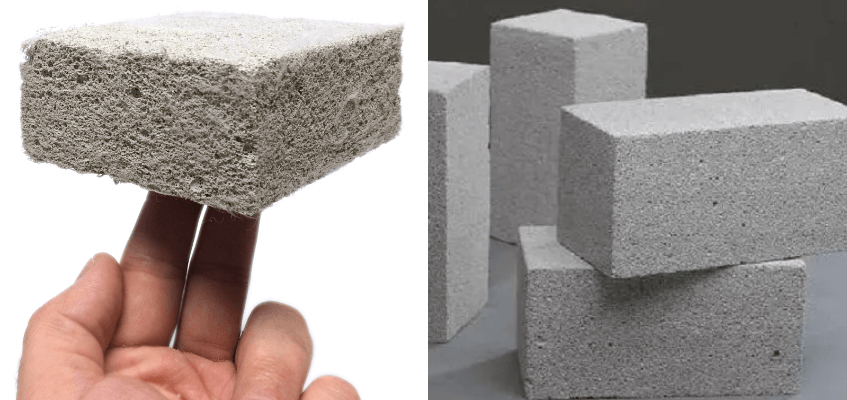
Using lightweight aggregates to prepare the concrete mixture also provides good heat loss prevention and thus acts as a great insulator. Concrete becomes more heat resistant when made with a mixture of blast furnace slag, burnt clay aggregates, and vermiculite.
Where to buy the Thermal Insulation Material?
Neo Thermal Insulation is the best name to rely on for thermal insulation material. We have been catering to a wide range of sectors for their insulation needs. We have explored the industries like warehouses, manufacturing industries, commercial, and residential properties, apartments, malls, fitness training centers, and more with our insulation solutions. At the same time, we master a range of services including thermal insulation for roofs, complete building insulation, ceiling insulation, thermal insulation wall, floor insulation, Aluminum Foil Insulation, etc. Neo Thermal Insulation offers the best insulation services by customizing it according to a particular geographical location and property structure.
Conclusion
In the end, it can be concluded that thermal insulation in buildings is very important and it can play a significant role in residential and commercial buildings. As far as the benefits are concerned, apart from the aforementioned benefits, thermal insulation can also prevent building damage caused by the formation of moisture on the interior of the building envelope. A thermal environment can make the place much more comfortable by maintaining the temperature in winter and summer. Lastly, it can reduce unwanted heating or cooling energy input. You can contact Neo Thermal Group and get your building insulated to make it solid and comfortable for living.
Frequently Asked Questions
1. What is the purpose of thermal insulation in buildings?
Ensuring your home is well-insulated serves as a barrier against heat transfer, ultimately cutting down on your expenses for heating and cooling. Efficient insulation not only diminishes the costs associated with maintaining a comfortable temperature but also enhances overall living comfort.
2. What are examples of thermal insulation?
Typical thermal insulating materials include wool, fiberglass, rock wool, polystyrene, polyurethane, goose feathers, and perlite. These materials exhibit low thermal conductivity, making them effective thermal insulators by impeding the transfer of heat.
3. What is thermal insulation used for?
Enhancing thermal efficiency involves minimizing heat transfer among solids, fluids, or gases through the implementation of a protective barrier. This insulation plays a crucial role in diverse sectors such as energy, industrial, medical, and beyond.
4. What are the benefits of thermal insulation?
Insulation functions as a shield against the movement of heat. It contributes to the comfort of your living space by curbing the loss of warmth during winter and limiting the influx of heat in the summer months.
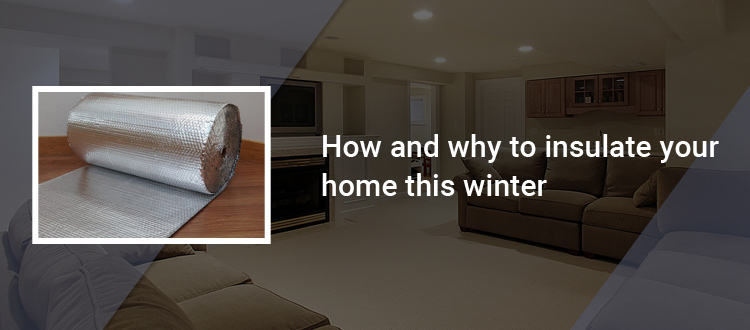
The winter is knocking at the door, and people at home have started preparing for keeping their home warm and cozy. The traditional approaches that were once popular like open-coal fire, kerosene lamps and indoor small room heaters are replaced with modern heating appliances and insulation techniques. These techniques are far efficient and effective regarding durability, maintenance cost and installation cost.
Thermal Insulation is being popular among urban society because of its prominent advantage that it reduces energy consumption and provide environment-friendly solutions. In this article, we will learn about the need to insulate your home and the best ways to insulate your homes to prevent heat escape.
What is the Need to Insulate your Home?
Insulation creates a protective barrier around the homes that prevent the heat transfer from the outer space into the inner space of the house. The thermal insulation on the wall, over the roof and beneath the floor, helps to reduce the amount of heat loss during winter and keeps heat out of the house in the warm days.
Thus, thermal insulation takes the place of Air Conditioners in summers and Heaters in winters. Leading to a subsequent cost-cutting in the utility bills and saving a considerable amount of energy that is put in maintaining the desired temperature in winters and summers.
How to Keep your Home Warm?
To maximize the effect of thermal insulation, we need to analyse the condition of the house, R-value and the types of thermal insulation materials. Depending on the requirements, you can implement any of these two insulation techniques roof insulation and wall insulation. Furthermore, a combination of these insulations can maximize the insulation effect.
Roof Insulation
The most vulnerable area of your house from where there is a high probability of heat transfer is the roof. Around 25% of the heat is lost through the roof and thus, applying roof insulation is the primary procedure that you should implement in your house. To reduce the heat escape, roof insulation materials are used. To enhance the insulation quality, you can also insulate the loft area with either fiberglass or rock wool.
Wall Insulation
Homes with two layers of bricks between the outer world and inner rooms creates a cavity and thus known as cavity walls. These cavities are filled with an insulating material to stop heat transfer. Usually, these air gaps are filled with either expanding foams or loosely-packed, air-filled materials such as recycled papers, vermiculite or fiberglass. This type of insulation is also known as cavity-wall insulation.
Types of Thermal Insulation Materials for Winters
Batt and Roll:
These materials consist of fiberglass and are possible insulation material for attic insulation.
Loose Fill:
It can insulate the attic and small crawl spaces as it is a filler. Loose fill is used to fill up the areas that have little traffic.
Spray-Foam:
Spray foam insulation is a wet and expandable liquid that gets dry afterwards. This is an effective way to insulate the areas where you can’t reach or invisible to the naked eyes. It is easy to apply and cost-effective at the same time.
Conclusion
If you start feeling cold in winters inside your houses, then it is the sign that you should go for thermal insulation. Implement the most appropriation heat insulation material to trap the heat inside your houses and make it warm and comfortable. Moreover, you can hire insulation contractors that are professionals and provide diverse thermal insulation services. Remember insulation is the basic need to attain a perfect insulation and reduce energy consumption.
Insulating a warehouse or any other similar commercial building can save up to $9.5 billion in energy costs annually. It’s huge, right? You can also save a major portion of your money from going into utility bills through Warehouse Insulation . And how to save the energy consumption, we are going to learn in this article.
In this article we will get to know the following things:
Reasons to insulate your warehouse
Types of suitable warehouse insulation
The best way to insulate your warehouse
What is Insulation Sheet?
An insulate sheet, also known as an insulation sheet, is a material specifically designed to enhance the thermal resistance and energy efficiency of buildings or structures. These sheets are typically composed of various insulating materials such as foam board, fiberglass, or reflective foil.
The primary purpose of an insulate sheet is to reduce heat transfer, keeping indoor spaces warmer in the winter and cooler in the summer. It accomplishes this by creating a barrier that inhibits the movement of heat through walls, ceilings, roofs or windows. This helps homeowners and building occupants maintain a more comfortable and energy-efficient environment while reducing heating and cooling costs.
Insulate sheets come in various forms, including rigid boards, flexible rolls and reflective bubble wrap. The choice of insulating material and form depends on specific application needs and local climate conditions.
Overall, insulate sheets are a crucial component in modern construction and retrofitting efforts, playing a significant role in sustainable building practices and energy conservation. They are instrumental in creating well-insulated, energy-efficient and environmentally-friendly structures. So let’s address the points one by one.
Benefits of Insulate your Warehouse
The cost that you pay for the utility bills is much more than that of the investment you put in warehouse insulation. Thus, insulating the warehouse is important for attaining stable and desirable conditions.
Following are the reasons to insulate the warehouse.
1. Reduce Cooling and Heating Costs:
Recently, architectures and the designers are constructing the warehouses using pre-engineered building designs. Pre-engineered buildings consist of metal frames and walls that are easy to construct and cost-efficient. But the only drawback it offers is poor quality in maintaining the interior conditions.
Metal warehouses consume a large amount of energy to maintain the desired temperature. Thus, a perfect insulation layer with suitable R-value is applied to the ceiling, exterior and interior walls. Insulation helps in keeping the air inside the building and prevents or blocks the movement of air.
2. Reduce Emissions:
Well, a major concern these days is to improve the environmental conditions by reducing the carbon emissions. Insulation helps to reduce the energy consumptions which further leads to a reduction in fuel consumption which is essential for heating and cooling. Thus, leading to a lower carbon emission from your end.
3. Enhance HVAC System Performance:
HVAC (Heating, Ventilation, Air Conditioning) System requires more repair and maintenance when they work excessively and continuously for a longer duration. Insulation helps to reduce the cost that is put in the maintenance of the HVAC system.
Insulation provides more than just a barrier to heat transfer. It is a perfect remedy to reduce external noise.
5. Comfortable and Healthier Work Place:
To enhance the productivity and quality of the work, it is necessary to create a healthier environment. Warehouse insulation gives a comfortable and cozy workplace for the employees.
Types of suitable Warehouse Insulation
There are a variety of insulation types and insulation materials available in the market. But insulation depends on various factors like climatic conditions, demography, usage of the warehouse, etc.
Following are the insulation types suitable of warehouse:
1. Insulation Sheets
Insulation Sheets are pre-cut panels that can be easily installed to provide insulation for walls, ceilings and floors. They offer a convenient and efficient solution for improving energy efficiency and reducing heat loss or gain.
Advantages:
Quick and easy installation: No specialized equipment or labor is required.
Versatile: Can be used in various applications, including new construction and retrofit projects.
Durable: Resistant to moisture, mold and pests.
Cost-effective: Can be a more affordable option compared to other insulation methods.
1. Cellulose Insulation:
It consists of about 80% recycled materials and is environmentally friendly. You can use cellulose to insulate the walls for your commercial buildings or warehouses.
2. Fiberglass Insulation:
Fiberglass sandwiched between two layers of foil is effective in providing heat insulation. They are installed below the roof deck for achieving better insulation. Fiberglass insulation is available in either loose-fill or blanket form.
3. Radiant Barrier Insulation:
Radiant barrier offers a great reflection to the radiant heat coming from the sun. It helps to keep the warehouse cool as it doesn’t absorb the heat but reflect it back to space. Installing on the warehouse roof, radiant barriers are very useful if you utilize your warehouse for storing things that require low temperature. It consists of reflective material like foil.
4. Spray Foam Insulation:
The liquid of Polyurethane is sprayed evenly on the walls or attic, it expands as it is applied and peeks into the cracks and unreachable places. It blocks each and every crack, gaps, etc. which lets air exchange between the exterior and interior spaces.
5. Vinyl insulation:
It is a synthetic plastic consisting of polyvinyl chloride. It is a versatile material which is used for making seat covers, window frames, phonograph records, etc. Vinyl insulation is moisture and humidity resistant. It is durable and strong insulation material for commercial metal buildings.
Climate: Your region’s climate will influence the type of insulation needed. For example, colder climates may require thicker insulation.
Building Structure: The age, size, and construction materials of your warehouse will impact insulation requirements.
Budget: Different insulation types vary in cost. Consider your budget when making a decision.
Environmental Considerations: Some insulation materials are more environmentally friendly than others.
By carefully considering these factors and selecting the appropriate insulation type, you can significantly improve the energy efficiency, comfort and overall performance of your warehouse.
What are the Best ways to Insulate your Warehouse?
There can be two choices; either you insulate yourself by doing DIY steps or call the insulation contractors for doing it professionally. Well, DIY is possible if you are insulating a small space like home, garage etc. But for a space as big for a warehouse, it is not possible for an individual to do it the right way.
On the other hand, professional insulation contractors can analyse the surroundings and implement best-suited insulation material. They can install insulation layer with perfection and also provide a cost-effective solution for your requirements.
Conclusion
Insulation plays an important part in preventing heat transfer, moisture retention and helping to maintain desirable interior conditions. Warehouse insulation is necessary to maintain the quality of the products that you store in the warehouse for a long duration. We suggest taking advice from an expert on providing perfect thermal insulation conditions for your warehouse.
FAQ’s
1. What is Insulation in Warehouse?
Insulation in a warehouse refers to the use of materials to minimize heat transfer, helping to maintain stable indoor temperatures, reduce energy costs and protect stored goods from temperature fluctuations.
2. Why is Insulation Important in Commercial Buildings?
Insulation in commercial buildings is crucial to conserve energy, improve comfort and reduce heating and cooling expenses, making it a cost-effective and environmentally-friendly choice.
3. How can we Reduce Heat in Warehouse?
To reduce heat in a warehouse, consider using reflective roof coatings, insulating walls and ceilings, installing proper ventilation and using high-efficiency lighting systems.
4. What is the Best Insulation for a Warehouse?
The best insulation for a warehouse depends on factors like climate, budget and specific needs. Options include fiberglass, spray foam and reflective insulation, tailored to the building’s requirements.
If you are reading this article then probably in your region the sun is extra bright and strong in the hot weather like in major part of north India. Insulation in such an area where the temperature rises above 35°C becomes a must to maintain a cool and comfortable environment inside the building. It will not only block the heat transfer but will also reduce the energy consumption required to cool the buildings.
We are very much aware of the fact that in hot weather, we frequently face electricity cut downs for hours. In this circumstances, we require an alternative to maintain a comfortable temperature all year long.
Many people are misinformed about the Thermal Insulation, that it only keeps your building warm during cold weather. However, thermal insulation helps to slow down the heat transfer rate between two temperature varied spaces. Thus, it prevents overheating of the building during hot climatic conditions.
In this article, we will learn about the thermal insulation types that are best for the hot climatic condition.
Thermal Insulation Types for a Hot Climate
It is important that you implement the correct type of insulation after researching and analysing the available insulations that are suitable for hot weather. It is better to take an advice or hire insulation services as they have a vast knowledge about the Indian climatic conditions. There are mainly 4 categories that are preferred by the thermal insulation contractors in India, they are as given below.
Radiant Barrier
This is the best insulation type as it rarely allows any heat transfer through the material. A radiant barrier reflects the energy and prevents heat transfer efficiency. To make a radiant barrier more efficient and an extra layer of insulation inside the attics. This will help in making more comfortable and cooling conditions inside the building.
Rolled Batt
If your budget is limited and you want to deal with the heat with the simplest approach, then roll batt is the best choice. Roll batts come in yellow or pink rolls and they are installed with the help of staple guns. It is installed between the wall studs and rafters for cooling down the inside temperature.
Spray Foam
Spray foam has an incredible property of expanding into cracks and gaps into the wall. Thus, covering every single inch and providing excellent insulation from the external environment. Spray foam has high R-value thus, offers high resistance to heat transfer. It is advisable to get a consultation from an experienced insulation contractor because it requires high-level of technique to implement the insulation.
Loose Fill
Another name of loose fill insulation is “blow in insulation”. It is a great option for attic walls and floors. The spaces where you can’t reach to insulate properly, loose fill can easily reach. A machine blows loose fill into the spaces, filling each corner in the wall and floors to apply in every corner.
Tips to opt to Amplify the Insulation Effect in Hot Climate
If you have implemented a good insulation material in your building, then you can boost their effect by following these tips.
Use blinds, drapes or reflective material on the windows to minimize the impact of solar gain because of the Sun.
Air conditioners definitely make a pleasant cool living space but then it is an expensive approach to fight back hot weather. It consumes a significant amount of electricity and adds the cost of maintenance. Thus, rather than exceeding the budget of your expenses, try to opt the DIY for your home.
Try to turn off the unnecessary electronic items that produce a lot of heat. Apart from this, put water in a tray and put under the fan. Yes, it does work and comes with no cost.
Allow proper air circulation in the buildings. Open all windows at the night time to have an effective air circulation.
Conclusion
So, is insulation is important in the hot weather? Yes! Of course, it is important. Because it not only insulate the building from the external hot climate but it reduces a huge amount of energy. You will definitely run your AC for a lesser time and will save a considerable amount of expenses. A poorly insulated roof or attic or wall is cooler in winters and hotter in summer. Thus, a good thermal insulation is a must to protect your building and enhance your living comforts.
Constructing a building either for a domestic purpose or for a commercial purpose requires a stable and strong roof. Each part of the building needs to have the ability to withstand adverse climatic conditions and external deterioration caused due to climatic changes.
As per statistics from Grand View Research, the global roofing material market size had a valuation of $120.34 billion in 2021 which is all set to mark a CAGR of 4% from 2022-2030. The market is expected to achieve the valuation of $178 billion by the end of 2030.
Recently, in industrial and urban areas, colour coated roofing sheets are gaining popularity because of their aesthetic look and thermal insulation property. They serve the purpose of adding beauty and at the same time protecting the roof from external wear and tear. There are many benefits of Colour Coated Roofing Sheets that we discuss in this blog.
The colour coated roofing sheets are used in place of galvanized iron sheets in residential buildings to provide better aesthetic look. Today, colour coated sheets can be seen at various places like offices, garages, restaurants, car-parking area, warehouses, manufacturing industries, etc.
These sheets are available in different shapes and sizes according to the requirements. Moreover, unlike traditional coating sheets, these sheets have a strong base of steel metals. These colour coated steel metals can be copper, aluminum, zinc-aluminum and tin. Offering high-functional buildings that are compatible with high environmental requirements and delivers top-notch quality cladding to the roofs.
What is Colour Coated Roofing Sheet?
A Colour Coated Roofing Sheets are specially treated metal sheet designed for roofing applications, enhanced with a protective coating that not only adds an aesthetic appeal but also imparts crucial functional benefits. These sheets are typically made from materials like steel or aluminum and undergo a meticulous coating process to ensure durability and performance.
The primary purpose of the colour coating is to provide weather resistance, protecting the roofing material from the detrimental effects of rain, sunlight and other environmental factors. This coating acts as a shield, preventing corrosion, rust and wear and tear, thereby significantly extending the lifespan of the roofing sheet.
Beyond their protective properties, colour coated roofing sheets are known for their versatility. Available in a spectrum of colors and finishes, they allow for customization to match the architectural style and design preferences of a structure. This not only adds a visual dimension to the building but also enhances its overall aesthetic appeal.
The coating on these roofing sheets serves multiple functions, contributing to thermal insulation that regulates indoor temperatures. This can result in energy savings by reducing the need for excessive heating or cooling, making them a sustainable choice.
Benefits Of Colour Coated Roofing Sheets
Colour coated roof sheets offer a multitude of advantages, including exceptional weather resistance, flexibility for diverse architectural designs, and a lightweight yet robust structure. With features such as corrosion resistance, thermal insulation, and eco-friendliness, these sheets provide a durable and attractive roofing solution, ensuring longevity, energy efficiency and visual appeal for residential and commercial structures alike.
1. Weather Resistant:
Colour coated roof sheets offer exceptional weather resistance, making them a reliable choice for diverse climates. The specialized coating acts as a shield against harsh weather conditions, including heavy rainfall, extreme temperatures and UV rays. This resilience ensures prolonged longevity and minimal wear and tear, providing a durable roofing solution for both residential and commercial structures.
2. Flexibility:
One of the standout features of colour coated roof sheets is their flexibility, allowing for versatile applications in roofing designs. This flexibility facilitates creative architectural solutions, making them suitable for various roof shapes and structures. Whether it’s a modern, angular design or a more traditional pitched roof, these sheets can be adapted to meet diverse aesthetic and functional requirements.
3. Lightweight:
Colour coated roof sheets are lightweight yet robust, offering a balance between structural integrity and ease of installation. The reduced weight minimizes the load on the underlying structure, making them an ideal choice for a variety of buildings. This characteristic not only simplifies the installation process but also contributes to cost-effectiveness and structural efficiency.
4. Corrosion Resistant:
The corrosion-resistant properties of colour coated roof sheets make them an excellent choice for areas prone to high humidity or proximity to corrosive environments. The protective coating acts as a barrier against rust and corrosion, ensuring the longevity and structural integrity of the roofing material.
5. Thermal Insulation:
These roof sheets provide effective thermal insulation, helping to regulate temperatures within the building. The reflective coating minimizes heat absorption, keeping interiors cooler in hot weather and reducing the need for excessive air conditioning. This not only enhances comfort but also contributes to energy efficiency, making them a sustainable choice for environmentally conscious consumers.
6. Durable:
Colour coated roof sheets are known for their durability, with the protective coating serving as a robust shield against external elements. This durability translates to a longer lifespan, reducing the frequency of maintenance and replacement. It’s an investment that pays off over time, offering a cost-effective and reliable roofing solution.
7. Environment Friendly:
For those seeking eco-friendly options, colour coated roof sheets are a sustainable choice. Their extended lifespan and recyclability contribute to a reduced environmental impact. Additionally, the thermal insulation properties can contribute to energy efficiency, aligning with green building practices and promoting a more sustainable approach to construction.
8. Attractive:
Beyond their functional benefits of colour coated roofing sheets they also add an aesthetic dimension to buildings. Available in a wide range of colors and finishes, they allow for customization to match architectural styles and personal preferences. The attractive appearance not only enhances the curb appeal of structures but also provides a visually pleasing aspect to the overall design. This combination of functionality and aesthetics makes colour coated roof sheets a popular choice for modern roofing solutions.
Conclusion
Recently, many measures have been taken especially in commercial sectors to promote eco-friendly products. And colour coated metal roofing sheets is a step forward to minimize the use of harmful products. If you are planning to implement colour coated roofing sheets to provide roof insulation or thermal insulation to your workplace or houses, then it is recommended to get a consultation from the insulation contractors. As implementing sheets requires precision and many deciding parameters to taken care before installing the sheets.
FAQs
1. What are the Advantages of Colored Roofs?
Colored roofs offer a range of advantages, from enhancing the aesthetic appeal of a structure to practical benefits. The primary advantage lies in the customization options, allowing homeowners and builders to choose a color that complements the overall design and style of the building. Additionally, colored roofs can contribute to energy efficiency by reflecting sunlight, reducing heat absorption, and subsequently lowering cooling costs. The protective coating on colored roofs also adds a layer of durability, providing resistance against weather elements and extending the lifespan of the roofing material.
2. Which Color Sheet is Best for Roofing?
The choice of the best color for roofing depends on various factors, including climate, architectural style, and personal preferences. Light-colored sheets, such as whites and pastels, are effective in reflecting sunlight and keeping interiors cooler, making them suitable for hot climates. However, in colder regions, darker colors can aid in absorbing heat, contributing to better insulation. Ultimately, the ideal color is one that aligns with the specific needs of the building and the climate of the region.
3. How Thick is a Color Coated Roofing Sheet?
The thickness of a color-coated roofing sheet can vary based on the material and the specific requirements of the project. Common thickness ranges from 0.35mm to 0.60mm. Thicker sheets may offer increased durability and resistance to external forces, but the choice depends on factors such as structural requirements, local weather conditions, and the intended use of the roofing material.
4. Which Roof Sheet is Best for Hot Climates?
For hot climates, it’s advisable to choose roofing sheets with reflective and heat-resistant properties. Light-colored sheets, especially those with reflective coatings, are effective in minimizing heat absorption. Metal sheets, such as aluminum or coated steel, are popular choices for hot climates due to their ability to reflect sunlight and resist heat, keeping the interiors cooler and reducing the reliance on air conditioning.
5. What is the Life of Color Coated Roofing Sheets?
The lifespan of roofing sheets depends on various factors, including the material, maintenance practices, and local weather conditions. Generally, high-quality color-coated roofing sheets made from durable materials like steel or aluminum can last for several decades. Regular maintenance, such as cleaning to prevent debris build-up and timely repairs can contribute to extending the life of the roofing sheets.
6. How do I Choose Roofing Sheets?
Choosing the right roofing sheets involves considering factors such as material, color, thickness and the climate of the region. Start by assessing the specific requirements of the building, including the slope of the roof, local weather conditions and the desired aesthetic. Consult with roofing experts or manufacturers to understand the properties of different materials and coatings. Additionally, consider factors like insulation, durability, and maintenance requirements to make an informed decision. Ultimately, the choice of roofing sheets should align with both functional needs and the overall design vision for the structure.