The roof is one of the prime supporting structures of the building. So, if you are trying to implement an ultimate insulation solution, then, you must ensure that your roof is heat-proofed. Additionally, it must be sturdy as the roof stays exposed to harsh natural calamities. Colour coated sheets act as great insulation for your roof. Additionally, they add to the aesthetic look of your building and increase the lifespan of the roof. So, in this article, we are going to discuss the best Roof Insulation Solution for your building.
Before we move on with the various types of roof sheets, we must discuss the advantages of Roof Insulation Solution:
Durability
These sheets are very durable. For instance, they will last up to 10 years without any form of maintenance. So, these sheets will help you to reduce all the unnecessary maintenance costs.
Flexibility
They are very flexible and can transform into various shapes. Thus, you have different customization options to enhance the look of the building. So, these sheets are the best choice for the renovation of old buildings.
Corrosion Resistant
Roof materials suffer from two types of corrosion: galvanic corrosion and crevice corrosion. So, Heat insulation sheets are made of aluminium to be completely corrosion resistant. Additionally, you can paint them to keep them isolated from parts of the building that might have already corroded. Moreover, corrosion can also occur when salt, sand, or dirt gets between the two layers of the roof sheet but the acrylic paint on heat insulation sheets prevent all these activities.
Thermal Insulation
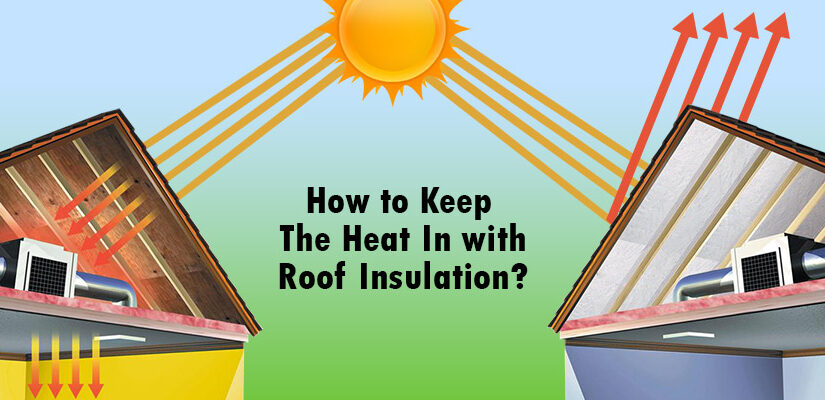
The primary aim of this article is to find the best Roof Insulation Solution for any building. So, these sheets are one of the leading industrial insulation solutions. For instance, this sheet not only prevents heat loss from the building but also don’t allow excessive heat gain from the atmosphere. Additionally, they help to save your energy consumption bill as you don’t have to make up for any loss of heat energy. For example, these sheets can reduce up to 50% heat absorption during summers and up to 40% heat loss during winters.
Attractive
These sheets come in various shapes, sizes, and colors. Additionally, you have the choice to customize them according to your taste or building type. So, a colour-coated heat insulation sheet will help to uplift the aesthetic looks of your building.
Completely recyclable
These sheets are either made from aluminum or a special polymer that has high reusable abilities. Additionally, they are recyclable without any garbage production. So, they are very environment friendly and doesn’t harm the natural balance around us.
Other possibilities for a proper Roof Insulation Solution
Many people might consider heat insulation sheets to be a generic insulation solution. However, there is various other Roof Insulation Solution that is unique and gives good results. So, let us take a look at some other insulation solutions.
Shade the Roof
During the hot summer days, when the heat gets unbearable, a human looks for a shade under a tree or umbrella. This instinct justifies that if there is something to prevent direct contact of sunlight, then you can reduce the total heat absorption. So, if you can create shade above your building then you can increase the insulating abilities of it. Additionally, you can plant some trees on the roof to enable the absorption of heat. You can use the GI Sheet, Mangalore Tiles or canvas for making the roof shade.
Top Insulation
This is a common insulation practice in cold areas. People cover the roof with flexible heat insulation layers that trap the heat inside the roof. Some other names for this type of insulation are blanket insulation or bat insulation. This insulation process uses materials such as animal hair, cotton, woollen fibre, etc. Moreover, the sheets are 12 to 80mm thick to ensure that they serve as an excellent heat absorption medium. The insulation process is useable for all types of roofs, and you can even customize the sheets to match the style of your building. Additionally, you can use these sheets for the walls of your building to ensure complete insulation of your house.
Inbuilt insulation
It is a modern insulation process. While the building is under construction, you can integrate the insulation process within the roof. You can do this by filling the entire roof with Hollow clay panels and lightweight foam concrete panels. This insulation process has three primary benefits. They are:
You can reduce the total consumption of the building as you will fill the mixture with insulating materials.
Due to less concrete, the overall weight of the building will be comparatively low. So, your building is safe against most natural disasters.
As the insulating material is present within the concrete, the insulation ability of the roof will increase drastically.
Another term for these insulating roofs is Filler slab roofs. So, this is great for Roof Insulation Solution.
Conclusive news on Roof Insulation Solution
Thermal insulation of a building is necessary to save the environment. For instance, if we can reduce the total heat emission from every building, we will be able to bring global warming under control. Moreover, you will save a lot of money that you have been wasting on your excess energy bills. Additionally, many governments recommend that buildings constructed before 1980 must get repaired with proper insulation process. It will help to reduce the average carbon footprint. Thus, we can conclude that a decent Roof Insulation Solution is very crucial for us and the environment.
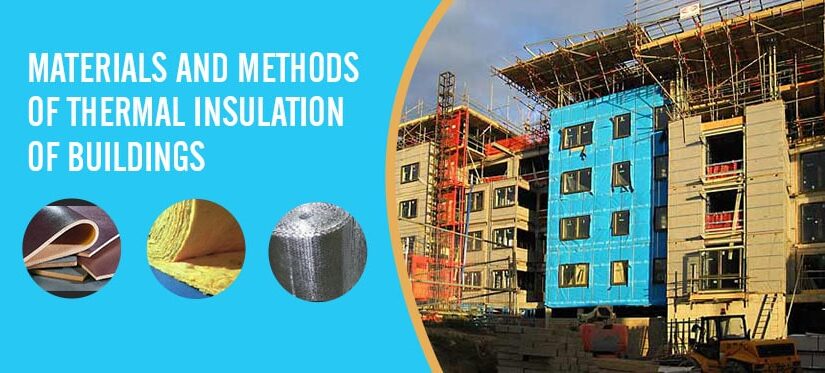
The natural condition of the earth is in huge danger due to our activities. In other words, global warming is disturbing the ecological balance of the earth. Heat emissions cause an increase in the average atmospheric pressure and harms the nature. Buildings all around the world are one of the prime thermal emitters. There are various companies like Pre Engineering Building Manufacturers India that help to curb the thermal emissions from all types of buildings. So, in this article, we are going to discuss the various method to thermally insulate the buildings.
Role of companies like Pre Engineering Building Manufacturers India
No individual can insulate his house on his own. Moreover, the story is a lot more complex when it comes to a large building like a factory. Thus, you need experts who have years of experience in this field to have effective insulation. So, companies like Pre Engineering Building Manufacturers India, are the best choice for this job. Now, it’s time to take a look at all the best thermal insulation practices.
Slab or block Insulation
This is the most common and cost-effective insulation practice. Here, you have to fix the insulator slabs to the walls of the roof. These slabs help to control heat loss or gain and thus maintain the optimal temperature in the building. You can use materials like mineral wool, corkboard, cellular glass, and cellular rubber or sawdust for this purpose.
Blanket Insulation
This is the complete opposite of slab insulation. In blanket insulation, you have to put the insulating sheet directly over the roof of the building. These sheets are usually very flexible and can adapt to almost all roof types. You can use material such as animal hair, cotton, woolen fiber, etc for this purpose. These sheets are usually 12 to 80mm thick and serve as excellent heat absorption medium.
Loose-Fill Insulation
This is an advanced insulation process. A stud space is provided between the two layers of the wall. Now, you can fill this space with some insulating material. Thus, the heat will get trapped between the two layers of the building wall. For loose-fill insulation, you can use rock wool, wood fiber, cellulose, etc. This insulation is most commonly used in cold regions.
Bat insulation is very similar to blanket insulation. The only difference is that bat inclusion sheets are thinker than the blankets. You can use cellulose, woolen fiber, for bat insulation. Additionally, just like blanket insulation, these are also spread over the walls and roof of the building.
Insulating boards
You can use pulpwood or cane to make insulating boards. The pulp is pressed with pressure under a certain temperature to turn it into sheets. Now, you have to attach these sheets to the inner side of the building to block your room temperature from being emitted through the walls. These boards are very cheap to make and thus they are very cost-effective. Companies such as Pre Engineering Building Manufacturers India make these sheets to allow insulation on a budget.
Reflective Sheet Material
Aluminum sheets, gypsum boards, steel sheet have high reflective and heat resistance capacity. This means that when this sheet will come in contact with solar heat, it will reflect it straight back. So, these materials are best for houses or buildings that are located in tropical areas with high average temperatures. These sheets can also be used to maintain a low temperature in large refrigeration units.
Lightweight Materials
This is a very easy insulation practice. During the construction of the building, certain insulating materials such as blast furnace slag, vermiculite, burnt clay aggregates, etc are mixed with the concrete mixture. These increase the heat resistance of your house and don’t need to do any sort of separate insulation in your house.
Proving a proper roof shading
If you can block the direct sunlight on your roof then, you can increase the heat efficiency of your house. Thus, you can construct a shade on your roof for this purpose. Moreover, you have to ensure that the angle of the shade is accurate to the direction of the sun. Companies such as Pre Engineering Building Manufacturers India provide innovative ideas for roof shading. They also have various customization options to help the shade blend in with the aesthetic of your building.
Conclusive view on insulation practices by Pre Engineering Building Manufacturers India
So, we can conclude that the thermal insulation of a building is very crucial to saving the environment. Additionally, it will save a lot of your energy bill that you have been wasting to make up for the heat loss due to non-insulation. Pre Engineering Building Manufacturers India has been doing building insulation for years., So they know everything there is to know in this field. Thus, you can blindly rely on them to provide you with the best insulation. Moreover, many governments have made it mandatory to have some sort of insulation in all buildings.
Every home deserves to be a sanctuary and insulation services play a crucial role in making that dream a reality. Forget drafty winters and sweltering summers – insulation acts as a silent guardian, trapping heat in when it’s chilly and keeping it out when the sun blazes. But wait, there’s more! This unsung hero also shields you from the modern-day plague – noise pollution. Imagine layers of protection whispering “shhh” to unwanted sounds, creating a peaceful oasis within your walls. Yet, amidst its undeniable benefits, fascinating facts about insulation often go unnoticed. Let’s peek behind the curtain and uncover the hidden wonders of this essential home comfort service!
The anticipated growth in the global building insulation market is projected to add $4.6 billion to its value from 2021 to 2026. Valued at $28 billion in 2021, this sector within the construction industry is expected to reach $33 billion by 2026. The significance of insulation lies in its contribution to sustainable construction practices, effectively curbing heat transfer and enhancing the energy efficiency of buildings. Join us in this article as we explore the top 10 intriguing facts about insulation services.
What is insulation services?
Insulation services, specifically home insulation services, encompass a range of expert solutions geared towards enhancing the energy efficiency, comfort, and sustainability of residential structures. Insulation refers to the material or combination of materials used to slow down or prevent the transfer of heat, sound, or electricity between different spaces or materials. These services involve the installation and maintenance of materials within buildings or structures to regulate temperature, reduce energy consumption and control sound transmission. These services play a crucial role in creating comfortable, energy-efficient and acoustically sound indoor environments.
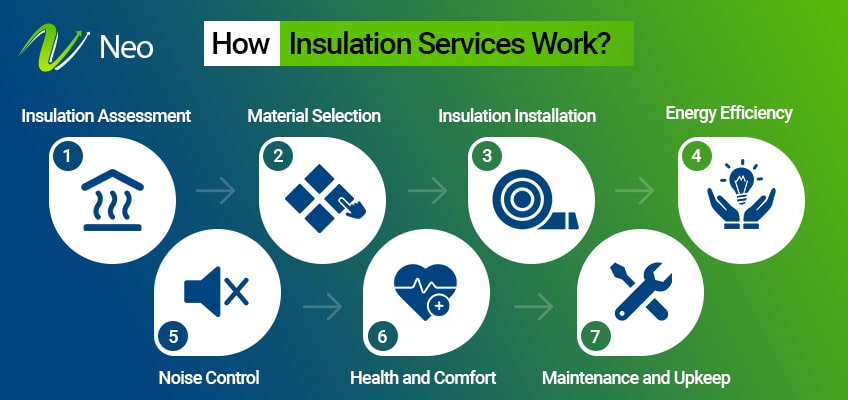
How does Insulation Services work?
1. Insulation Assessment
Insulation contractors begin by conducting a thorough assessment of a Building’s Insulation needs. This involves considering factors such as climate, building design and energy efficiency goals.
2. Material Selection
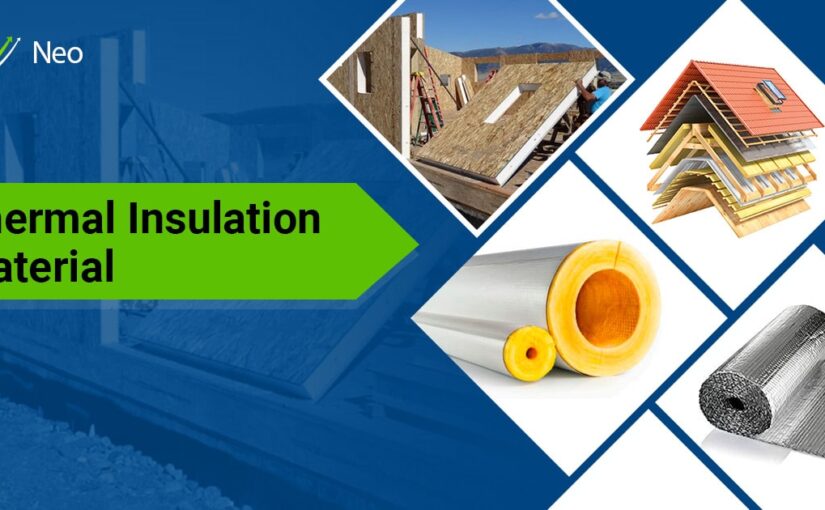
Thermal Insulation services begin with the selection of appropriate insulation materials. Common insulation materials include fiberglass, cellulose, foam board, spray foam, mineral wool and reflective foil, each with its own unique properties and applications.
3. Insulation Installation
Insulation contractors expertly install the selected materials to create a barrier against heat loss or gain. This process involves placing insulation in walls, ceilings, floors and other areas where energy transfer occurs. Proper installation is crucial for the effectiveness of the insulation.
4. Energy Efficiency
Insulation contributes to energy efficiency by reducing the need for excessive heating or cooling. This, in turn, can lead to lower energy consumption, decreased utility bills and a reduced environmental impact.
5. Noise Control
Multi-layered insulation materials also provide a shield against noise pollution. Insulation contractors use these materials strategically to create barriers that absorb or reflect sound, resulting in a quieter indoor environment.
6. Health and Comfort
Professional Insulation services contribute to the overall health and comfort of occupants by preventing drafts, controlling humidity and minimizing the infiltration of allergens and pollutants. This is particularly important for individuals with respiratory conditions.
7. Maintenance and Upkeep
Insulation contractors may offer maintenance services to ensure that insulation continues to perform optimally over time. This can include periodic inspections, repairs, or upgrades as needed.
Types of Insulation Services
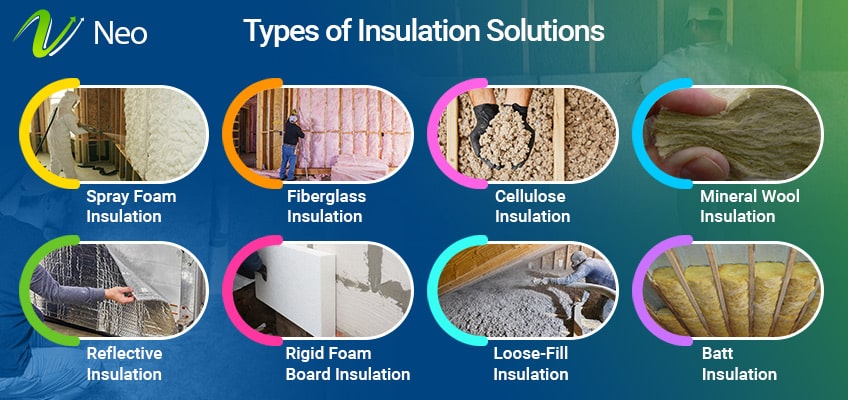
1. Spray Foam Insulation
This involves spraying a liquid foam that expands into a solid, providing an effective seal against air infiltration. Spray foam insulation is versatile and can be applied to various surfaces and irregular spaces.
2. Fiberglass Insulation
Fiberglass insulation consists of fine glass fibers and is widely used for its affordability and fire-resistant properties. It is available in batts, rolls and loose-fill forms.
3. Cellulose Insulation
Made from recycled paper or plant fibers, cellulose insulation is an eco-friendly option. It can be blown into cavities or installed as loose-fill, providing good thermal resistance.
4. Mineral Wool Insulation
This insulation type is derived from natural minerals like basalt or recycled slag. Mineral wool is known for its fire resistance and can be used in various applications, including batts, blankets and loose-fill.
5. Reflective Insulation
Reflective insulation materials typically consist of a reflective surface that reflects radiant heat. This type of insulation is often used in attics to control the transfer of radiant heat.
6. Rigid Foam Board Insulation
Rigid foam boards are made from materials like polystyrene, polyisocyanurate, or polyurethane. These boards provide high thermal resistance and are suitable for walls, roofs and foundations.
7. Loose-Fill Insulation
Loose-fill insulation, such as blown-in fiberglass or cellulose, is installed by blowing or pouring loose insulation material into cavities, attics or other enclosed spaces.
8. Batt Insulation
Batt insulation comes in pre-cut panels or rolls and is typically made of fiberglass. It is designed to fit between standard spacing in framing, making it a convenient option for walls and ceilings.
Types of Insulation Sheets
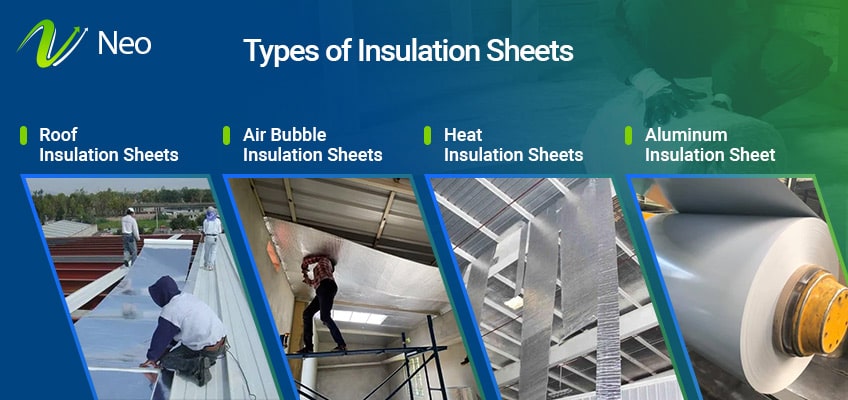
The insulation sheets play a crucial role in enhancing energy efficiency, maintaining optimal temperatures, and contributing to overall comfort within living and working spaces. This exploration into the “Types of Insulation Sheets” seeks to shed light on the characteristics, applications, and advantages of these materials, empowering homeowners, builders and insulation enthusiasts with the knowledge needed to make informed decisions about their insulation needs.
1. Roof Insulation Sheets
Roof insulation sheetsplays a pivotal role in creating a thermally efficient and comfortable living space. The choice of insulation sheets is a crucial aspect of roof insulation services, contributing to energy savings and enhanced home insulation.
2. Air Bubble Insulation Sheets
Air bubble insulation sheets have gained popularity as an innovative and effective solution for thermal insulation in various applications. These sheets, often comprised of layers of reflective foil and trapped air pockets, offer a range of benefits that make them a preferred choice in the realm of insulation.
3. Heat Insulation Sheets
Heat insulation sheets are essential components in creating energy-efficient and comfortable environments by preventing the transfer of heat. These sheets, designed with specific thermal properties, find applications in various industries, construction projects, and home improvements.
4. Aluminum Insulation Sheets
Aluminum insulation sheets represent a sophisticated solution in the realm of home insulation services, combining the versatility of aluminum with the thermal properties essential for effective insulation. These sheets, often composed of aluminum foil layers and other insulating materials, offer unique advantages in enhancing energy efficiency and maintaining optimal indoor temperatures.
Facts About Insulation Service
Thermal Insulation services, often delivered by skilled insulation contractors, go beyond the contemporary understanding of regulating temperature and reducing energy consumption. Insulating your home is not just about keeping the energy bills in check; it’s a fundamental aspect of creating a warm and comfortable living space. However, there are several misconceptions surrounding insulation, and it’s crucial to grasp the key facts. Here are 13 intriguing facts about insulation that should be on your radar:
1. Recyclable and Reusable
Insulation is a recyclable and reusable heating solution, contributing to sustainability. Materials like cellulose insulation are crafted from 85% recycled paper product, making them eco-friendly choices for maintaining a warm home. This recycling process transforms post-consumer and post-industrial paper waste into a high-performance insulation material. By utilizing recycled materials, cellulose insulation reduces the demand for new resources, promoting a circular economy.
2. Easy Insulation Installation
When it comes to enhancing the comfort of your home and achieving significant energy savings, installing insulation stands out as a simple and easy. The process of insulating your home doesn’t require complex procedures or extensive renovations, making it an accessible and impactful home improvement option. In the realm of sustainable construction and responsible energy consumption, insulation stands out as a simple yet powerful tool.
3. Cost-Effective
Insulation services offer a cost-effective investment for slashing energy bills. Despite the initial cost that may seem substantial, insulation services prove to be a wise financial decision. The investment pays for itself within five to six years and continues to generate savings over its impressive 40-year lifespan. Recognizing insulation as more than just an upfront expense, this strategic financial move becomes evident as it significantly curtails energy bills, showcasing a swift return on investment.
4. Energy Bill Savings
By investing in top-notch Thermal insulation, you can enjoy significant savings. High-quality insulation can potentially cut down utility bills by as much as 40%. Given that heating and cooling makeup about 54% of typical utility costs, choosing the right insulation services becomes a smart approach to managing expenses and avoiding unnecessary energy waste. This underscores the considerable financial impact of effective temperature regulation on household spending.
5. R-Value Measurement
Integrating top-tier thermal insulation services into your home can lead to significant savings. The implementation of optimal insulation has the potential to achieve a remarkable 40% reduction in utility bills. Given that heating and cooling account for 54% of average utility expenses, choosing the Professional insulation services emerges as a potent strategy to manage costs and curtail energy wastage. This emphasizes the considerable financial impact that efficient temperature regulation, facilitated by high-quality insulation, can exert on overall household expenditures.
6. Reduces Carbon Dioxide
Insulating a house not only lowers energy demand but also reduces carbon dioxide emissions. By decreasing energy needs, insulation contributes to a greener world by curbing a major contributor to global warming. This natural air pollutant is a major contributor to global warming and climate change, so by using insulation you’ll be lowering your carbon footprint and contributing towards a greener world.
7. Varieties in insulation service
People often misunderstand that insulation is only a one-step process and has no variety. But actually, insulation service has over 10 varieties. Such insulation services include insulation with the help of spray foam, blown fiberglass, injection foam, rigid barrier, cellulose, etc. The realm of Thermal insulation is far from a singular, one-size-fits-all approach. Contrary to common misconceptions, insulation offers a diverse array of options, each tailored to specific needs and preferences. These types of insulation materials span from spray foam and blown fiberglass to injection foam, rigid barrier, cellulose, and more.
Schedule a consultation for top-notch Insulation Services.
As we discussed before, asbestos was an earlier solution to insulation. But later, it was discovered that asbestos had permanent harmful effects on the human lungs. So, there was an immediate need to replace it with a safer insulating material. Thus, fiberglass came into existence and it became a quick success. As a result, we use it today in all Professional insulation services.
Thus, Fiberglass is one of several accidental inventions. Maybe if this accident hadn’t happened then we would be still using harmful asbestos for insulating services.
9. Upgraded Insulation can increase your home’s value:
Installing new insulation not only contributes to energy bill savings but can also enhance your home’s market value. Elevating your home’s Energy Performance Certificate from a D to a C has the potential to boost your house value by 3%. Furthermore, achieving an increase of two bands could result in an impressive 8.8% rise in your property’s overall value.
10. Coloring insulation material for better results
Many people simply install insulation material and think that it’s all they need to do to save energy. But very few realize that coloring the sheets will improve the insulation capacity. A dark color will help it to absorb more heat and increase the insulating ability. On the other hand, a lighter color will help it to reflect a lot of heat and maintain a low temperature.
In summarizing this discourse on insulation services and unveiling compelling facts about insulation, it’s resoundingly clear that insulation stands as a non-negotiable element for every household. So, from this article, we can easily conclude that insulation is a must-have for all houses. Many governments have made it mandatory for new construction.
Opting for Neo Thermal Insulation, recognized as a leader in thermal insulation services, becomes a strategic move for transforming outdated homes into energy-efficient sanctuaries. Therefore, it is a great idea to renovate all old houses with insulating materials. Insulating services are very affordable and don’t drain you by any means. They are available both offline and online. And, the companies also provide excellent after-sales support. it is a fundamental necessity for all houses. Governments worldwide have recognized its pivotal role in energy efficiency, making it mandatory for new constructions. Looking back to the pre-1980 era, when insulation wasn’t a requirement, we see a stark contrast in energy consumption and emission levels.
Frequently Asked Question
1. What are the benefits of having insulation services?
Insulation services contribute to substantial savings on heating and cooling expenses, often exceeding 40%. This reduction in energy consumption leads to lower utility bills, making it a cost-effective investment for homeowners and businesses alike.
2. which company provide the Professional insulation services?
Neo Thermal Insulation is the best insulation company in India that provides top insulation services for diverse sectors like Warehouses, Manufacturing Industries, Commercial, Domestics, Apartments, Malls, Fitness Training Centers, etc. In the services include roof thermal insulation, complete building insulation, ceiling insulation, floor insulation, etc. They have a team of insulation constructors that analyze your building inside-out and recommend the best thermal insulation services that will provide high resistance to your building and will sustain all weather changes to keep your interior environment unchanged.
3. Where is the best place to put insulation?
Insulate every outer wall, encompassing (3A) walls that separate living spaces from unheated garages, shed roofs, or storage areas; (3B) foundation walls situated above ground level; (3C) foundation walls within heated basements. Additionally, apply insulation to floors positioned above unconditioned spaces, such as vented crawl spaces and unheated garages.
4. How long is insulation good for?
The lifespan of insulation can vary based on factors such as the type of insulation, environmental conditions, and the quality of installation. Here are general estimates for the longevity of common types of insulation:
1. Fiberglass Insulation: Fiberglass insulation, when properly installed and not subjected to damage, can last for 100 years or more. It is durable and does not deteriorate over time.
2. Cellulose Insulation: Cellulose insulation, typically made from recycled paper or plant fibers, can have a lifespan of around 20 to 30 years. However, its longevity can be affected by factors such as moisture and settling.
3. Spray Foam Insulation: Spray foam insulation has a long lifespan and is known for its durability. It can last 20 years or more, and its effectiveness is less likely to diminish over time.
4. Polyurethane Foam Insulation: Like spray foam, polyurethane foam insulation is durable and can last for several decades. With proper installation, it can provide effective insulation for 20 years or more.
5. Mineral Wool Insulation: Mineral wool insulation, made from materials like basalt or recycled slag, is known for its resilience. It can last for 50 years or more, maintaining its insulating properties.
Let us face the fact here. In case your house is situated in a place where the climate is cold, keeping it hot during the wintertime is going to be pretty expensive. There are some attics that are really worth protecting form the different cases of temperature changes and heat escape problems for sure.
So, for these cases, it is really important to choose some proper and effective insulation material. In most situations, people tend to go to PUR Foam. Hence, it is really essential for people to know how to use it and how to measure the attic space or area for heat insulation. This is exactly what this article is about. Check out this article for the perfect heat insulation solution.
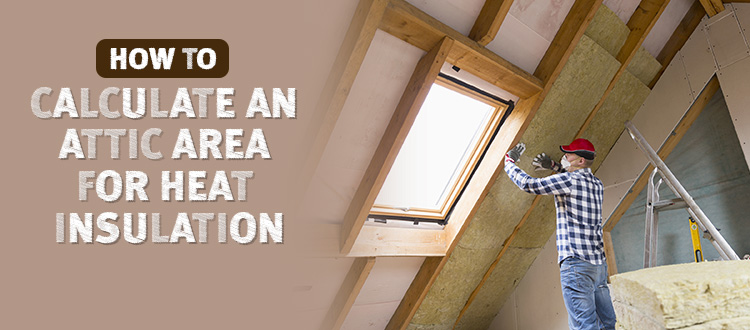
Calculating The Attic Area For Proper Heat Insulation
Ascertaining a usable area or space of an attic can cause issues. It is important to keep in mind that the surface used for insulation isn’t equivalent to the surface which is situated in an upper story. So as to precisely figure its worth, you have to think about the components of roofs and inclinations.
The specific outcome can be acquired by estimating the whole attic. You can likewise utilize an equation that generally decides its usable area. How to figure out square meters of the slants? Accept that there is 1.4 m2 for the insulation of a rooftop surface for each m2 of an upper area. Definite information on the best way to figure a usable area of the attic can be found in the different standards of construction.
In the event that you don’t plan to make a usable area under a rooftop, the entire calculations are less confounded. How to total the slants on a non-utility rooftop? You don’t have to know their measurements. Also, you can do the thermal insulation just on an upper story. At that point, the estimation of the surface to be protected is equivalent to the outside of a roof.
On account of the heat insulation solution of an attic, the thickness of the thermal insulation layer is significant, particularly if a room is to be usable. The touch of thermal insulation occupies a touch of room, lessening its volume.
The thickness of the attic insulation relies upon the estimation of the heat transfer coefficient U. Its worth is as of now 0.18 W/(m2K), thusly the thickness of the open-cell PUR foam layer, for example, Purios E, which ought to be secured with an upper room, is at any rate 21 cm. The lower the thermal transferring coefficient you need to accomplish is, the thicker the foam layer ought to be applied. To accomplish the U-esteem for the shut cell foam, for example, Purios H, the ideal foam thickness is just 12 cm, which on account of practical attics is critical.
On the off chance that you anticipate a more elevated level of insulation, you can apply a thicker layer of up to 24 cm. Such thickness of PUR froth will build the degree of insulation, which will have an extra sparing on account of room warming, and as a result – for your funds.
Choice Of Proper PUR foam For Insulation Of An Attic
There is certainly no unambiguous answer – the two sorts are ideal for thermal insulation. The open-cell PUR Foam, for example, Purios E, is a lightweight material with incredible insulation properties. Moreover, it is impeccable as an acoustic isolator. Thus, the closed-cell foam, for example, Purios H, is recognized by a low heat transfer coefficient. It is unbending, impervious to mechanical harm, and doesn’t assimilate dampness, which results from high dispersion opposition and the structure of shut cells. The open-cell foam is suggested for wooden upper rooms and the closed-cell foam – for attics made of cement.
On the off chance that ascertaining the initial expense of the attic insulation is hard for you, you can utilize the type of attic thermal insulation calculation. This apparatus will assist you in deciding the sum that you will presumably need to spend on the insulation of a rooftop.
You can utilize the loft insulation number cruncher on the off chance that you have just decided the size of a rooftop surface to be protected, you comprehend what material you need to utilize, and you know the prerequisites for the protection thickness. Look at whether you intend to convey rooftop protection with a wooden roof and corner to corner storage room floor, or protecting a roof over a story. The subsequent stage includes the assurance of the sum for the work believing the sort of a surface to be protected.
So, that is all we have for you today. We have mentioned details about finding out the perfect usable area in the attic for insulation. Also, we have mentioned how to calculate the amount for the heat insulation solution. Make sure to follow this article for more details.
When it comes to summer, there are so many exciting things to do and explore such as beaches, watermelon coolers, pool dips, BBQs, mountains, and more. However, all this excitement soon vanishes when summer goes to its peak. Every year, people think that this year is the hottest summer ever and staying in the home, and turning on AC is the only option left for them.
But, the situation is not done yet because now people have to face various challenges to stay cool in summer such as high electricity bills, bad environmental impact and many homes are not prepared for such hot weather.
At this point, many people don’t know how to keep home cool in summer. Well, if you don’t have any ideas, then this guide is all you need.
Fortunately, there are numerous ways that you can try to keep your home cool.
Here, we have covered some of the best sustainable ways to keep your home cool in the summer, provide comfortable living at home, reduce electricity bills and ensure a healthy environment.
So, without any further delay, let’s find out!
How to Keep Home Cool in Summer? – Top Six Ways
Here are the six most ways to keep your house cool in the hot summer:
1. Proper Insulation
One of the most sustainable and eco-friendly ways to keep your home cool in the summer is by properly insulating your home. Proper insulation creates a layer that acts as a barrier, prevents the outer hot air, and keeps the inside temperature cool.
When you’ve done proper insulation, then the usage of air conditioning is reduced, electricity bills are low, and your indoor temperature is naturally cool with high air quality. There are different types and sizes of insulation available, such as rolls, panels, spray foam, fiberglass, or metal roof insulation.
Each types of insulation has its own way of protecting your home for heat prevention and keeping your home cool in summer. However, insulation is a typical process that requires professional help to install in your walls. So, you can choose the most suitable thermal insulation option done by professionals for cool and comfortable living.
Having proper insulation in your home will keep your home cool in summer and warm in winter, reduce your electricity bills, provide pure indoor air quality and ensure long-term savings.
2. Sealing Gaps and Cracks
Another common way to keep your house cool in summer is by sealing all the gaps and little cracks in your house. Even when you’ve closed all the windows and doors properly, the hot air keeps coming, which means there are some gaps and cracks left that you haven’t noticed yet.
So, first you should look and identify all the places where you can check the gaps and cracks where hot air coming around windows, door frames, crawl spaces, etc and then use draught excluders to properly seal it tightly to make sure hot air didn’t come into your house or cool air did not escape.
3. Effective Ventilation
If your house gets immediately hot during summer, even if the AC is turned on, then there’s no proper ventilation. You need effective ventilation throughout inside hot air and give space to cool air.
All you can do is open the windows early in the morning and late at night when the outside temperature is a bit cool, which can help you replace the inside warm air with cool air and ensure proper ventilation in your house.
It’s recommended to open windows around 5 am to 8 am and 8 pm to 10 pm to improve airflow around your house. Plus, you can also start exhaust fans to throw the hot air outside for faster cooling.
4. Air Conditioning
Air conditioning is the common way that most people prefer to cool down their inside house temperature. However, running the air conditioner all the time can increase the electricity bills and badly affect the environment.
If you use the air conditioner efficiently by setting an optimal temperature, keeping your air conditioner maintained by cleaning or replacing filters and using other sustainable ways then surely the usage of air conditioner will reduce that overall leads to low electricity bill, high cooling in house and pure air quality.
Most heat directly comes from the windows. So make sure you keep the windows shut with blinds and covers during the summer season. It will prevent the heat flow inside of the house and keep the house cool.
You should especially close those on the west and north-facing windows from late morning to early evening. Plus, you can consider breathable curtains like sheers, cotton, jute or bamboo shades to prevent maximum sunlight.
6. Exterior Shading
To prevent the effect of direct sunlight on your house, there are various external shading things you can consider, such as awnings, solar panels, planted trees, etc, which can absorb the direct sunlight and reduce the impact. For example, inside plants, it can keep the temperature cool and provide pure air.
How to Keep the House Cool in Summer Without AC?
Keeping the house interior cool in summer without AC is vital for energy conservation, reducing electricity bills, and minimizing environmental impact. It promotes a healthier indoor environment by avoiding the dry air and allergens often associated with AC use. Further, natural cooling methods bring comfort and well-being, making living spaces more pleasant without relying on energy-intensive air conditioning systems.
Optimize ventilation
At times when the outside temperature drops, usually during early mornings or late evenings, open windows to let in the cooler air. Open windows on opposite sides of the house to create cross ventilation and promote air circulation.
Block Out the Sun
Block the heat coming from the sun through your windows to keep your home cool without AC. The easiest way is to use light-colored curtains or blinds. This passive or natural cooling method is one of the effortless and cheapest ways to keep your home cool in summer.
Reduce Heat Sources
Appliances that usually generate heat such as hair dryers, water heaters, electric irons, and dishwashers, etc. should be used as minimum as possible to avoid heat transfer. Additionally, use LED bulbs instead of normal lights as they produce less heat.
Use Cooling Techniques
Under the most common cooling techniques and methods, one of the simplest ways is to buy an air cooler that works on the principle of evaporative cooling that can help you beat the heat during the peak hours of summer.
Conclusion
Keeping your house cool in summer is the most challenging thing. However, there are some sustainable ways, like proper insulation at home, sealing gaps, exterior shades, and curtains, which can actually help to prevent the heat inside flow and keep your home cool in the summer without impacting the electricity bills.
By implementing these ways, you can make this summer cooler, comfortable, save energy consumption , and sustainable. Because the climate is changing rapidly, summer temperatures will keep rising. So, it’s better to prepare early to make your house cooler. We would love to know how you’re planning to keep your home cool this summer. Please Share your additional tips and exercises by commenting below.
FAQ
1. What is the most cost-effective way to cool my home?
The most cost-effective way to cool your home is by doing proper insulation and sealing air leaks. Both ways can help to keep your home cool inside and reduce the need of air conditioning.
2. How can I keep my home cool without using a lot of energy?
To keep your home cool without using a lot of energy then you need to implement sustainable ways that will keep your home cool in summer such as proper insulation and ventilation, and cover windows with curtains.
3. Are there any eco-friendly cooling solutions?
Yes, doing thermal insulation in the internal walls of the house can protect the home from external temperature keep it cooler in summer, and provide clean air, which makes it the best eco-friendly option.
4 How often should I service my air conditioning system?
If you are using AC regularly, then it’s recommended that AC service is performed at least once a year.
5. What are the benefits of using thermal curtains?
Thermal curtains are the best option to protect the heat from direct sunlight. These curtains can block the sunlight, reduce the heat impact in your house, and ensure internal cooling temperature. Also thermal curtains help in noise reduction and prevent UV rays.
6. Can landscaping really help in cooling my home?
Yes, trees are the most natural way to keep your home cooler in summer because they can absorb the heat and release pure and cool air, which keeps the inside temperature cooler in summer.
7. How do reflective roof coatings work?
Reflective coatings are also known as solar reflective paints. These are specially designed to prevent direct sunlight from moving away from the roof’s surface and ensure the inside temperature is cooler in summer.
8. What are some quick fixes for an extremely hot day?
Some of the quickest fixes are using fans with ice in the bowl in front, opening windows, cross-ventilation, running exhausts and limiting appliance use.
We’ve been around talking to our people today and the environment is very buoyant. NEO’s people are glad to be back at work again and serve you with extra safe services.
A little bit apprehensive of course they are, but you can see all people are getting return into the swing of working. They’re getting used to social distancing.
We assure you that the working environment and atmosphere at the NEO is completely fantastic during the COVID-19 pandemic.
Everybody is happy to provide excellent customer service again.
The course of Action To Prevent The Spread Of COVID-19 Pandemic With Supporting Customer Service
The unpredictability caused by the COVID-19 pandemic has tremendously impacted distinct business cycles across the world. We are taking higher precautions for the protection of people and to reduce the chances of an increase of COVID-19 disease by following simple steps as mentioned below.
1 The initial step is, we ask our associates to check their body temperature when they’re at home because we know that temperature’s a vital indicator of this disease.
2. We have installed thermal cameras so we can check our employees’ temperatures when they come for services throughout the day.
3. Every one of our associates has access to full PPE to make them feel comfortable with coming back to work, including the safety visor. We’ve been producing these ourselves and we’ve made sure every single person has access.
4. We put the safety of our NEO’s family and customers prior.
5. We provide sanitizer, and alcohol-based hand washes to clean hands often. All you know is that washing your hands with soap and sanitizer for at least 20 seconds, kills the viruses that may be present on your hands.
6. We, at the NEO, maintain the social distancing for a minimum of 1 meter while designing and manufacturing thermal insulation sheet material. So, if someone is having health issues like sneezing, cough, or at the time of speaking, your body should not come in contact with droplets, which may contain viruses.
7. NEO is advising the customers to stay at home with no worries. We deliver NEO products to your doorstep without any trouble.
8. Additionally, we are using a face mask and gloves to take extra precautions. It is advisable for NEO’s people not to touch the nose, eyes, ears and mouth. These are the most important places viruses can enter into your body.
9. We are also offering the best packaging services for each order made at NEO.
10. It is recommended to the NEO’s people and its customers to follow the extra respiratory hygiene. All you need to wash your hands with running water regularly.
11. Immediately dispose of the used tissue. By doing this, you can protect all nearby people with infection.
12. Now, we are reaching out to our customers by delivering and providing the best NEO and installation services at their doorstep.
13. We offer our services through different digital mediums to the customers.
14. Furthermore, we are sanitizing each product at every milestone as well as after the final packaging of product material.
15. We promise our customers to give the best quality of the materials generated and constructed by NEO.
16. Importantly, we are dealing with the latest technical aspects, which makes every single requirement more beneficial.
17. Our experts are always happy to serve you better in all parts of material designing to delivery, as well as with the most important specifications, requirements and queries during this COVID-19 pandemic situation.
18. In the end, we advise our customers to stay at home. Although we promise to give the best services and delivery at your doorstep. Stay safe.
Do’s
Avoid close contacts with the sick person or those who are having cold or cough.
Also, if you’re feeling sick, it’s better to stay at home.
Always cover your mouth and face if you cough or sneeze.
Stay at home quarantine, if you’re feeling sick. There’s still no vaccine available for COVID-19 disease. So, this is the one single way to prevent or stop other people from getting sick.
It is importantly advisable to clean your regularly usable things for example doorknobs, tables, light switches, watches, the pen with some soap and water or sanitizer.
You can also use different high-quality screen cleaners for your cell phones, tablets and laptops.
Wash your hands before eating anything and after coughing or sneezing with soap and water for at least 20 seconds immediately.
Always use quality sanitizer with at least 60% alcohol.
Don’ts
Do not share food or drinks.
Do not share your personally used face mask and gloves.
Also, if there is the shared washroom, all you need to use separate towels which are regularly washed and cleaned.
Don’t touch any body part like mouth, eyes, nose, lips, ears when you’re outside or at any public place.
Do not go near to anyone who is feeling sick.
Above all are the measures to prevent the spreading of COVID-19 pandemic.
We assure you to give the best in class strong as well as safe services with quality installation, delivery, product packaging to our customers with doorstep delivery by NEO thermal insulation.
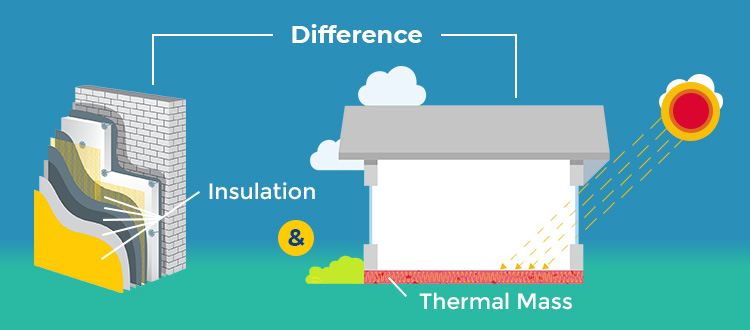
Insulation and thermal mass are the terms related to thermal insulation for home. But people often get confused between both these terms thermal insulation and thermal mass. So knowing the difference will not only help you understand about them but also will make you decide between the use of their combination or only one to prepare a more substantial and effective solution. Both are used to control the temperature inside a house throughout the seasons but work in a completely different way. Their use will not only help you in saving money on the long term basis and increase overall energy efficiency.
We are here to answer the basic difference between thermal mass and insulation to help you decide accordingly and protect your home.
Thermal Mass
Thermal Mass is a specific material with the ability to absorb but also store and radiate heat energy. In a home, you can find these materials in the form of masonry like brick, concrete, adobe, rammed earth and earthbags. To help you understand thermal mass, besides explaining thermal heat formulas and equations which are not meant to common people. I would like to explain it using a simple example.
If you are having an old uninsulated adobe house. The walls will simply soak up the heat during the day and channel the heat through the wall at a rate of 1 inch per hour. When the wall is fully charged like a battery by the end of the day, it will start emitting heat to the interior and keep it warm overnight. While in the night walls started getting cooler from outside at the rate of 1 inch per hour and radiated it into the house during the day. The cycle keeps on repeating and maintains room temperature. People have figured out this amazing physics a very long time ago.
Thermal mass can also be understood as the thermal admittance because both are proportionally related. Actually, it is the capability of absorbing and releasing heat. The higher thermal admittance results in higher thermal mass. Other than this, thermal mass can also be explained through the material density (higher density means higher thermal mass). While the thermal conductivity is calculated based on the heat travel through the material. For example, the materials like stone, brick, concrete, gypsum plaster and water hold high thermal mass. Whereas, the materials like timber, steel or mineral fibre insulation possess low thermal mass.
The insulation can be understood as the ability of a material to slow down the transfer of heat energy and maintain the temperature between inside and outside. This ability to maintain heat energy is decided based on R- and U-values of the material. The materials like foam, fibreglass, loose-fill or any other reflective materials, provide thermal insulation for home.
Proper insulation can safeguard your home from drastic weather and temperature changes throughout the year. So choose insulation material sensibly because all products are not meant for every part of your home. Like insulation for the floor uses different material as compared to the roof or cavity wall.
Homes built using structural insulated panels are the best example of thermal insulation. Such houses have walls manufactured with big foam pieces sandwiched between specific sheathing formed by engineers like oriented strand board (OSB). These panels with mostly foam form an extremely tight super-insulated shell which results in no air transmission to keep the room temperature unchanged.
The decision between choosing thermal mass and insulation depends on the temperature fluctuations outside. If you want to maintain a stable, constant temperature inside the home as compared to the stable, constant temperature outside but comparatively higher than the inside temperature. You should go with the thermal insulation because it will prevent additional heat emission inside and will maintain a proper difference between outside and inside temperature. In this case, if you choose thermal mass it will soak out heat and eventually release inside which will equalize temperature both outside and inside the home. So basically thermal insulation is an ideal choice since it prevents overheating in the day time and overcooling during the night.
What if you choose the best of both-thermal mass and insulation?
If you have ever noticed an old adobe, you should be aware of how it regulates temperature and gets cold in the winter after a series of cold sunless days. Whereas a super-insulated home completely depends on artificial heating and cooling systems to control the air temperature.
So the combination of thermal mass and insulation will be the most practical solution. Because it will provide complete insulation but you have to rely on cooling and heating devices you are going to use.
The combination of thermal mass and insulation is often considered as passive solar design. It provides a comfortable space to live in where heat and cool manages itself naturally without any artificial heating and cooling systems. It results in the reduction of heating and cooling bills and preserves natural resources as well.
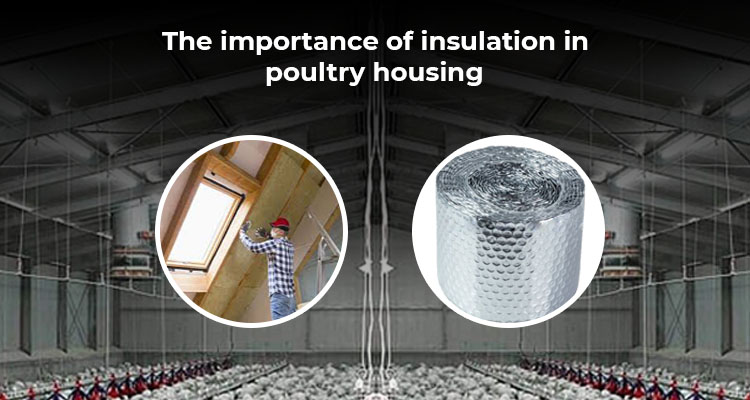
“Do you have a poultry farm or planning a new one? Make sure you follow the chief guidelines and plan an organized Poultry Farm Insulation. Wondering why insulating poultry houses proves beneficial? Let’s find out.”
Poultry and Its Roots
Poultry is the method of raising the domestic bird for their eggs and meats. These birds can be chicken, geese, ducks, turkey, etc. The practice of poultry farming is conducted for several years and is an integral part of the farming and agriculture system in India. Poultry farming techniques have a whole new science that is evolving every day. India has a large consumption of eggs and meat. Therefore, India ranked third in egg production and fifth in chicken meat production in the world. The science of agriculture and poultry farming is introducing new methods and techniques to enhance the productivity of the business. The eggs are a good source of protein and are considered as mandatory breakfast in most of the metro cities in India.
Rearing birds for eggs is called layers and raising them for meat is called broilers. Both, layer, and broiler are part of poultry farming. Many factors should be kept in mind before starting a poultry farm such as the breed of bird, type of temperature they need, type food available in the market for feeding, types of vaccinations (if required) etc. Out of all these, one basic and most important need is to create a healthy environment and temperature so that they do not face any inconvenience while laying the eggs and performing activity.
Poultry farm insulation is the method to cover the habitats of layers and broilers to maintain the temperature. Why is it important?
Maintains the Temperature
The body temperature of the chicken is expected to be 106-degree Fahrenheit (41-degree Celsius). The temperature depends on the type of production for which chickens are raised. It is essential for all the birds, especially egg laying birds to be kept in an environment where they can facilitate with enough temperature. The correct temperature helps the birds to make their internal system work well which results in laying good eggs. The insulated shed helps to maintain the temperature of the birdhouse.
Protection from UV Rays
Global warming is increasing rapidly which is resulting in depletion of the ozone layer. Due to the poor shield of the ozone layer, harmful Ultra voile trays are directly reflecting on earth. These UV rays can cause skin diseases and many other hazardous body problems. The bird shelter should be insulated to prevent them from these harmful rays. The water consumption by the birds should be well purified. Therefore, an insulated water tank jacket is suggested to wrap around the water tank to protect the tank from UV rays and other harmful pollutants.
The biggest problem that occurs in poultry farm management is the disease in the birds. If any of the birds gets any disease, it will quickly spread among other birds. The main source of any disease can be caused by interaction with rodents, insects and other unwanted flies. The shelter should be insect-proof so that the birds stay healthy. It is important to protect the roof and other parts of shelter from rodents, insects and other unwanted flies. The insulation on roofs and walls will prevent the rodent and flies from entering the shelter. Like this, there are fewer chances of spreading any type of influenza among the birds.
These little creatures are yielding at large numbers. It is important to protect them from the chaotic area, heavy rain, storms, excess of cold and hot weather. If insulation is done efficiently then not a single drop of rainwater can enter the birdhouse. The insulation roofs and walls stand solid in rigid weather and promise to guard the birds from any weather condition.
Conclusion:
The water tank covers are easy to install and are ideal for poultry farming. Poultry farm insulation materials are leak-proof and are last in all weather conditions. Insulation poultry house help the animals and birds to stay healthy by protecting them, for various problems. The insulation is suitable for all types of domestic rearing and breeding shelters. After all, the animals and birds give you the output only if you take care of them by proving the best care of their hygiene. Make the insulation installed in your poultry farm today and boost your business productivity.
Machines, they are just like humans. If you want a man to work for long, you have to keep up his energy, provide him proper rest. Same goes with machines. With regular maintenance they can be your best investment. Machines take longer to fix once they are start malfunctioning due to poor maintenance. Thermal Insulation is one of the important parts of carrying out proper maintenance. With proper maintenance you can prevent all the problems about to occur in the near future. This way you are saving yourself a big fortune for self and protecting your investment.
Preventive maintenance is like taking record of data of the machine when it was new and good. We can say that equipment are in top shape when they first to the work station. In this data record you have to record the data of the resistance shown in by machines/instruments. If the value of the insulation resistance is consistent shows that the device is still in good shape. But if there is any kind of decrease in insulation resistance then it is a bad news for the equipment. This indicates that you might run into trouble in the near future.
How Preventive Maintenance Benefits?
Beating the Time:
Without preventive maintenance equipment can only run for a fixed time period that is sometimes shorter than estimated time by manufacturer. With insulation this age can be extended for a long period. This extension of age results in saving a big amount of your investment on equipment.
As insulation maintenance is presented as the solution to machines or equipment it can not increase their age, it will also increase the efficiency. This regularity in checking for the defects in work-flow of the machines increases your product quality too.
Safe and Sound:
There are several cases happened in industrial facilities all because of the poor preventive maintenance schedules. Burn hazard is one of the most frequently occurring in the plants. By installing some insulation jackets a plant can stop there hazards by spending a few hundred dollars more. So with this you are not saving the life of your equipment but also the life of the workers on that machine.
Eliminating Corrosion:
Moisture, one core enemy of all kinds of equipment. If you failed just slightly you can see how much a little thing like moisture can be dangerous. A little introduction of moisture for a long can cause corrosion to machine parts, that can reduce the age of the machine to half very easily. So introducing a proactive maintenance to equipment on time to time basis can solve these kind of problems very easily.
So if you are tying things near a fixed budget then you have to consider all the things that can cost you a fortune in future. This is where you need to see through the time. But sometimes people do not count maintenance in this list but now you know should. Stopping a problem a lot before it takes place your power here that enables you to see through the time. So try to keep the insulation maintenance done frequently so that you can save a lot by not losing your machines and investing them in growing you venture strong.
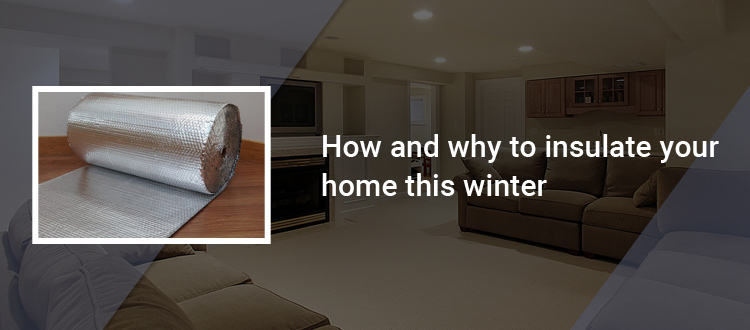
The winter is knocking at the door, and people at home have started preparing for keeping their home warm and cozy. The traditional approaches that were once popular like open-coal fire, kerosene lamps and indoor small room heaters are replaced with modern heating appliances and insulation techniques. These techniques are far efficient and effective regarding durability, maintenance cost and installation cost.
Thermal Insulation is being popular among urban society because of its prominent advantage that it reduces energy consumption and provide environment-friendly solutions. In this article, we will learn about the need to insulate your home and the best ways to insulate your homes to prevent heat escape.
What is the Need to Insulate your Home?
Insulation creates a protective barrier around the homes that prevent the heat transfer from the outer space into the inner space of the house. The thermal insulation on the wall, over the roof and beneath the floor, helps to reduce the amount of heat loss during winter and keeps heat out of the house in the warm days.
Thus, thermal insulation takes the place of Air Conditioners in summers and Heaters in winters. Leading to a subsequent cost-cutting in the utility bills and saving a considerable amount of energy that is put in maintaining the desired temperature in winters and summers.
How to Keep your Home Warm?
To maximize the effect of thermal insulation, we need to analyse the condition of the house, R-value and the types of thermal insulation materials. Depending on the requirements, you can implement any of these two insulation techniques roof insulation and wall insulation. Furthermore, a combination of these insulations can maximize the insulation effect.
Roof Insulation
The most vulnerable area of your house from where there is a high probability of heat transfer is the roof. Around 25% of the heat is lost through the roof and thus, applying roof insulation is the primary procedure that you should implement in your house. To reduce the heat escape, roof insulation materials are used. To enhance the insulation quality, you can also insulate the loft area with either fiberglass or rock wool.
Wall Insulation
Homes with two layers of bricks between the outer world and inner rooms creates a cavity and thus known as cavity walls. These cavities are filled with an insulating material to stop heat transfer. Usually, these air gaps are filled with either expanding foams or loosely-packed, air-filled materials such as recycled papers, vermiculite or fiberglass. This type of insulation is also known as cavity-wall insulation.
Types of Thermal Insulation Materials for Winters
Batt and Roll:
These materials consist of fiberglass and are possible insulation material for attic insulation.
Loose Fill:
It can insulate the attic and small crawl spaces as it is a filler. Loose fill is used to fill up the areas that have little traffic.
Spray-Foam:
Spray foam insulation is a wet and expandable liquid that gets dry afterwards. This is an effective way to insulate the areas where you can’t reach or invisible to the naked eyes. It is easy to apply and cost-effective at the same time.
Conclusion
If you start feeling cold in winters inside your houses, then it is the sign that you should go for thermal insulation. Implement the most appropriation heat insulation material to trap the heat inside your houses and make it warm and comfortable. Moreover, you can hire insulation contractors that are professionals and provide diverse thermal insulation services. Remember insulation is the basic need to attain a perfect insulation and reduce energy consumption.