Category: Bubble Insulation

COVID-19 Update: How NEO is Supporting Customer Service During The COVID-19 Crisis?

We’ve been around talking to our people today and the environment is very buoyant. NEO’s people are glad to be back at work again and serve you with extra safe services.

A little bit apprehensive of course they are, but you can see all people are getting return into the swing of working. They’re getting used to social distancing.

We assure you that the working environment and atmosphere at the NEO is completely fantastic during the COVID-19 pandemic.

Everybody is happy to provide excellent customer service again.

The course of Action To Prevent The Spread Of COVID-19 Pandemic With Supporting Customer Service

The unpredictability caused by the COVID-19 pandemic has tremendously impacted distinct business cycles across the world. We are taking higher precautions for the protection of people and to reduce the chances of an increase of COVID-19 disease by following simple steps as mentioned below.

1  The initial step is, we ask our associates to check their body temperature when they’re at home because we know that temperature’s a vital indicator of this disease.

2. We have installed thermal cameras so we can check our employees’ temperatures when they come for services throughout the day.

3. Every one of our associates has access to full PPE to make them feel comfortable with coming back to work, including the safety visor. We’ve been producing these ourselves and we’ve made sure every single person has access.

4. We put the safety of our NEO’s family and customers prior.

5. We provide sanitizer, and alcohol-based hand washes to clean hands often. All you know is that washing your hands with soap and sanitizer for at least 20 seconds, kills the viruses that may be present on your hands.

6. We, at the NEO, maintain the social distancing for a minimum of 1 meter while designing and manufacturing thermal insulation sheet material. So, if someone is having health issues like sneezing, cough, or at the time of speaking, your body should not come in contact with droplets, which may contain viruses.

7. NEO is advising the customers to stay at home with no worries. We deliver NEO products to your doorstep without any trouble.

8. Additionally, we are using a face mask and gloves to take extra precautions. It is advisable for NEO’s people not to touch the nose, eyes, ears and mouth. These are the most important places viruses can enter into your body.

9. We are also offering the best packaging services for each order made at NEO.

10. It is recommended to the NEO’s people and its customers to follow the extra respiratory hygiene. All you need to wash your hands with running water regularly.

11. Immediately dispose of the used tissue. By doing this, you can protect all nearby people with infection.

12. Now, we are reaching out to our customers by delivering and providing the best NEO and installation services at their doorstep.

13. We offer our services through different digital mediums to the customers.

14. Furthermore, we are sanitizing each product at every milestone as well as after the final packaging of product material.

15. We promise our customers to give the best quality of the materials generated and constructed by NEO.

16. Importantly, we are dealing with the latest technical aspects, which makes every single requirement more beneficial.

17. Our experts are always happy to serve you better in all parts of material designing to delivery, as well as with the most important specifications, requirements and queries during this COVID-19 pandemic situation.

18. In the end, we advise our customers to stay at home. Although we promise to give the best services and delivery at your doorstep. Stay safe.

Do’s

  • Avoid close contacts with the sick person or those who are having cold or cough.
  • Also, if you’re feeling sick, it’s better to stay at home.
  • Always cover your mouth and face if you cough or sneeze.
  • Stay at home quarantine, if you’re feeling sick. There’s still no vaccine available for COVID-19 disease. So, this is the one single way to prevent or stop other people from getting sick.
  • It is importantly advisable to clean your regularly usable things for example doorknobs, tables, light switches, watches, the pen with some soap and water or sanitizer.
  • You can also use different high-quality screen cleaners for your cell phones, tablets and laptops.
  • Wash your hands before eating anything and after coughing or sneezing with soap and water for at least 20 seconds immediately.
  • Always use quality sanitizer with at least 60% alcohol.

Don’ts

  • Do not share food or drinks.
  • Do not share your personally used face mask and gloves.
  • Also, if there is the shared washroom, all you need to use separate towels which are regularly washed and cleaned.
  • Don’t touch any body part like mouth, eyes, nose, lips, ears when you’re outside or at any public place.
  • Do not go near to anyone who is feeling sick.

Above all are the measures to prevent the spreading of COVID-19 pandemic.

We assure you to give the best in class strong as well as safe services with quality installation, delivery, product packaging to our customers with doorstep delivery by NEO thermal insulation.

Stay Safe and Stay Healthy!

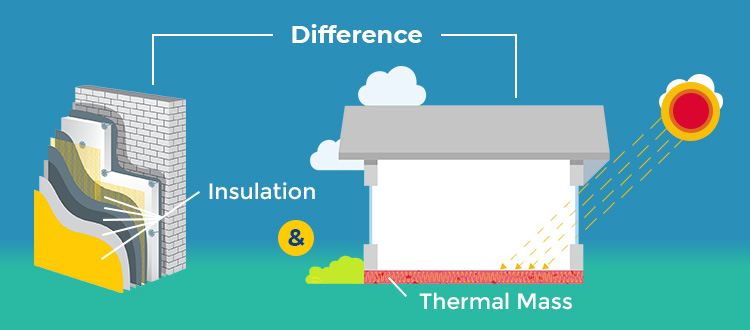
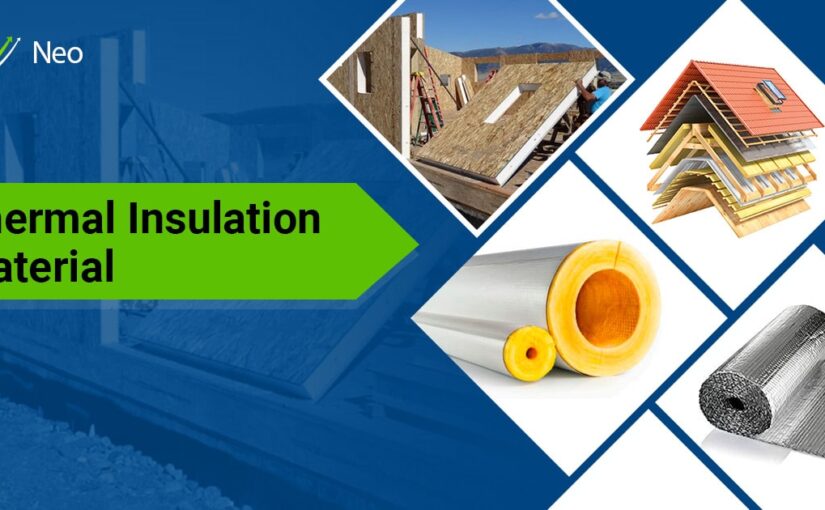
What’s the Difference Between Thermal Insulation and Thermal Mass?

Insulation and thermal mass are the terms related to thermal insulation for home. But people often get confused between both these terms thermal insulation and thermal mass. So knowing the difference will not only help you understand about them but also will make you decide between the use of their combination or only one to prepare a more substantial and effective solution. Both are used to control the temperature inside a house throughout the seasons but work in a completely different way. Their use will not only help you in saving money on the long term basis and increase overall energy efficiency.

We are here to answer the basic difference between thermal mass and insulation to help you decide accordingly and protect your home.

Thermal Mass

Thermal Mass is a specific material with the ability to absorb but also store and radiate heat energy. In a home, you can find these materials in the form of masonry like brick, concrete, adobe, rammed earth and earthbags. To help you understand thermal mass, besides explaining thermal heat formulas and equations which are not meant to common people. I would like to explain it using a simple example.

If you are having an old uninsulated adobe house. The walls will simply soak up the heat during the day and channel the heat through the wall at a rate of 1 inch per hour. When the wall is fully charged like a battery by the end of the day, it will start emitting heat to the interior and keep it warm overnight. While in the night walls started getting cooler from outside at the rate of 1 inch per hour and radiated it into the house during the day. The cycle keeps on repeating and maintains room temperature. People have figured out this amazing physics a very long time ago.

Thermal mass can also be understood as the thermal admittance because both are proportionally related. Actually, it is the capability of absorbing and releasing heat. The higher thermal admittance results in higher thermal mass. Other than this, thermal mass can also be explained through the material density (higher density means higher thermal mass). While the thermal conductivity is calculated based on the heat travel through the material. For example, the materials like stone, brick, concrete, gypsum plaster and water hold high thermal mass. Whereas, the materials like timber, steel or mineral fibre insulation possess low thermal mass.

Read now:- Importance of Insulation in Poultry House

Thermal Insulation

The insulation can be understood as the ability of a material to slow down the transfer of heat energy and maintain the temperature between inside and outside. This ability to maintain heat energy is decided based on R- and U-values of the material. The materials like foam, fibreglass, loose-fill or any other reflective materials, provide thermal insulation for home.

Proper insulation can safeguard your home from drastic weather and temperature changes throughout the year. So choose insulation material sensibly because all products are not meant for every part of your home. Like insulation for the floor uses different material as compared to the roof or cavity wall.

Homes built using structural insulated panels are the best example of thermal insulation. Such houses have walls manufactured with big foam pieces sandwiched between specific sheathing formed by engineers like oriented strand board (OSB). These panels with mostly foam form an extremely tight super-insulated shell which results in no air transmission to keep the room temperature unchanged.

Read now:- Advantage and Benefits of Thermal Insulation

Which one to choose-Thermal mass and Insulation?

The decision between choosing thermal mass and insulation depends on the temperature fluctuations outside. If you want to maintain a stable, constant temperature inside the home as compared to the stable, constant temperature outside but comparatively higher than the inside temperature. You should go with the thermal insulation because it will prevent additional heat emission inside and will maintain a proper difference between outside and inside temperature. In this case, if you choose thermal mass it will soak out heat and eventually release inside which will equalize temperature both outside and inside the home. So basically thermal insulation is an ideal choice since it prevents overheating in the day time and overcooling during the night.

What if you choose the best of both-thermal mass and insulation?

If you have ever noticed an old adobe, you should be aware of how it regulates temperature and gets cold in the winter after a series of cold sunless days. Whereas a super-insulated home completely depends on artificial heating and cooling systems to control the air temperature.

So the combination of thermal mass and insulation will be the most practical solution. Because it will provide complete insulation but you have to rely on cooling and heating devices you are going to use.

The combination of thermal mass and insulation is often considered as passive solar design. It provides a comfortable space to live in where heat and cool manages itself naturally without any artificial heating and cooling systems. It results in the reduction of heating and cooling bills and preserves natural resources as well.

Insulation: Why Needed For Preventive and Proactive Maintenance

Machines, they are just like humans. If you want a man to work for long, you have to keep up his energy, provide him proper rest. Same goes with machines. With regular maintenance they can be your best investment. Machines take longer to fix once they are start malfunctioning due to poor maintenance. Thermal Insulation is one of the important parts of carrying out proper maintenance. With proper maintenance you can prevent all the problems about to occur in the near future. This way you are saving yourself a big fortune for self and protecting your investment.

Read: – Advantage of Thermal Insulation

What is Preventive Maintenance?

Preventive maintenance is like taking record of data of the machine when it was new and good. We can say that equipment are in top shape when they first to the work station. In this data record you have to record the data of the resistance shown in by machines/instruments. If the value of the insulation resistance is consistent shows that the device is still in good shape. But if there is any kind of decrease in insulation resistance then it is a bad news for the equipment. This indicates that you might run into trouble in the near future.

How Preventive Maintenance Benefits?

Beating the Time:

Without preventive maintenance equipment can only run for a fixed time period that is sometimes shorter than estimated time by manufacturer. With insulation this age can be extended for a long period. This extension of age results in saving a big amount of your investment on equipment.

As insulation maintenance is presented as the solution to machines or equipment it can not increase their age, it will also increase the efficiency. This regularity in checking for the defects in work-flow of the machines increases your product quality too.

Safe and Sound:

There are several cases happened in industrial facilities all because of the poor preventive maintenance schedules. Burn hazard is one of the most frequently occurring in the plants. By installing some insulation jackets a plant can stop there hazards by spending a few hundred dollars more. So with this you are not saving the life of your equipment but also the life of the workers on that machine.

Eliminating Corrosion:

Moisture, one core enemy of all kinds of equipment. If you failed just slightly you can see how much a little thing like moisture can be dangerous. A little introduction of moisture for a long can cause corrosion to machine parts, that can reduce the age of the machine to half very easily. So introducing a proactive maintenance to equipment on time to time basis can solve these kind of problems very easily.

Read: – Insulation for building constructions

Seeing Through The Time:

So if you are tying things near a fixed budget then you have to consider all the things that can cost you a fortune in future. This is where you need to see through the time. But sometimes people do not count maintenance in this list but now you know should. Stopping a problem a lot before it takes place your power here that enables you to see through the time. So try to keep the insulation maintenance done frequently so that you can save a lot by not losing your machines and investing them in growing you venture strong.

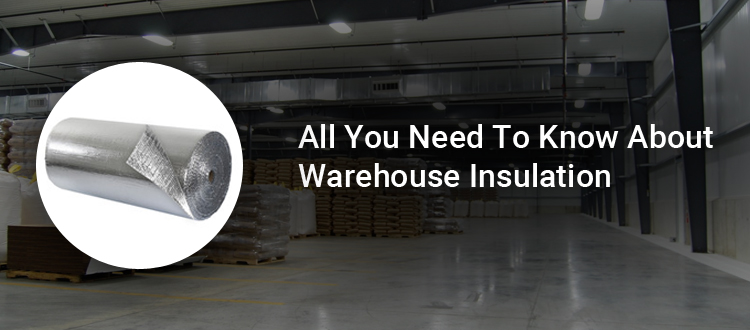
Warehouse Insulation (Benefits, Type)

Insulating a warehouse or any other similar commercial building can save up to $9.5 billion in energy costs annually. It’s huge, right? You can also save a major portion of your money from going into utility bills through Warehouse Insulation . And how to save the energy consumption, we are going to learn in this article.

In this article we will get to know the following things:

  • Reasons to insulate your warehouse
  • Types of suitable warehouse insulation
  • The best way to insulate your warehouse

What is Insulation Sheet?

An insulate sheet, also known as an insulation sheet, is a material specifically designed to enhance the thermal resistance and energy efficiency of buildings or structures. These sheets are typically composed of various insulating materials such as foam board, fiberglass, or reflective foil.

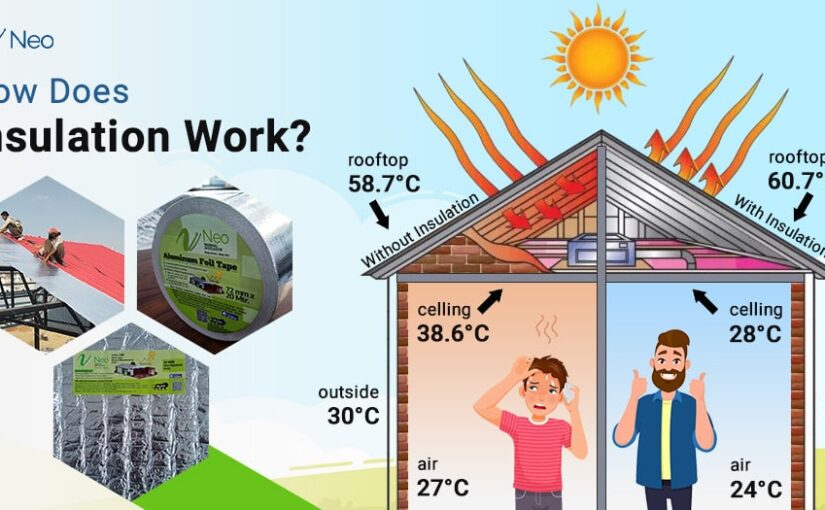
The primary purpose of an insulate sheet is to reduce heat transfer, keeping indoor spaces warmer in the winter and cooler in the summer. It accomplishes this by creating a barrier that inhibits the movement of heat through walls, ceilings, roofs or windows. This helps homeowners and building occupants maintain a more comfortable and energy-efficient environment while reducing heating and cooling costs.

Insulate sheets come in various forms, including rigid boards, flexible rolls and reflective bubble wrap. The choice of insulating material and form depends on specific application needs and local climate conditions.

Overall, insulate sheets are a crucial component in modern construction and retrofitting efforts, playing a significant role in sustainable building practices and energy conservation. They are instrumental in creating well-insulated, energy-efficient and environmentally-friendly structures. So let’s address the points one by one.

Benefits of Insulate your Warehouse

The cost that you pay for the utility bills is much more than that of the investment you put in warehouse insulation. Thus, insulating the warehouse is important for attaining stable and desirable conditions.

Following are the reasons to insulate the warehouse.

1. Reduce Cooling and Heating Costs:

Recently, architectures and the designers are constructing the warehouses using pre-engineered building designs. Pre-engineered buildings consist of metal frames and walls that are easy to construct and cost-efficient. But the only drawback it offers is poor quality in maintaining the interior conditions.

Metal warehouses consume a large amount of energy to maintain the desired temperature. Thus, a perfect insulation layer with suitable R-value is applied to the ceiling, exterior and interior walls. Insulation helps in keeping the air inside the building and prevents or blocks the movement of air.

2. Reduce Emissions:

Well, a major concern these days is to improve the environmental conditions by reducing the carbon emissions. Insulation helps to reduce the energy consumptions which further leads to a reduction in fuel consumption which is essential for heating and cooling. Thus, leading to a lower carbon emission from your end.

3. Enhance HVAC System Performance:

HVAC (Heating, Ventilation, Air Conditioning) System requires more repair and maintenance when they work excessively and continuously for a longer duration. Insulation helps to reduce the cost that is put in the maintenance of the HVAC system.

Get Insulation Sheet for Warehouse

4. Reduce Unwanted Noise:

Insulation provides more than just a barrier to heat transfer. It is a perfect remedy to reduce external noise.

5. Comfortable and Healthier Work Place:

To enhance the productivity and quality of the work, it is necessary to create a healthier environment. Warehouse insulation gives a comfortable and cozy workplace for the employees.

Types of suitable Warehouse Insulation

There are a variety of insulation types and insulation materials available in the market. But insulation depends on various factors like climatic conditions, demography, usage of the warehouse, etc.

Following are the insulation types suitable of warehouse:

1. Insulation Sheets

Insulation Sheets are pre-cut panels that can be easily installed to provide insulation for walls, ceilings and floors. They offer a convenient and efficient solution for improving energy efficiency and reducing heat loss or gain.

Advantages:

  • Quick and easy installation: No specialized equipment or labor is required.
  • Versatile: Can be used in various applications, including new construction and retrofit projects.
  • Durable: Resistant to moisture, mold and pests.
  • Cost-effective: Can be a more affordable option compared to other insulation methods.

1. Cellulose Insulation:

It consists of about 80% recycled materials and is environmentally friendly. You can use cellulose to insulate the walls for your commercial buildings or warehouses.

2. Fiberglass Insulation:

Fiberglass sandwiched between two layers of foil is effective in providing heat insulation. They are installed below the roof deck for achieving better insulation. Fiberglass insulation is available in either loose-fill or blanket form.

3. Radiant Barrier Insulation:

Radiant barrier offers a great reflection to the radiant heat coming from the sun. It helps to keep the warehouse cool as it doesn’t absorb the heat but reflect it back to space. Installing on the warehouse roof, radiant barriers are very useful if you utilize your warehouse for storing things that require low temperature. It consists of reflective material like foil.

4. Spray Foam Insulation:

The liquid of Polyurethane is sprayed evenly on the walls or attic, it expands as it is applied and peeks into the cracks and unreachable places. It blocks each and every crack, gaps, etc. which lets air exchange between the exterior and interior spaces.

5. Vinyl insulation:

It is a synthetic plastic consisting of polyvinyl chloride. It is a versatile material which is used for making seat covers, window frames, phonograph records, etc. Vinyl insulation is moisture and humidity resistant. It is durable and strong insulation material for commercial metal buildings.

Talk to Experts for Any Query

Factors to Consider When Choosing Insulation

  • Climate: Your region’s climate will influence the type of insulation needed. For example, colder climates may require thicker insulation.
  • Building Structure: The age, size, and construction materials of your warehouse will impact insulation requirements.
  • Budget: Different insulation types vary in cost. Consider your budget when making a decision.
  • Environmental Considerations: Some insulation materials are more environmentally friendly than others.

By carefully considering these factors and selecting the appropriate insulation type, you can significantly improve the energy efficiency, comfort and overall performance of your warehouse.

What are the Best ways to Insulate your Warehouse?

There can be two choices; either you insulate yourself by doing DIY steps or call the insulation contractors for doing it professionally. Well, DIY is possible if you are insulating a small space like home, garage etc. But for a space as big for a warehouse, it is not possible for an individual to do it the right way.

On the other hand, professional insulation contractors can analyse the surroundings and implement best-suited insulation material. They can install insulation layer with perfection and also provide a cost-effective solution for your requirements.

Conclusion

Insulation plays an important part in preventing heat transfer, moisture retention and helping to maintain desirable interior conditions.  Warehouse insulation is necessary to maintain the quality of the products that you store in the warehouse for a long duration. We suggest taking advice from an expert on providing perfect thermal insulation conditions for your warehouse.

FAQ’s

1. What is Insulation in Warehouse?

Insulation in a warehouse refers to the use of materials to minimize heat transfer, helping to maintain stable indoor temperatures, reduce energy costs and protect stored goods from temperature fluctuations.

2. Why is Insulation Important in Commercial Buildings?

Insulation in commercial buildings is crucial to conserve energy, improve comfort and reduce heating and cooling expenses, making it a cost-effective and environmentally-friendly choice.

3. How can we Reduce Heat in Warehouse?

To reduce heat in a warehouse, consider using reflective roof coatings, insulating walls and ceilings, installing proper ventilation and using high-efficiency lighting systems.

4. What is the Best Insulation for a Warehouse?

The best insulation for a warehouse depends on factors like climate, budget and specific needs. Options include fiberglass, spray foam and reflective insulation, tailored to the building’s requirements.

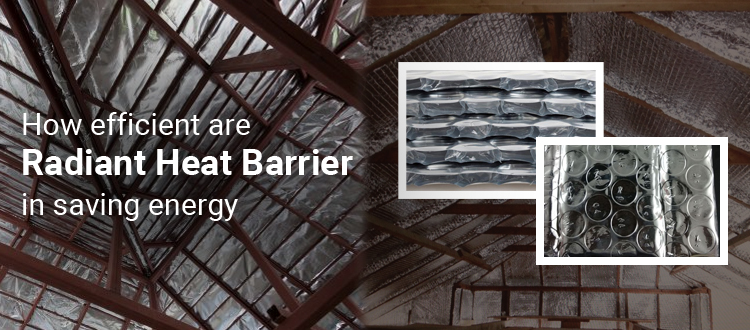
How Efficient are Radiant Heat Barrier in Saving Energy

As the climatic conditions are changing with the time due to various ecological changes like global warming, increase in pollution, smog, dust, etc., the demand of a barrier between an exterior and interior spaces increases. People are looking for different techniques that can be helpful in reducing the consumption of energy and provide highly efficient thermal insulation.

Radiant barriers or reflective insulation materials provide cooling effective during hot climate. Without the proper attic insulation or roof insulation materials, solar heat will transfer to the living spaces and will make discomfort to you. Of course, you can have Air Conditioners in your homes but that is only going to consume energy and add to your utility billings.

Thus, radiant barriers are the perfect solution to fight with the hot climatic conditions and have a cooler environment in your home or work space. But how much they are effective and how it works? We are going to learn in this article.

How Radiant Barrier Work?

Radiant heat transfer is the most dominating mode among three heat transfer mode i.e. Conduction, Convection and Radiation. It is the transmission of the electromagnetic rays through space to your living space. The rays are commonly infrared rays and their origin is the sun.

Radiant barrier is consist of reflective sheets, generally aluminum and non-toxic light-weighted material which is easy to handle and install. Usually, radiant barrier alone is inefficient to provide a high-quality insulation. Thus, they make a part of a large assembly which consist of other roof insulation or attic insulation materials like foam, fiberglass or cellulose.

Radiant barriers are reflective and light color coated roofing sheets insulation materials that solve the purpose of overheating in the house. They are applied to either on the existing insulation or under the roof surface. Radiant barriers reduce the heat transfer and 95% of the radiant heat that directly fall on the roof surface during daytime.

To block or reflect the heat energy radiant barrier utilizes to physical properties of aluminum, they are:

Reflectivity:

Aluminum or any reflective surface sends back or reflect the rays striking to their surface back to space. Thus, blocking 95% of heat rays to enter your living space.

Emissivity:

The emissivity of a material is the effectiveness of radiating its energy as thermal radiation. In simple terms, radiant barrier’s own heat. Radiant materials should have a low range of emissivity, generally ranging from 0.1 or less. In general, low emissivity property of a reflective surface that is facing an air space results in low emittance of heat from the surface of the material.

 Factors to remember before installing a radiant barrier

Implementing a radiant barrier in your building is surely advantageous but to enhance the effectiveness of the radiant barrier insulation, you need to analyse a few parameters. Here are some factors that can boost the cooling effect in your building.

  1. Type of existing insulation:

    A good insulation has R-value. If your insulation has high R-value then it is referred to be as efficient insulation material. If your roof or attic is already insulated earlier with a high value of the material, like R-30 then your radiant barrier will block major heat transfer. However, if R-value is below R-30 then 40% reduction in roof or attic heat will transfer through radiant barriers.

  2. Demographic location:

    A major factor that decides the effectiveness of your radiant barrier is the location where you live. If you live in hot climatic conditions, then you will immediately notice the cost cuttings in your energy consumption and your radiant barrier will work efficiently. Although radiant barrier works in cold weather to maintain the heat inside the room, however, it will not be effective as its major strength is noticeable in the hot climatic condition.

  3. Air Space:

    Radiant barriers must have at least one air space of minimum 3/4th of an inch on either side. Airspace is necessary to block the conductive heat transfer. If there is no air space then conductive heat transfer will take place from the surface touching the radiant barrier. Thus, it is a MUST to have an air space.

Application of radiant barriers

There are many applications of radiant barriers in providing efficient thermal insulation at a different place.

 Space Exploration:

To protect the spacecraft, astronauts and equipment from thermal radiations in the pace.

Window Treatments:

To attain a low emissivity, window glasses are coated with radiant barriers.

Roof and Attic Insulation:

Radiant barriers enhance the thermal insulation in the living space and offer a comfortable space.

Conclusion

Thermal insulation can be achieved through various approaches depending on the demand of the climatic conditions, requirements, the position of installation and thermal insulation materials availability. Radiant barriers work well along with other insulation materials to obtain a high degree of thermal stability in your building.

It is important that before taking any step towards installing radiant barriers, take an advice from the thermal insulation contractors or suppliers in India, to gain potential knowledge about the best-fitted solution for your building.

Why Should You Insulate Basement of Your House? Pros and Cons

When we talk about basements, the first thing that strikes in the mind is “Store Room”. A place to keep all used or unwanted or occasionally used items. We find basement not so important to give it an extra care or invest an extra cent to maintain it. Moreover, we never ponder on a thought to insulate the basement, are we?

But after reading this blog, we assure that you will again give a second thought on insulating your basement. Do you know that discriminating or taking a chance with proper insulation of your basement can cost you heavily?  What if we tell you that basement insulation actually improves the overall energy efficiency of your home! It also reduces consumption of energy, eliminates moisture retention on the walls and roofs.

So, let’s understand how we can manage our house thermal stability with the help of thermal insulation.

Basement Insulation

Basement insulation is not a rocket science but a proven skillful thermal insulation technique to implement high-quality thermal insulation material evenly on the desired area. The current buildings are having inbuilt thermal insulated basements. However, the already existing buildings are required to opt these energy-efficient approaches to insulate their basements.

Here are some questions to ask before insulating basement to give an affirmative response to your queries related to the insulation of the basement.

  • What is the state of your house thermal stability? You need to have a home energy audit to get an idea of the exact thermal insulation required in your home to save energy consumption.
  • If you have existing insulation, then what is the R-value of it? R-value is the measure of the capabilities of an object to resist the heat flow. The Thermal Insulation Materials are present in various density and thickness. The more the thickness the better the thermal insulation.

It is obvious with the fact that there is a significant amount of air leakage through the walls, roofs, ceilings, vents, etc. Maintaining the thermal condition inside the house during the winter is difficult because heat travels from higher temperature to lower temperature. Basement being at the lower temperature condition, the heat travels from the rooms which are cozy and are at a high temperature. Thus, it becomes utmost important to insulate the basement with a high-quality thermal insulation material.

Which Part to Insulate in the Basement?

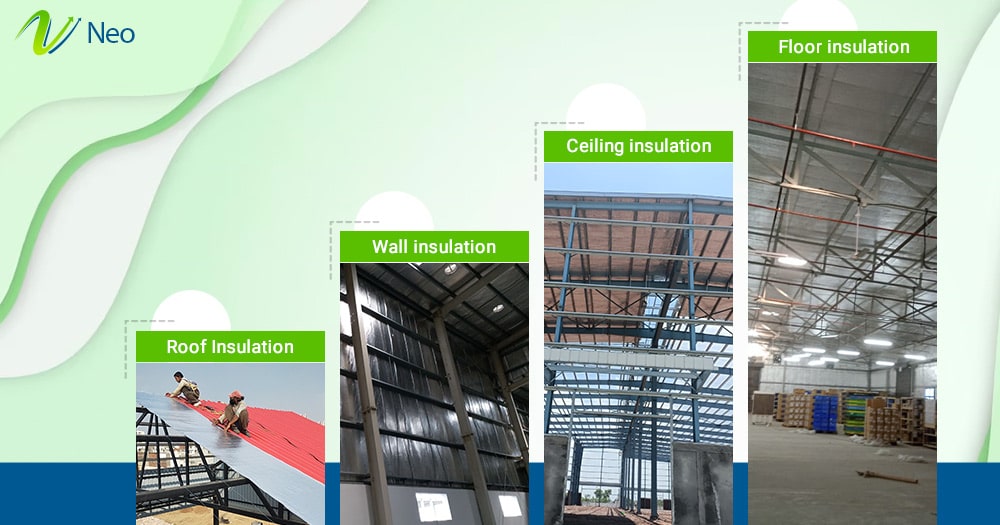
There are three major places where insulation is effective: exterior wall, interior walls and ceilings. The best insulation placement depends on how the basement is used, also it depends on if the building is already existing or you are constructing a new building. However, you can use a combination of insulation to get the best result.

  • Wall insulation: Wall insulation is the most vital part of the basement insulation because the maximum amount of heat is transferred through walls, especially if your surrounding climatic conditions are colder in the winter season.
  • Ceiling insulation: A general way to insulate the ceiling of your building’s basement is fiberglass bat insulation. It will make the space in the basement much warmer and thermally stable.
  • Floor insulation: When we start constructing a building, we make sure that the foundation is strong and don’t allow any kind of leakage in the building. Moisture retention can be a major issue if the floor is lacking proper insulation. Thus, insulation contractors in India recommend floor insulation for the existing buildings and also for the buildings that are under construction.

Pros of Basement Insulation

–    Maintain Thermal Stability:

Insulation prevents air leakage and heat transfer. It boosts comfort and helps in cost cutting of the utility bills.

–    Control Moisture:

Moisture enters through the ground and foundation. This moisture gets trap in the basement due to lack of proper ventilation. Thus, a simple SPF foam sprayed onto inside wall can prevent moisture intrusion. For exterior insulation, fiberglass is the first choice.

–    Prevents Freezing of Water Pipes:

Areas where mercury drops frequently, water pipes get frozen easily in the basements. Thus, basement insulation is the best and cost-effective solution.

–    Reduces Energy Consumption:

When you insulate the basement, there is no place for heat to escape. Thus, maintains the desired temperature in the building which further cut down the energy consumption during variable climatic conditions.

Cons of Basement Insulation

  • Cost of Installation:

    The cost is a variable quantity, highly depending on the type of thermal insulation material and the area (dimensions) required to insulate. However, the maintenance cost is 100% more than the initial cost of installation.

  • Degradation of Exterior Insulation:

    The most common reason for the destruction or degradation of the external wall installation is insect infestation. Because of the direct contact to the external surrounding, insulation is highly susceptible to degradation.

  • Improper installation:

    If the insulation contractor or agency is not having proper experience then, there will be loopholes in insulating your building. Thus, choose wisely a thermal insulation contractor to get the best services.

Conclusion

Basement insulation is surely an important factor to consider while insulating other parts of the building and especially if that building is your comfy house. You might think that thermal insulation is a costly approach or investment but if you are in a construction phase then it will not cost you much compared to the other investments. It surely enhances the lifespan of the building and reduces the post-maintenance costs. Live comfortably and save your energy consumption to reduce your expenses.

Talk to us?

Download Brochure