Category: Thermal Insulation

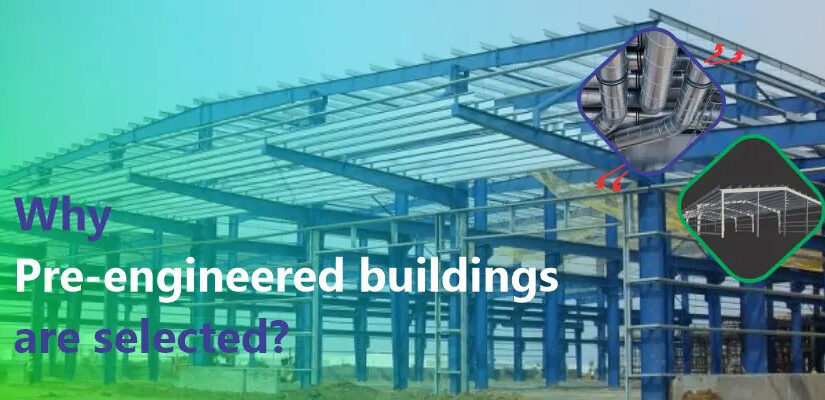
Why Pre-Engineered Buildings are Selected?

Pre Engineered Buildings are assembled at site and engineered at a factory. Normally, Pre Engineered Buildings are related to steel format. Developed sections are fabricated in the factory in order to exact size, transported to the site as well as, assembled at site with the bolted network. Following are reason for selecting Pre-engineered buildings:

Utilize Preset Stock of Raw Materials :

Pre engineered buildings utilize preset stock of raw materials, which attains larger areas of aesthetic and structural design needs. This kind of resilience permits Pre-engineered buildings steel to meet almost developing configurations, uses and custom designs.

Related to Metal Area Development :

The Pre-engineered buildings are related to metal area development which involves a structural design as well as, wall support and standard roof. It is developed for a factory and it is erected on the site.

Pre-engineered buildings related to new manufacturing aspect that replaces conventional manufacturing.

It is identified as a breakthrough in the sector of construction that provides less time in construction, low maintenance, cost-effectiveness, consistent span, as well as premium quality.

Industrial Building Manufacturers :

Pre-engineered buildings focus on wider area of industry. In the current time, there has been substantial improvement in Pre-engineered buildings. Because of rapid construction development, there is an increase in demand regarding quick-track construction in India.

Eco-Friendly Modes

Pre-engineered buildings use eco-friendly modes to address global warming, which is also economically efficient. The prefabricated construction saves time since it is intended in a shorter time. The components are prefabricated regarding transport and specification to the site in which they are accumulated.

Steel Structures :

Generally, Pre-engineered buildings are related to steel structures. For correct size, developed segments are manufactured in the factory. There are two kinds of systems in the context of pre-engineering buildings such as primary and secondary.

Primary Structures :

Primary structures in Pre-engineered buildings are the management of developed I-shaped members of steel and considering the trusses and castellated beams. It contains all elements regarding the structure that passes the load to the base as well as considering End wall structures. The end walls are either intended to be economical bearing structures and rigid structures. These structures are reinforced to connect bolts, wind bracing and if required, it considers anchor bolts.

Apart of individual parts, it integrates these three components as well as weather considering sheeting outcomes in the context of robust steel construction. In the context of conventional framing, individually developed and stand-alone structures could be trusses as well as, individual columns in large as well as, heavy structures.

Secondary Structures :

The secondary structure considers wall girts, clips, struts as well as roof purlins. It assists and aids the primary structure regarding wall panelling as well as, roof. The secondary framing technique consists mainly of C and Z purlin kinds of different sizes. The initial technique involves the column and rafters whereas Z and C Purlin have been considered in the structure maintenance.

Decline Expenses :

Apart from conventional platforms, angles, and beams uses purlins that aids to decline expenses. To get whole stability about building structures, Purlins/Girts moves force instantly from one frame to another. It functions as a developing system for weather covering sheeting requirements. Purlins exist in different thicknesses and lengthy that makes sure no cost of production as well, wastage. Purlins could be frequently mounted, robust, lightweight and resistant to corrosion.

Leading Supplier and Manufactures of Pre Engineered Building

Neo thermal insulation is a leading supplier and manufactures of Pre-engineered buildings in India. Pre engineered building manufacturers in India considers single-source accountability regarding shipment, manufacture, design and erection related to Pre-engineered building manufacturers. Neo thermal insulation company focuses on providing Pre-engineered building manufacturers to the SAARC areas.

Involvement of overseas and Indian companies

Neo thermal insulation has accomplished more than 1500 projects for our customers across different areas of India. Neo thermal insulation list of clients involves different significant overseas and Indian companies. Neo thermal insulation company is one of the first companies in India that integrates to the system for planning, manufacturing, engineering and erection.

Energy efficiency is another factor supporting the success of Pre-engineered building designs. Pre-engineered metal buildings are energy efficient since they could be manufactured in factories. Therefore, there is no construction contamination happening at the site that is unheard about brick and mortar construction.

Wider Range of products

Neo Thermal Insulation offers these steel buildings to companies ranging from e-commerce warehouses to airports. They are high-quality structures that are developed to longer terms. The construction though lightweight that needs minimal maintenance. Therefore, in the longer term, Neo thermal insulation focuses on immense savings of cost. Thermal insulation products are prominent in the context of weather-resistant properties as well as, it is easy in terms of installation. Lastly, Neo thermal insulation company provides peace of mind assurance for every steel building we develop.

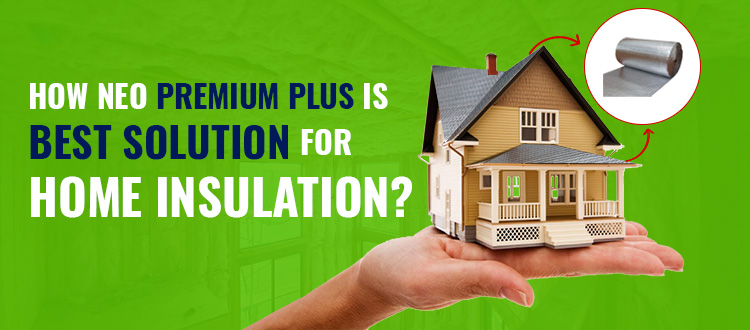
Why Is Neo Premium Plus the Best Solution for Home Insulation?

You might have heard about the term thermal insulation but ever wondered what it is? Thermal insulation is a modern technology that helps reduce the consumption of energy in buildings. Thermal insulation creates a building envelope which prevents loss or gain of heat. It is a type of a construction material which generally has thermal conductivity 0.1 W/mk or even lesser. The main job of a thermal insulator is to save energy and provide comfort to people. These are often used on the walls, floors and roof of the building.

Neo Premium Plus is a thermal insulator which is made up of a high resistance foil. It also has anti-corrosion properties which makes it an ultimate thermal insulation solution.

Product Options Provided by Neo Thermal Insulation

We also have a wide variety of insulation options available that you can choose from. Some of our products are:

● Neo single
● Neo Single Plus
● Neo Double
● Neo Double Plus
● Neo Premium
● Neo Premium Plus
● Neo Triple Advance
● Neo superior
● Neo Reflective Foil Tape

Neo Premium Plus is one of the best insulation options that we provide. Its features make it one of the best insulation options in India. Its premium quality, high resilience, and anti-corrosive features attract customers. It is the home insulation solution that you should go for right away but before moving into anything else, let us know why home insulation is essential.

Why Is Home Insulation Essential?

Home insulation is a perfect way to save energy. Yes, I am not talking about installing expensive solar panels or heat pumps to save energy. Simple insulation can help you save a lot of money. If you feel that you have been getting massive electricity bills, you should consider getting home insulation done. Home insulation controls the flow of air moving in and out of your house, thus acting as a thermal resistor. Insulation is one of the most efficient ways to save electricity bills. It will keep your home cold during the summer seasons and warm during the winter season. Hence your consumption of AC during summers and heaters during winters will reduce a lot. Therefore, you can save your valuable money.

There are other perks of home insulation, too, like it reduces outdoor moisture and noise. It also decreases the possibility of ice dam formation. With so many benefits, you should indeed consider installing a home insulation system. If you are still not sure about that, then go through this article. We have attempted to provide detailed information to help you make an informed choice.

Reasons Why Neo Premium Plus Is the Best Home Insulation Solution

The all-new Neo Premium Plus is manufactured from a non-corrosive, high resistance and defective foil. On both sides of the foil is a non-toxic closed cell fiber with extra thickness. There are also two layers of air bubbles present in between the foil. Here are a few reasons that make Neo Premium Plus the best insulation option available in the market:

Non-corrosive Foil

Corrosion in the insulation system has evolved as a familiar yet notorious problem, leading to cracks and damaging insulation. This problem usually occurs in places with high humidity or during the rainy season. Why will you want to invest in an insulation foil that will ultimately damage? It is the reason we have come up with a non-corrosive feature in the neo-Premium Plus. It is done using modern technology, which will protect the insulation system from corrosion even during the rainy season.

Thickness

Neo Premium Plus insulation foil has several benefits. It comes with a thickness of 20mm and is the thickest foil that we manufacture. The thickness of our other sheet ranges from 4mm to 12 mm. A thicker insulation sheet will always provide more protection to your building than a comparatively thinner sheet.

Reflectivity

An insulation sheet with good reflectivity has a lot of benefits. During summers, it will reflect heat from your building, thereby keeping your house cool. During winters, it reflects the heat in the direction of your office or home, thereby keeping your house warm. This feature of a Reflective insulation sheet will reduce your electricity bills drastically.

Therefore it is vital to go for an excellent Reflectivity insulation sheet. It is better than Neo Premium Plus, which has a reflectivity percentage of 97.

Read now:- Advantage and Benefits of Thermal Insulation

Operating Temperature

Make sure the insulation foil you select operates in the temperature conditions of your area. There is no use investing in an insulation foil that cannot handle your area’s weather conditions and temperature. Neo Premium Plus has a wide operating temperature range. It can comfortably operate in temperatures ranging from – 40 degrees to 90 degrees. Thus, this insulation sheet will work in Kashmir as well as Rajasthan!

Air Bubble Thermal Insulation

The Neo Premium Plus comes with a layer of air bubbles in between, making it an excellent insulator. The air in the air bubbles acts as a cheap and natural insulator. It also acts as a radiant barrier. And a radiant barrier reduces the transfer of heat by radiation.

Other Great Features of Neo Premium Plus Are

● Emissivity is of 3%
● R-value of 3.80 m 2 degree C/W.
● Standard roll width of 1.25 meters.
● Fire Retardant(BS 406 PART 6, PART 7)-Class 0-1
● It has been designed keeping in mind the hot Indian sun.
● Experts test the product.
● It also comes with a warranty to make your investment risk free.

Final Words

At Neo Thermal Insulation, we use the latest insulation technology to present the country’s best insulation options. Our every product is of high quality. Also, we strictly supervise our products at the time of manufacturing. We have used the latest technology to design and manufacture our neo premium plus. Our experts have tried to solve the issues faced by obsolete insulation options by using the world’s best insulation technology. Do not miss the experience of our top-notch services and make your office or home insulated.

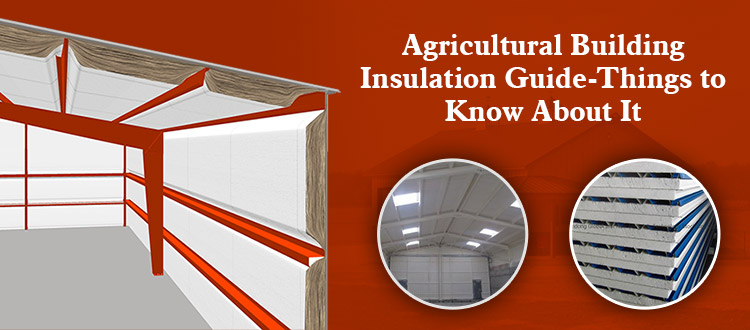
Agricultural Building Insulation Guide-Things to Know About It

Are you looking for insulation of top-notch quality and the best services? Make sure that you are paying for some optimum quality products for your company. There are many heat insulators readily available in the market, therefore choosing the best and according to your need may be confusing. Please read this article carefully to understand more about the heat insulators in farms, its uses, and other insulating machines.

How do Heat Insulators Help Farms?

All farmers keep in mind the maximum capacity of their storage and carry out farming. It won’t be beneficial if you do not have a big storage area that has insulating services. Without insulation, the produce will rot within no time. Insulators help keep the storage area’s temperature in control so that the fruits or vegetables are good for present and future sales.

In the present situation, there are no storage areas without insulating services. With its help, you can easily store your vegetable for future sales and profit from the entire season. In winters, the insulators will increase the temperature in the storage, and in summers, it brings down the heat. That allows you can check the decay period of fruits and vegetables. Even during the off-season, there remains a need for specific fruits and vegetables. You can sell them at more increased prices, thus incurring profits.

Now you must know that several types of equipment to control temperature are available in the market at a low price. Remember to install only those who are professionals in this sector and provides the best services and machines.

How does Insulating Farm Works?

You can install insulating roofs in your farms that will keep the temperature in check and forbid the decay or rotting of vegetables. Farmers worldwide carry the burden of maintaining the right temperature, which is harder during season change.

The winter veggies and fruits need a cold temperature to survive; therefore, insulating roofs are necessary. The insulation does not allow the warm weather to affect the storage and keeps them safe from rotting at any given point.

The insulating cavity seals the storage area and retains the conditioned air, providing the perfect temperature for months or several years. Farmers carrying out intensive farming need these types of advanced equipment the most. Vegetables, such as potatoes and tomatoes, are common and required throughout the year in many countries and regions. Though it needs cold temperatures to survive, which is not possible around the year, you can produce potatoes all around the year with the insulating farms.

Optimum insulating material saves more than 30% to 45% of the energy required to cool or heat the storage sections. However, you must remember to choose only the best materials from the market at a reasonable price. Sometimes a customer thinks over-priced material will render the best result, but they are mistaken.

Where can you Install Insulating Materials?

Poultry farms, greenhouses, cold storage sections, pork sheds, farmhouses, wherever you need to control the temperature artificially, insulation is possible. It would help if you kept in mind that the insulating materials help to preserve the temperature. If you need to cut down the cost of providing energy in your farmhouses, roof insulation is the best option. It saves more energy when compared to the insulating floors and walls.

It has several scientific reasons- as the warm air is lighter than the cold air, it tends to exit from above (roofs). Therefore insulating the roof with optimum material from reputed companies is wise.

Read Now:- How to keep home cool in summer

Types of Insulating Materials According to Agricultural Needs

There are different types of unique and advanced insulating material for all purposes. Some of them are mentioned below:

1. Spray Foam Insulations

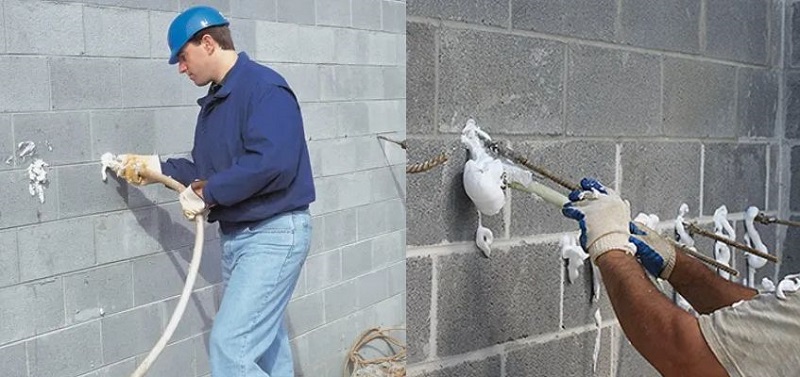
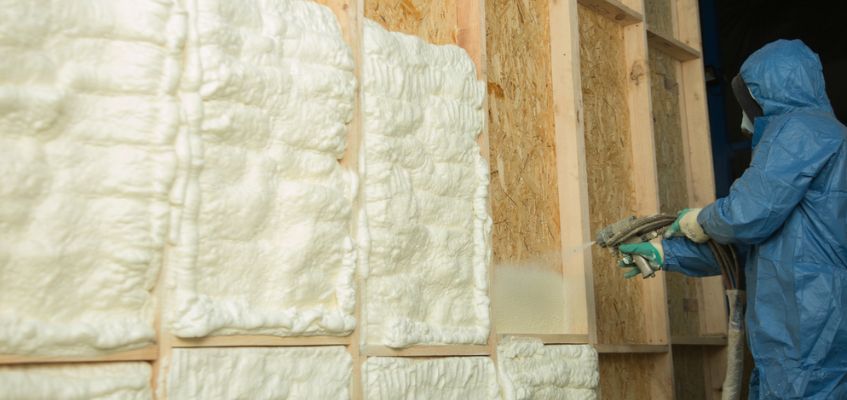
Farms that need to store edibles for mid-season can opt for spray foam insulations as they fulfill the requirements for a short period. The spray foam is mainly soy-based and sometimes also petroleum-based in liquid form. These materials are heated or mixed in large containers to apply on the insulating surfaces. After using the foam, it automatically expands on the surface, filling all the existing cracks on walls or floors.

It creates a radiant barrier and maintains the required temperature. Depending upon the need, the density of the foam insulations differs. Generally, they are closed-cell or open-cell (high or low density, respectively). Farmers use this process to ensure there is no moisture in the storage section and obstruct air circulation.

2. Insulation Boards

Generally, the insulating material is cut into composite boards according to the required size to insulate the area. Material such as extruded polystyrene renders better strength and is rigid. Professionals cut out the panels and fix them on the required sites with caulk or foam.

3. Insulation Batts

It contains materials such as fiberglass, sheep’s wool, and rock wool from the volcanic rocks. These materials work as a blanket fixed on the required surface.

4. Reflective Insulations

You can efficiently insulate the roof of your storage area with the help of insulating roofs. These are mainly foil-type insulations that retain the temperature within the confined space. If you can provide reflective insulations and the insulation batts or boards, it will render the best results.

About Neo Thermal Insulations

Neo Thermal Insulations have changed the entire insulating business. They have set their benchmark set at such a level that few companies can even reach. The vast customer base all across the globe speaks for itself about its products and dauntless services. Neo is one of the best thermal insulation material suppliers in India.

The company provides top-notch products with effective services, making them reach and survive at pole positions. Therefore, choose Neo Thermal Insulations for the best work and longevity.

Conclusion

Through this article, you will understand the need and efforts of insulating farms. Keep in mind to choose only the best for quality products and services. If you have any queries about Neo Thermal Insulations, do not forget to check their website. Do not hesitate to call or email them for more information.

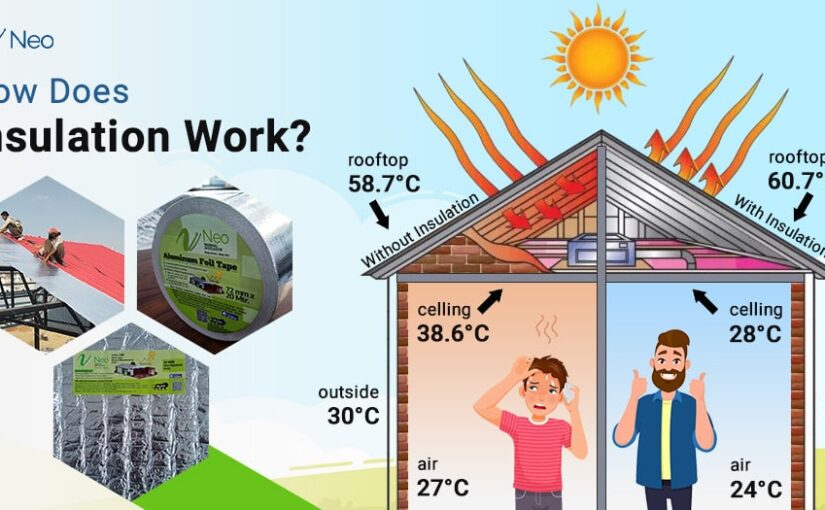
How does Insulation Work?

Thermal insulation is a great solution for people worldwide who prefer comfortable living spaces. An alternative to eclectic cooling and heating systems, thermal insulation packs the house, office, warehouses, machines and almost everything to prevent the impact of external temperature.

Still, have you ever wondered “how insulation works” and how it keeps our home warm or cool despite the external temperature? Today in this blog, we will talk all about the working mechanism of insulation and its types and benefits.

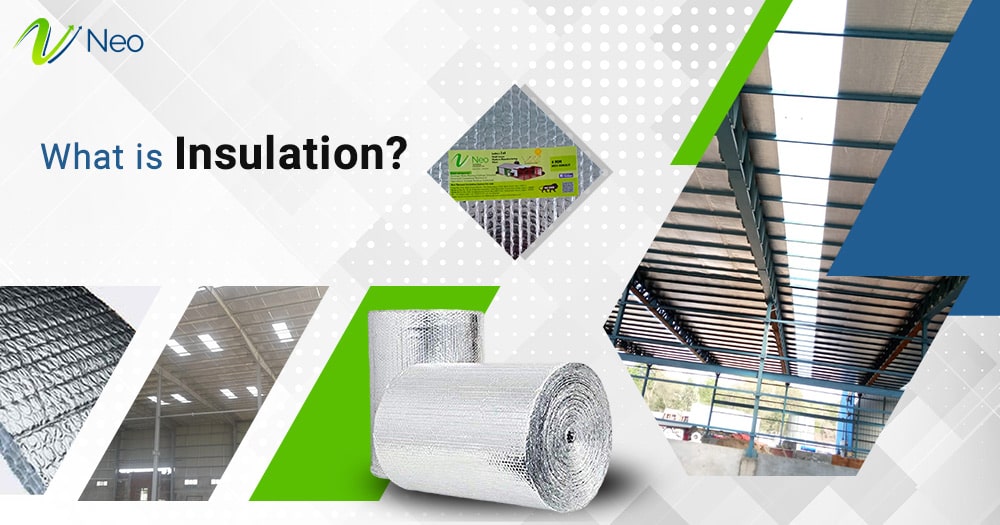
What is Insulation?

What is Insulation?

Thermal insulation is basically the solution that comes in various forms like spray, blocks, sheets, foam, and much more. The core purpose of insulation solutions is to prevent external heat or cold from entering the space and maintain a comfortable living temperature without the use of any energy-based heating or cooling system. This solution basically keeps the inner and outside temperatures disconnected so that they don’t interfere with each other.

As per Precision Business Insights, the thermal insulation market was valued at $28.6 billion in 2022, which is all set to grow with a CAGR of 7.2% between 2024-2030. The market is all set to achieve a valuation of $35.6 billion by 2029. Having gone through the ever-growing market and increased adoption of insulation products around the world, let’s understand the definition and how does insulation works.

Want to know How Insulation can Transform your Comfort?

How does Insulation Work?

To make the insulation work, sheets or blocks are installed over/under any surface. These layers restrict heat loss and heat movement. So, the outside temperature is trapped inside the wall only and does not enter the room. Similarly, inside temperature is kept inside the space only. This mechanism enables the insulation solutions to keep the room warmer, cold or a comfortable temperature as per personal preferences.

Thermal insulation can even reflect radiation as well as decrease the conduction potential and convection. Materials with a low conduction rate are used in the insulation which prevents the heat from flowing from one surface to another surface. Some insulation sheets, depending on personal choices and quality, even help to deal with moisture risk, fire hazards, and noise disturbance.

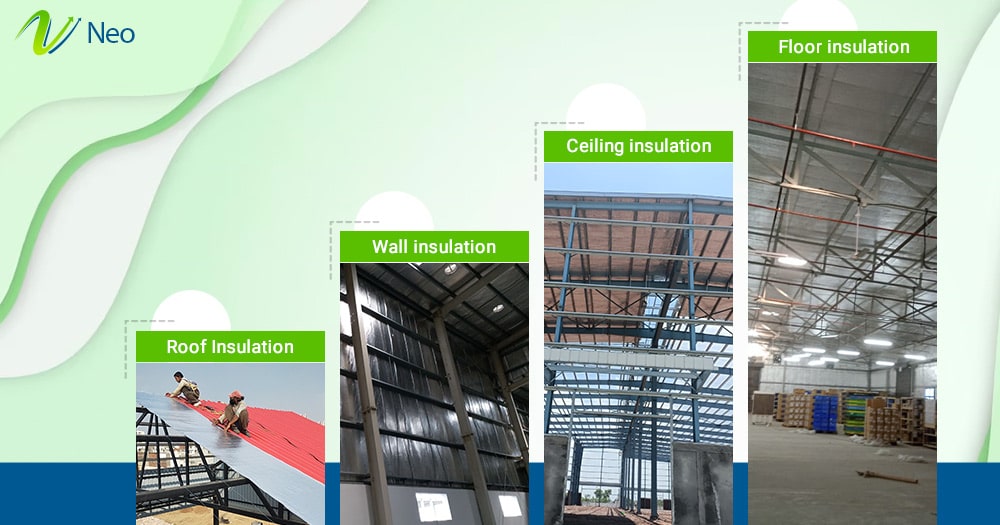
There are different parts of the house of any property that need to be insulated to maintain the efficient temperature throughout the property. Here are the main types of insulation that enable the owners for a comfortable living.

Types of Insulation

Roof Insulation

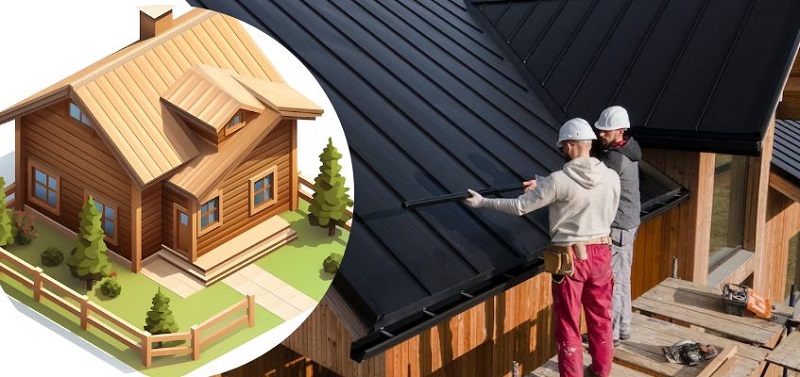
Roof insulation sheets, as implied by their name, are primarily deployed in the roof section of a building. Insulating materials with reflective properties are used for the same that reflect back the sunlight and don’t allow the external heat to enter the premises.

Wall insulation

Wall insulation sheets are installed inside or outside the wall of the house. These sheets trap the heat inside the wall and thus maintain a comfortable temperature inside the room or any space.

Ceiling insulation

Attic insulation or ceiling insulation is installed in the inner upper layer of the house that doesn’t allow the heat or cold to enter the house from the top area.

Floor insulation

Floor insulation is mainly used in the winter to keep the floor warm. The insulation sheets are installed beneath the floor that prevent the low temperatures from entering the room via the floor.

What is the Process of Insulation?

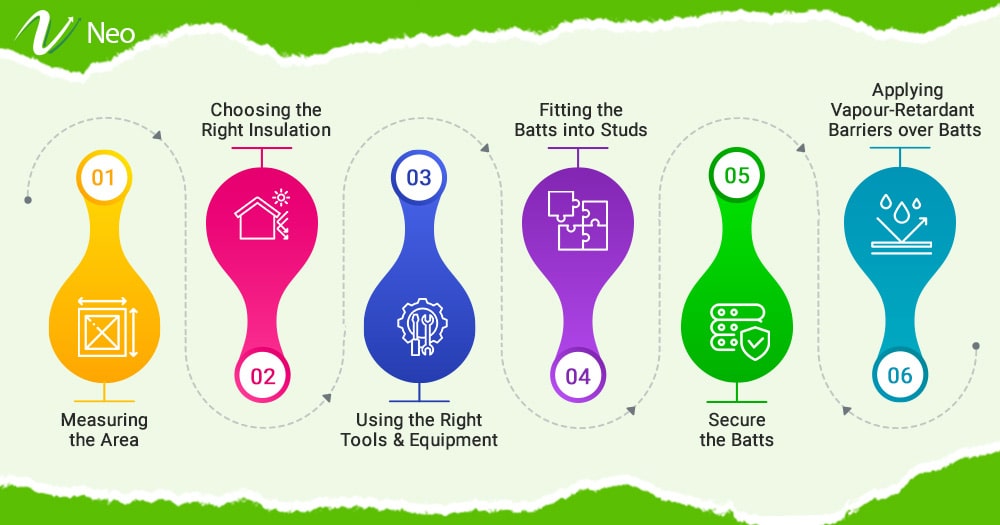
Insulating a particular area or surface requires utmost care and the professionals have to follow a certain procedure to ensure that the thermal insulation process is efficiently carried out. Here are the main steps that help in the process of insulation.

Process of Insulation

Measuring the Area

First of all, the professional measures the area of wall, roof, ceiling, floor, or any surface that has to be insulated. Width between the stud and measuring the wall gaps is the standard practice of measurement which ensures that insulation works efficiently.

Choosing the Right Insulation

In this step, the installation professionals choose the right insulating material after assessing the area that needs to be insulated as well as the requirement of the client. Majorly, the R-value plays a significant role in determining the right material.

Using the Right Tools and Equipment

It is very important that whoever installing the thermal insulation uses the right tools and equipment along with a PPE kit if necessary during the process. It makes sure that person-in-charge doesn’t get injured.

Fitting the Batts into Studs

Having measured the surface, the batts of insulation are cut down in the perfect shape and sizes. These batts are then fitted into the studs to insulate an area.

Secure the Batts

To ensure that batts don’t come out of the studs, a staple gun is used to attach the paper lining every 7 inches.

Applying Vapour-Retardant Barriers over Batts

In the end, a vapor-retardant barrier film is applied over the insulation which helps to maximize the thermal potential of the insulation and achieve better results.

Types of Insulation and Their Working

There are different types of thermal insulation with different qualities, costs, purposes, and the way insulation works. Here are the main types of insulation that are used widely by people in their houses, offices, warehouses and other spaces.

Types of Insulation

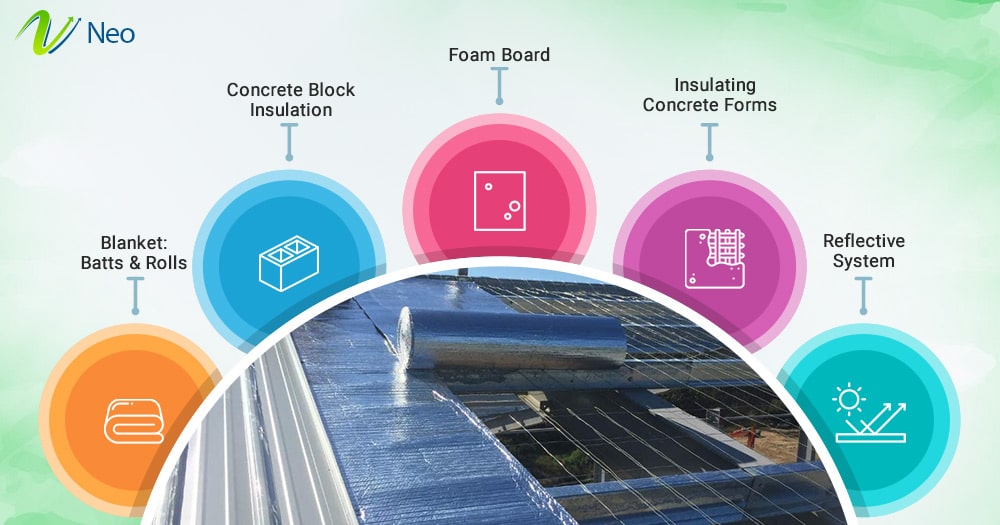
Blanket: Batts and Rolls

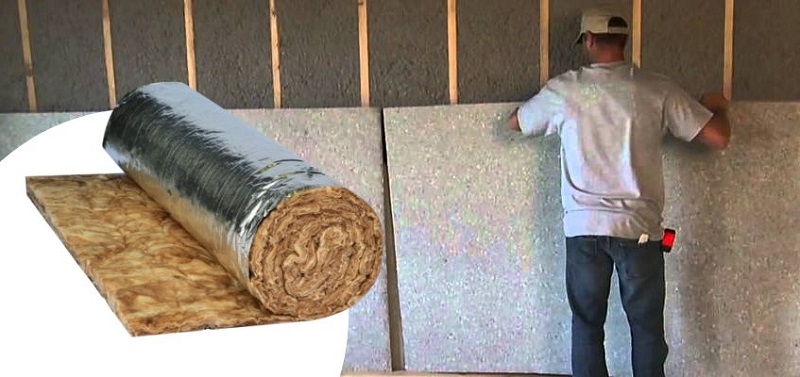
This insulating material is made up of fiberglass mineral (slag or rock) wool, natural fiber, and plastic fibers. This insulation is mainly used in new construction projects for acoustic benefit. Talking about homes, it is mostly used in attic insulation for better temperature maintenance.

Concrete Block Insulation

Concrete block insulation is made up of foam boards that are fitted outside of the wall or inside of the wall during construction. Mostly, air is incorporated into this insulation to increase its R-value. This insulation is helpful in waterproofing during backfilling.

Foam Board or Rigid Board

Foam boards or rigid boards are made up of polystyrene, phenolic, or polyurethane. These are mostly used in unfinished walls, floors, or ceilings. It is applied in commercial and residential buildings that prevent the air from entering the premises.

Insulating Concrete Forms

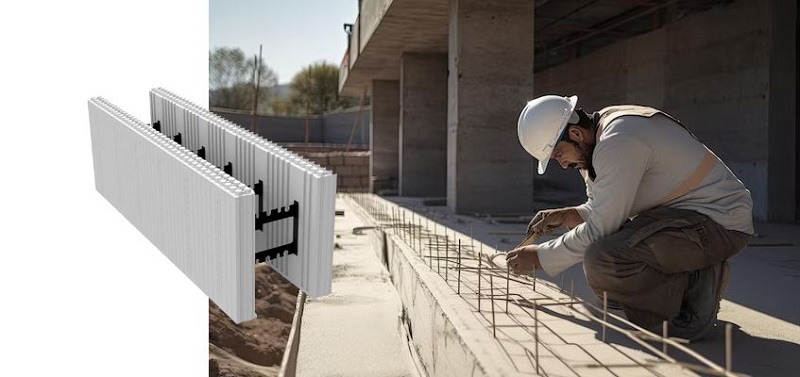
Made up of foam boards and foam blocks, this insulation is used for the foundation walls in new constructions. Along with maintaining the temperature comfort, this insulation is used widely to incorporate strength into the structure.

Reflective System

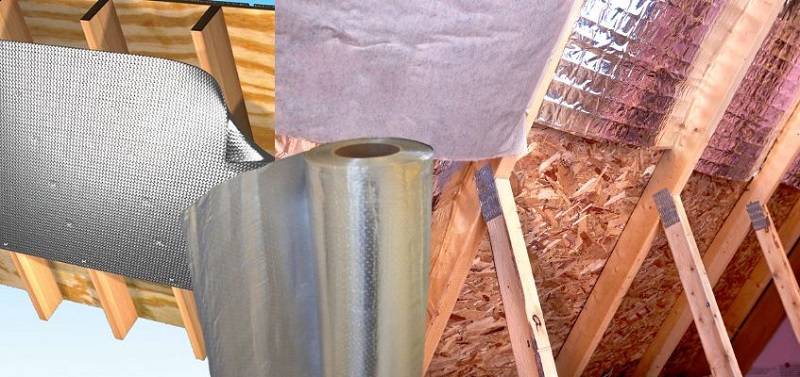
As the name suggests, this solution reflects back the heat and doesn’t allow the temperature to enter inside the premises. It is made up of cardboard, polyethylene bubbles, and plastic films. This insulation is used in buildings with high sunlight exposure.

What is The R-value of Insulation?

Insulation work involves understanding how insulation functions. R-value simply refers to the capability of the material to prevent the surface from heat and reflect back or lock the high temperature inside the surface only. The higher the R-value, the better will be the resistance, and thus more effective the material to prevent the internal temperature from getting affected by the external temperature.

The requirement of R-value during insulation differs from area to area on the basis of their regular day temperature. Different insulating materials have different R-values and the customers choose the right insulation material after analysing factors like requirements, area, budget and personal preferences.

Explore our Range of Insulation Solutions Today!

Benefits of Thermal Insulation

There are a range of benefits that thermal insulation can provide to the building. Here are some of the advantages that you can leverage by choosing the right thermal insulation for your place:-

  • Thermal insulation helps save a lot of energy by preventing the external heat or cold from entering the house. The reliance on electric heating and cooling systems decreases which reduces the utility bills.
  • The dependence on the electricity supply decreases into fractions which saves you a lot of money.
  • Electrical heating and cooling systems cause a range of negative impacts like global warming and carbon footprints to the environment. Thermal insulation solutions, on the other hand, are environmentally friendly.
  • Thermal insulation has been proven very effective for its acoustic properties as it doesn’t allow outside noise to enter the premises.
  • Most of the thermal insulation products are fire resistant which makes sure that your property is not exposed to fire hazards.
  • Thermal insulation prevents moisture and condensation in a building which helps to maintain a stable and comfortable temperature.
  • Thermal insulation products come with a long-life warranty that brings down the maintenance costs into fractions.

Choosing The Right Insulation For Your Home

While there are ample range of insulation products that will help you get a comfortable living, what is more important for you is to choose the right insulation provider. You need not to worry about how does insulation works as Neo Thermal Insulation is there for you to answer all the questions and suggest the right insulation material according to your needs. All of our products are of high quality and require least maintenance. Moreover, we provide our services pan India along with door-to-door assistance post-installation. So, choose Neo Thermal Insulation for all your insulation needs.

FAQ for Insulation Work

What is the Purpose of Insulation?

The foremost purpose of insulation is to restrict the outside temperature inside the house and maintain a comfortable living temperature. However, there are many other purposes like acoustic benefits, fire resistance, water leakage and more that come with thermal insulations.

What is the basic Principle of Insulation?

Thermal insulation restricts the movement of heat through the surfaces. So, the outside temperature can not move inside the house and vice-versa. Thus, it helps to keep the house or any space cool or warmer for a longer time.

Which type of insulation is best?

Foam insulation is considered the best one that creates the air seal in your space. Thus, maintaining the same temperature for a longer time saves you a lot in electricity and energy utility bills.

How Insulation Works in Your Home?

Answer- Insulation when applied in your home, doesn’t allow the external temperature to come in contact with the inside temperature. As there is no connecting point between the external and internal atmosphere, the space remains at the temperature that you prefer for a longer time.

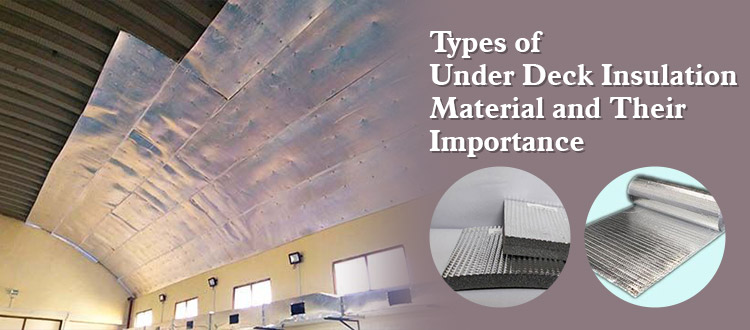
Types of Under Deck Insulation Materials and Their Importance

One of the essential methods to reduce the inflow of heat. It is a way of reducing heat in an industrial plant, and it is also one of the critical factors to consider before constructing a building. It carries great value, and it comes with many benefits. Furthermore, there are various types of under deck insulation materials that you can put to use for your place. So, here are the advantages, importance, and the different types of underdeck roof insulation materials, put together.

Underdeck insulation refers to the installation of insulating materials beneath the flooring or decking of a structure. This insulation serves various purposes, including temperature regulation, moisture control and soundproofing. Placing types of insulation materials beneath the deck helps maintain a consistent indoor temperature, reducing energy consumption and preventing condensation-related issues. The insulation also acts as a barrier against sound transmission, contributing to a quieter and more comfortable living or working environment. Overall, underdeck insulation is a practical solution for enhancing energy efficiency, structural integrity and the overall performance of a building.

Types of Under Deck Insulation Materials

Under Deck Insulation Materials

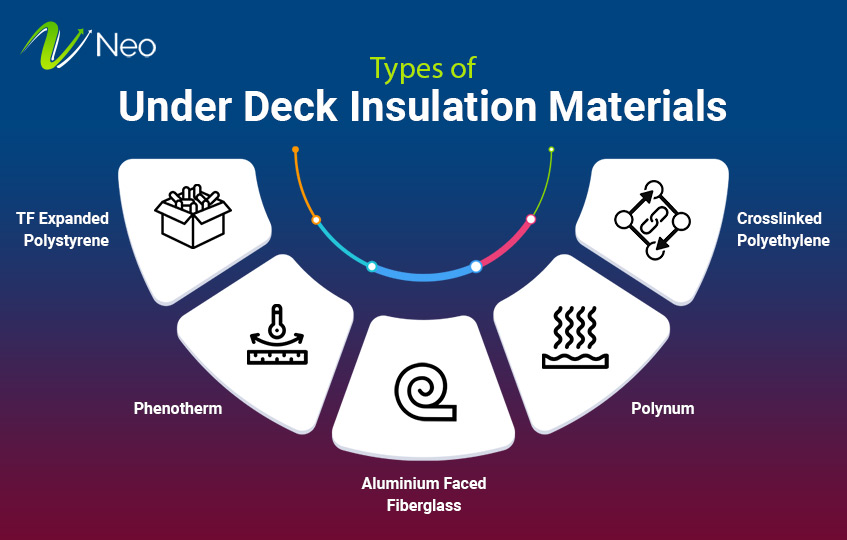
There are different types of under deck insulation materials. All of them have various applications, so let’s take a look at some of them.

1. TF Expanded Polystyrene

Most people widely use it for underdeck roofs. It provides high thermal insulation. The lower the conductivity (thermal), the better the insulation and the conductivity value decreases with density and thickness. Most people prefer using EPS because of its ability to repel water and prevent the growth of bacteria.

It doesn’t absorb water because it has a low water absorption rate. After all, the pores of EPS are very close to each other. Because of the compact porous structure, even the humid air cannot pass through, thus, preventing humidity. Other than that, it is light, easy to install, flexible, fireproof, and resistant to cold and heat.

2. Phenotherm

Not only can you use it for under deck insulation, but you can also use it for over deck, and even pipe insulation. The foam on it is versatile and has a broad utility field. It has various advantages apart from these. Furthermore, it resists fire so well that it has the highest fire rating standards. It has a low water absorption rate because of its structure.

Not only that, but phenotherm also reduces condensation and its composition makes it transmit significantly less water vapor. A plus point of using this material is that it is rodent and insect-proof. It also prevents the growth of fungi and bacteria, to a certain extent.

3. Aluminium Faced Fiberglass

It is a very effective alternative to many other under deck insulation materials that are high in cost. Most people prefer it because it is lightweight and has excellent strength. Furthermore, fiberglass is also resistant to corrosion, making it the perfect material for under deck roof. Because of its low weight, it becomes effortless to work with it. Additionally, fiberglass has the same amount of strength as steel, although it only has a quarter of the density if we compare it with steel. Most factories choose this material because it is resistant to aggressive chemicals.

Read Also: Wall Insulation: Materials, Types & Benefits Complete Guide

4. Polynum

It is one of the most suitable under deck insulation materials for commercial, agricultural, industrial and residential roofs. It is also known to reflect around 95% of the radiant heat, and it is very safe to handle and install. There is no need to wear gloves or any such equipment for installation because there are no risks. Polynum provides energy efficiency to a high level without imposing any environmental hazards. Furthermore, it is waterproof. It does not retain moisture, and it prevents the growth of bacteria and fungi.

5. Crosslinked Polyethylene

The crosslinking turns it into a thermoset by adding a catalyst to the resin. After the process, it has a higher density, and it is the bond that makes the molecules linked to each other. It is scratch-resistant, it has better tensile strength and overall better temperature properties. Furthermore, crosslinking also increases the chemical stability, making it a perfect underdeck insulation materials.

Schedule Your Underdeck Insulation Installation Today.

Importance of Under deck Insulation Materials

Under Deck Insulation Materials

First, underdeck insulation makes sure that the consumption of energy spent in maintaining the inner atmosphere is low. Not only that, but it also prevents the heat from entering the building. If the heat penetrates the premises, it significantly increases the temperature. It is essential for a factory because the roof is responsible for 40-50% of the heat gain.

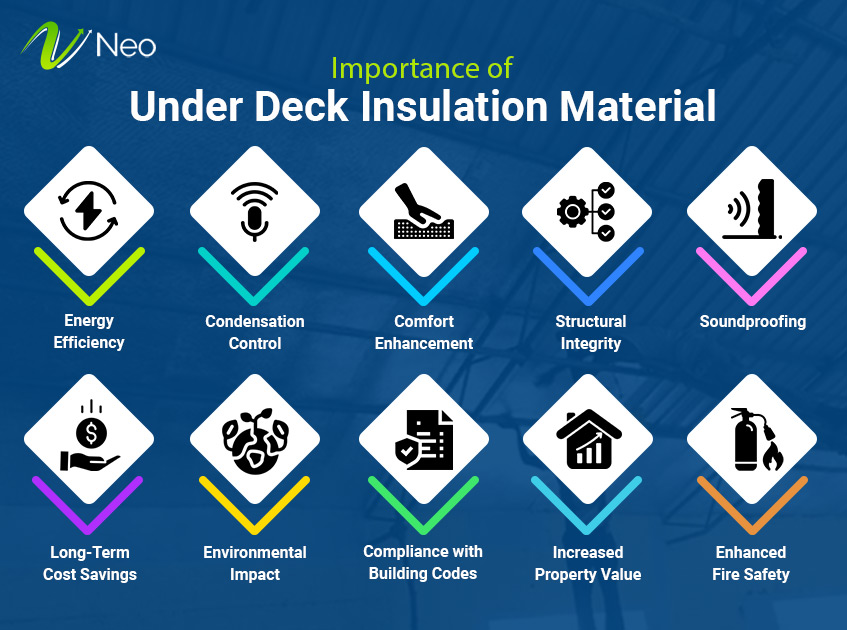
1. Energy Efficiency

Under deck insulation materials help in maintaining a consistent temperature within the living or working space, reducing the need for excessive heating or cooling. This, in turn, leads to energy savings and lower utility bills.

2. Condensation Control

Insulation materials under the deck prevent condensation from forming on the underside of the deck. This is crucial in preventing moisture-related issues such as mold, mildew and wood rot.

3. Comfort Enhancement

Proper Home Insulation contributes to a more comfortable indoor environment by minimizing temperature fluctuations. It helps in creating a cozy and pleasant space for occupants, whether it’s a residential or commercial setting.

4. Structural Integrity

Insulation materials act as a protective barrier, shielding the deck and the underlying structure from extreme temperature variations. This protection helps in preserving the structural integrity of the building over time.

5. Soundproofing

Under deck insulation can also serve as a sound barrier, reducing the transmission of sound from outside and between different levels of a building. This is particularly important in residential areas or spaces where noise control is a priority.

Also Read : How to Keep Home Cool in Summer?

6. Long-Term Cost Savings

While there is an initial cost associated with installing underdeck insulation, the long-term savings in energy bills and potential maintenance costs can outweigh the upfront investment. It is a cost-effective solution in the grander scheme of building maintenance.

7. Environmental Impact

By reducing the energy consumption of a building, under deck insulation materials contributes to lower greenhouse gas emissions. This aligns with environmental sustainability goals and helps in creating more eco-friendly structures.

8. Compliance with Building Codes

Many building codes and regulations require the installation of insulation to meet specific thermal performance standards. Using appropriate under deck insulation material ensures compliance with these codes, avoiding potential legal or regulatory issues.

9. Increased Property Value

Well-insulated properties are often more attractive to buyers and tenants. Investing in under deck insulation can enhance the overall value of a property, making it a wise investment for homeowners and real estate developers.

10. Enhanced Fire Safety

Some insulation materials come with fire-resistant properties, providing an additional layer of safety in the event of a fire. This can be a critical factor in regions prone to wildfires or in buildings with specific safety requirements.

Advantages of Under Deck Insulation Materials

Below are a few of the various advantages of underdeck insulation:

  • Increases inner comfort and decreases the environmental effect
  • Resists against vapor and moisture
  • Increases cooling efficiency inside
  • Roof insulation has soundproofing benefits because it reduces the noise level
  • Increases cooling time and energy consumption
  • Protects the building from heat

Apart from these advantages, under deck insulation materials offer better climatic conditions, and it is best for the summer season. It also has a better impact on the carbon footprint and the greenhouse effect.

Features of Under Deck Roof Insulation

  • Easy to install and maintain
  • Resistant to heat, and fire retardant
  • Lightweight and strong
  • Has a long life

Conclusion

Choosing the perfect Under deck Insulation materials is not an easy task. It requires much selecting, thinking, and considering all parameters. Then you can choose the material that suits perfectly for your purpose. So, these were the advantages and importance of under deck insulation with various materials. If you have a project requiring under-deck roof insulation then Neo Thermal Insulation is considered to provide top-quality and durable under deck insulation materials and insulation service. We have a team of devoted professionals who are ready to assist you every step of the way.

Frequently Asked Questions

1. What is the best material to put under a deck?

The best material to put under a deck is typically a moisture-resistant and durable option like marine-grade plywood, rubberized membrane or specialized under-deck systems designed for water drainage.

2. What is the thickness of underdeck insulation?

The thickness of underdeck insulation varies depending on the material and its intended purpose. Generally, it ranges from 2 to 6 inches to provide effective thermal and moisture control.

3. What insulation is used under the floor?

Common insulation materials used under the floor include fiberglass, foam board, and spray foam insulation. The choice depends on factors like budget, desired insulation properties and local building codes.

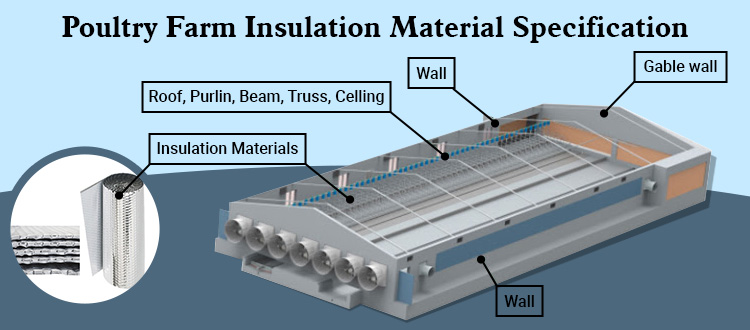
Specifications of insulation material from a premium Poultry Farm Insulation Manufacturer

The flock inside poultry needs a controlled temperature so that it can grow and breed properly. Thus, when winter hits, you have to invest a massive amount of money to keep your poultry warm. However, you can reduce the heating cost with a proper poultry farm insulation. A premium Poultry Farm Insulation Manufacturer will help you find the best insulation material for your farm. So, in this article, we are going to discuss the basic specifications of a poultry farm insulation material.

Primary reasons for Poultry farm insulation

Artificial heating includes the use of gases like propane, butane, etc. to generate heat. These gases are expensive, and their price keeps increasing every year. Moreover, these gases come with serious side effects. For instance, the flock might stop growing or have less food consumption due to the influence of these gases. So, a good breeder must focus on various ways to trap the natural heat instead of trying to produce artificial heat. Now, let us take a look at some of the best insulation materials from a premium Poultry Farm Insulation Manufacturer.

Specification of insulation material from a well maintained Poultry Farm Insulation Manufacturer

Neo insulated Sheets

Neo is one of the market leaders in Insulation services. It is an excellent insulation material as it contains double layers of fire-resistant polyurethane foam. Additionally, it has multiple layers of the waterproof coating so that it can tolerate rough weather. So, this material can prevent the downward heat flow and can control up to 97% of heat loss.

Benefits:

  • It is capable of creating a natural environment within the room.
  • This material can retain the natural temperature and reduce energy consumption. So, it is one of the best materials to reduce global warming.
  • It isolates the room from all types of unwanted noise

Neo Double heat Insulation material

It is an excellent insulation material due to its unique heat absorption system. Here, the manufacturer creates an air vacuum by putting several tiny air bubbles in between the two layers of aluminium foil. Thus, it can prevent all forms of heat transfer, and there is no loss of heats.

Benefits:

  • The outer material is a reflective surface. Thus, it can keep your flock cool during the hot summer days.
  • It can contain a lot of heat. Thus, you don’t need to waste hundreds of dollars on your heating costs.

Factory Shades Insulation

As the name suggests, this material aims to implement the heavy-duty insulation process into a poultry farm. It is well-tested and uses the latest insulation technology. Additionally, it is a very affordable product, as it tries to aim towards the smaller poultry farms.

Benefits:

  • It is a clean, thin, and single-layer insulation to avoid all forms of complexities.
  • It provides an exceptional amount of safety, insulation, and environmental care.
  • This material doesn’t require any form of maintenance.
  • It is highly efficient and is very easy to install in all the poultry farms.

Neo Single Plus Insulation sheet

Neo is a very reputed Poultry Farm Insulation Manufacturer. This Thermo reflective material is an example of the massive evolution in the poultry farm insulation industry. The surface of this material can reflect the heat and spread it evenly throughout the room. Additionally, the outer surface can reflect the excess heat during the hot summer days to maintain a pleasant temperature inside the room.

Benefits:

  • Maintains a clean and hygienic environment in the poultry farm.
  • It is made of recyclable material. Thus, while using this material, you will produce no waste product that can harm the environment. So, you will be contributing towards making the earth healthier for the future generation.

Moisture resistant flexible Insulation material

Breeding involves keeping many chicks within a single area. So, when you have so many living things in a room, moisture contamination is a massive risk. So, Insulation Manufacturers created this brilliant material that completely abolishes this risk. Additionally, it is resistant to all forms of chemicals to prevent any contamination from the flock feeds. It is made from the finest material and has the best finished look.

Benefits:

  • The reflective qualities of this material help it to survive the extreme weather conditions.
  • This material is 100% recyclable. Thus, it puts no extra burden on the environment.

Conclusion

Poultry farm insulation is a very important process. It is necessary if you want to make a profit in this business. For example, you won’t make any profit if you waste thousands on heating the farm. So, we can conclude that you must get your farm insulated by a Poultry Farm Insulation Manufacturer. It will insulate your farm and create a naturally warm atmosphere inside it. This will not only help your flock to breed naturally but also help in saving a lot of money that you have been wasting on heating the farm artificially.

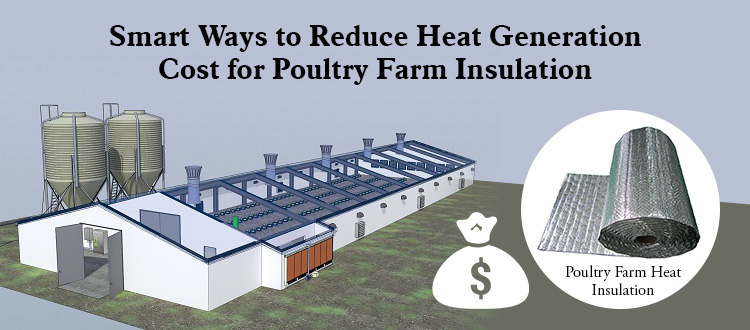
Smart Ways to Reduce Heat Generation Cost for Poultry Farm Insulation

When winter hits, the cost to keep the poultry farm warm starts to rise. As we all know, the outside temperature isn’t under our control. However, we can control the state of the poultry and its heat generation methods. Various ways can help us to create Poultry Farm Insulation and reduce the cost of artificial heat generation during the cold winter days. So, in this article, we are going to discuss some of the most useful ways to create Poultry Farm Insulation.

Reasons for Poultry Farm Insulation

While using an artificial heating technique, you have to use electric, propane, natural gas, or some other method. These gases aren’t cheap as their costs keep rising every year. These artificial processes promise to keep your flock healthy and growing during the winter season, although they fail to deliver at times. Additionally, your flock might stop breeding due to lower temperatures and lower feed consumption. However, you can control this by reducing gas usage and focusing on the environment of the poultry. For instance, if you can manage to trap the heat inside the poultry naturally, you will not only save a lot of money but also increase the health of your flock.

Many breeding experts have stated that most baby chicks die from cold instead of illness, dehydration, or lack of food. Even a few degrees lower temperatures might prove crucial for the overall breeding capacity of your poultry. For instance, the ideal temperature is 90°F for breeding even if it drops to even 85°F, you will lose quite a few of your baby chicks.

So, a good breeder needs to focus on trapping the natural heat instead of trying to produce that artificially. Various ways might help in this process. The two best ways to cut the cost without affecting the health of your flocks are:

  • Make your poultry more energy efficient
  • Change your sources for heat generation

Now, let us take a look at the six best ways for natural Poultry Farm Insulation.

1. Close the building- seal all air leaks and doors

Any type of crack in the walls or roof can cause massive heat loss. During winters, the average temperature outside is 40° F. So, if you are trying to maintain 90 degrees inside the poultry then, you need to avoid any possible ways of massive heat loss. Artificial heat generation is a costly process in itself, it becomes harder if the air keeps escaping through the cracks. You can reduce most of these costs with the help of the proper maintenance of your poultry and using thermal insulation material sheets. For instance, you should spend some money and time to check.

2. Try to isolate your younger flock in a smaller area for the first couple of weeks during the wintertime

The new-born chicks need a lot of heat, but they don’t need that much space. It is advisable to isolate the new-borns in a smaller area completely covered with blankets for better insulation. They must be kept in that area for the first couple of weeks of winter and then can be shifted with the rest of the flock.

Read Now:- How to keep heat in by Roof Insulation

3. Try to produce your energy with the help of solar power generator

Energy charges are very high when it comes to using them for producing for an entire season. So, it would be helpful if you could find alternative sources of energy, especially from renewable ones. For instance, solar energy is a very viable option for this category. Since you are considering this option for use in poultry farm then it is safe to assume that you already own a large open area. So, you have a perfect setup for solar energy production. This process might seem expensive during the initial installation but will be saving a lot more in the coming years. So solar energy is a very important part of Poultry Farm Insulation.

4. Try to recirculate the warmer air from the exhaust

Approximately 80% of the cost involves replacing the warm air with fresh cold air. However, there is a new waste management system that transfers the heat from the air in the exhaust to the fresh cold air inside the poultry. Research suggests that this system can reduce your heating bills by 50%. and many farmers from the middle west have already deployed it.

5. Increase the insulation in the building

According to a study, the heating cost is very high for a regular poultry house compared to an insulated one. So, it is necessary to ensure that your farm has the proper insulation to trap most of the heat inside it. In that way, you will have less heat loss and will have to produce less heat. Insulation charges might seem expensive, but it is a one-time investment. However, if you don’t have proper insulation, your energy bill will keep increasing over time.

Read Now:- Importance of Insulation in Poultry Housing

6. Clean the fans inside the poultry

Dirty fans need more energy to spin. So, if you have dirty fans, the ventilation process of your poultry will be consuming a lot of energy along with your energy production charges. You can reduce a lot of this cost by deploying a proper cleaning mechanism. For instance, you can clean the fans of your building to help them spin properly. In winter months, you can use the fans inside the poultry to disperse the heat. So, if you can keep your fans clean, you will be saving a lot of money involved in heat dispersion.

Conclusion

Poultry insulation is vital for controlling the heat loss from your flock farm. For instance, even if you are making a profit, you won’t feel it as you would be losing a lot more in Poultry Farm Insulation. The insulation process for poultry is generally a one-time investment, that will promote savings continuously over the years. Additionally, you have to remember that the average temperature varies from region to region. So, consider the region you are in and contact the best poultry farm insulation manufacturer before working on any form of Poultry Farm Insulation. Lastly, we can conclude that proper insulation is very necessary to have a functioning farm and also save the flock that will be residing in it.

How can Roof Insulation Solution help to keep the heat In?

The roof is one of the prime supporting structures of the building. So, if you are trying to implement an ultimate insulation solution, then, you must ensure that your roof is heat-proofed. Additionally, it must be sturdy as the roof stays exposed to harsh natural calamities. Colour coated sheets act as great insulation for your roof. Additionally, they add to the aesthetic look of your building and increase the lifespan of the roof. So, in this article, we are going to discuss the best Roof Insulation Solution for your building.

Types of heat insulation roof sheets:

Tiled heat insulation sheet
Corrugated heat resistant sheet
Troughed heat insulation sheet

Before we move on with the various types of roof sheets, we must discuss the advantages of Roof Insulation Solution:

Durability

These sheets are very durable. For instance, they will last up to 10 years without any form of maintenance. So, these sheets will help you to reduce all the unnecessary maintenance costs.

Flexibility

They are very flexible and can transform into various shapes. Thus, you have different customization options to enhance the look of the building. So, these sheets are the best choice for the renovation of old buildings.

Corrosion Resistant

Roof materials suffer from two types of corrosion: galvanic corrosion and crevice corrosion. So, Heat insulation sheets are made of aluminium to be completely corrosion resistant. Additionally, you can paint them to keep them isolated from parts of the building that might have already corroded. Moreover, corrosion can also occur when salt, sand, or dirt gets between the two layers of the roof sheet but the acrylic paint on heat insulation sheets prevent all these activities.

Thermal Insulation

The primary aim of this article is to find the best Roof Insulation Solution for any building. So, these sheets are one of the leading industrial insulation solutions. For instance, this sheet not only prevents heat loss from the building but also don’t allow excessive heat gain from the atmosphere. Additionally, they help to save your energy consumption bill as you don’t have to make up for any loss of heat energy. For example, these sheets can reduce up to 50% heat absorption during summers and up to 40% heat loss during winters.

Attractive

These sheets come in various shapes, sizes, and colors. Additionally, you have the choice to customize them according to your taste or building type. So, a colour-coated heat insulation sheet will help to uplift the aesthetic looks of your building.

Completely recyclable

These sheets are either made from aluminum or a special polymer that has high reusable abilities. Additionally, they are recyclable without any garbage production. So, they are very environment friendly and doesn’t harm the natural balance around us.

Other possibilities for a proper Roof Insulation Solution

Many people might consider heat insulation sheets to be a generic insulation solution. However, there is various other Roof Insulation Solution that is unique and gives good results. So, let us take a look at some other insulation solutions.

Shade the Roof

During the hot summer days, when the heat gets unbearable, a human looks for a shade under a tree or umbrella. This instinct justifies that if there is something to prevent direct contact of sunlight, then you can reduce the total heat absorption. So, if you can create shade above your building then you can increase the insulating abilities of it. Additionally, you can plant some trees on the roof to enable the absorption of heat. You can use the GI Sheet, Mangalore Tiles or canvas for making the roof shade.

Top Insulation

This is a common insulation practice in cold areas. People cover the roof with flexible heat insulation layers that trap the heat inside the roof. Some other names for this type of insulation are blanket insulation or bat insulation. This insulation process uses materials such as animal hair, cotton, woollen fibre, etc. Moreover, the sheets are 12 to 80mm thick to ensure that they serve as an excellent heat absorption medium. The insulation process is useable for all types of roofs, and you can even customize the sheets to match the style of your building. Additionally, you can use these sheets for the walls of your building to ensure complete insulation of your house.

Inbuilt insulation

It is a modern insulation process. While the building is under construction, you can integrate the insulation process within the roof. You can do this by filling the entire roof with Hollow clay panels and lightweight foam concrete panels. This insulation process has three primary benefits. They are:

You can reduce the total consumption of the building as you will fill the mixture with insulating materials.

Due to less concrete, the overall weight of the building will be comparatively low. So, your building is safe against most natural disasters.

As the insulating material is present within the concrete, the insulation ability of the roof will increase drastically.

Another term for these insulating roofs is Filler slab roofs. So, this is great for Roof Insulation Solution.

Conclusive news on Roof Insulation Solution

Thermal insulation of a building is necessary to save the environment. For instance, if we can reduce the total heat emission from every building, we will be able to bring global warming under control. Moreover, you will save a lot of money that you have been wasting on your excess energy bills. Additionally, many governments recommend that buildings constructed before 1980 must get repaired with proper insulation process. It will help to reduce the average carbon footprint. Thus, we can conclude that a decent Roof Insulation Solution is very crucial for us and the environment.

Process to Thermal Insulate Buildings with Pre-engineered Building Manufacturers India

The natural condition of the earth is in huge danger due to our activities. In other words, global warming is disturbing the ecological balance of the earth. Heat emissions cause an increase in the average atmospheric pressure and harms the nature. Buildings all around the world are one of the prime thermal emitters. There are various companies like Pre Engineering Building Manufacturers India that help to curb the thermal emissions from all types of buildings. So, in this article, we are going to discuss the various method to thermally insulate the buildings.

Role of companies like Pre Engineering Building Manufacturers India

No individual can insulate his house on his own. Moreover, the story is a lot more complex when it comes to a large building like a factory. Thus, you need experts who have years of experience in this field to have effective insulation. So, companies like Pre Engineering Building Manufacturers India, are the best choice for this job. Now, it’s time to take a look at all the best thermal insulation practices.

Slab or block Insulation

This is the most common and cost-effective insulation practice. Here, you have to fix the insulator slabs to the walls of the roof. These slabs help to control heat loss or gain and thus maintain the optimal temperature in the building. You can use materials like mineral wool, corkboard, cellular glass, and cellular rubber or sawdust for this purpose.

Blanket Insulation

This is the complete opposite of slab insulation. In blanket insulation, you have to put the insulating sheet directly over the roof of the building. These sheets are usually very flexible and can adapt to almost all roof types. You can use material such as animal hair, cotton, woolen fiber, etc for this purpose. These sheets are usually 12 to 80mm thick and serve as excellent heat absorption medium.

Loose-Fill Insulation

This is an advanced insulation process. A stud space is provided between the two layers of the wall. Now, you can fill this space with some insulating material. Thus, the heat will get trapped between the two layers of the building wall. For loose-fill insulation, you can use rock wool, wood fiber, cellulose, etc. This insulation is most commonly used in cold regions.

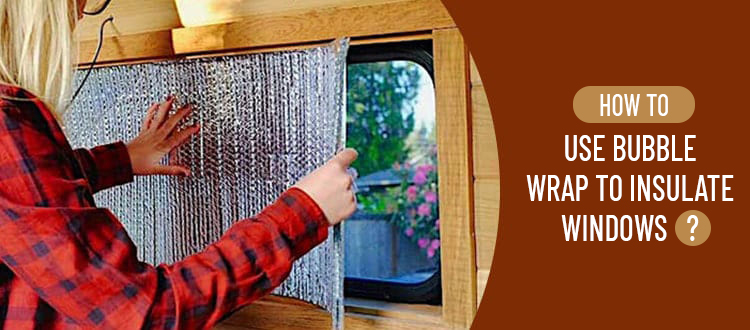
Read Also: – How to insulate window using bubble sheet roll

Bat insulating materials

Bat insulation is very similar to blanket insulation. The only difference is that bat inclusion sheets are thinker than the blankets. You can use cellulose, woolen fiber, for bat insulation. Additionally, just like blanket insulation, these are also spread over the walls and roof of the building.

Insulating boards

You can use pulpwood or cane to make insulating boards. The pulp is pressed with pressure under a certain temperature to turn it into sheets. Now, you have to attach these sheets to the inner side of the building to block your room temperature from being emitted through the walls. These boards are very cheap to make and thus they are very cost-effective. Companies such as Pre Engineering Building Manufacturers India make these sheets to allow insulation on a budget.

Reflective Sheet Material

Aluminum sheets, gypsum boards, steel sheet have high reflective and heat resistance capacity. This means that when this sheet will come in contact with solar heat, it will reflect it straight back. So, these materials are best for houses or buildings that are located in tropical areas with high average temperatures. These sheets can also be used to maintain a low temperature in large refrigeration units.

Lightweight Materials

This is a very easy insulation practice. During the construction of the building, certain insulating materials such as blast furnace slag, vermiculite, burnt clay aggregates, etc are mixed with the concrete mixture. These increase the heat resistance of your house and don’t need to do any sort of separate insulation in your house.

Proving a proper roof shading

If you can block the direct sunlight on your roof then, you can increase the heat efficiency of your house. Thus, you can construct a shade on your roof for this purpose. Moreover, you have to ensure that the angle of the shade is accurate to the direction of the sun. Companies such as Pre Engineering Building Manufacturers India provide innovative ideas for roof shading. They also have various customization options to help the shade blend in with the aesthetic of your building.

Conclusive view on insulation practices by Pre Engineering Building Manufacturers India

So, we can conclude that the thermal insulation of a building is very crucial to saving the environment. Additionally, it will save a lot of your energy bill that you have been wasting to make up for the heat loss due to non-insulation. Pre Engineering Building Manufacturers India has been doing building insulation for years., So they know everything there is to know in this field. Thus, you can blindly rely on them to provide you with the best insulation. Moreover, many governments have made it mandatory to have some sort of insulation in all buildings.

Insulation Services-10+ Facts About Insulation

Every home deserves to be a sanctuary and insulation services play a crucial role in making that dream a reality. Forget drafty winters and sweltering summers – insulation acts as a silent guardian, trapping heat in when it’s chilly and keeping it out when the sun blazes. But wait, there’s more! This unsung hero also shields you from the modern-day plague – noise pollution. Imagine layers of protection whispering “shhh” to unwanted sounds, creating a peaceful oasis within your walls. Yet, amidst its undeniable benefits, fascinating facts about insulation often go unnoticed. Let’s peek behind the curtain and uncover the hidden wonders of this essential home comfort service!

The anticipated growth in the global building insulation market is projected to add $4.6 billion to its value from 2021 to 2026. Valued at $28 billion in 2021, this sector within the construction industry is expected to reach $33 billion by 2026. The significance of insulation lies in its contribution to sustainable construction practices, effectively curbing heat transfer and enhancing the energy efficiency of buildings. Join us in this article as we explore the top 10 intriguing facts about insulation services.

What is insulation services?

Insulation services, specifically home insulation services, encompass a range of expert solutions geared towards enhancing the energy efficiency, comfort, and sustainability of residential structures. Insulation refers to the material or combination of materials used to slow down or prevent the transfer of heat, sound, or electricity between different spaces or materials. These services involve the installation and maintenance of materials within buildings or structures to regulate temperature, reduce energy consumption and control sound transmission. These services play a crucial role in creating comfortable, energy-efficient and acoustically sound indoor environments.

How does Insulation Services work?

How Insulation Services Work?

1. Insulation Assessment

Insulation contractors begin by conducting a thorough assessment of a Building’s Insulation needs. This involves considering factors such as climate, building design and energy efficiency goals.

2. Material Selection

Thermal Insulation services begin with the selection of appropriate insulation materials. Common insulation materials include fiberglass, cellulose, foam board, spray foam, mineral wool and reflective foil, each with its own unique properties and applications.

3. Insulation Installation

Insulation contractors expertly install the selected materials to create a barrier against heat loss or gain. This process involves placing insulation in walls, ceilings, floors and other areas where energy transfer occurs. Proper installation is crucial for the effectiveness of the insulation.

4. Energy Efficiency

Insulation contributes to energy efficiency by reducing the need for excessive heating or cooling. This, in turn, can lead to lower energy consumption, decreased utility bills and a reduced environmental impact.

5. Noise Control

Multi-layered insulation materials also provide a shield against noise pollution. Insulation contractors use these materials strategically to create barriers that absorb or reflect sound, resulting in a quieter indoor environment.

6. Health and Comfort

Professional Insulation services contribute to the overall health and comfort of occupants by preventing drafts, controlling humidity and minimizing the infiltration of allergens and pollutants. This is particularly important for individuals with respiratory conditions.

7. Maintenance and Upkeep

Insulation contractors may offer maintenance services to ensure that insulation continues to perform optimally over time. This can include periodic inspections, repairs, or upgrades as needed.

Types of Insulation Services

Types of Insulation services

1. Spray Foam Insulation

This involves spraying a liquid foam that expands into a solid, providing an effective seal against air infiltration. Spray foam insulation is versatile and can be applied to various surfaces and irregular spaces.

2. Fiberglass Insulation

Fiberglass insulation consists of fine glass fibers and is widely used for its affordability and fire-resistant properties. It is available in batts, rolls and loose-fill forms.

3. Cellulose Insulation

Made from recycled paper or plant fibers, cellulose insulation is an eco-friendly option. It can be blown into cavities or installed as loose-fill, providing good thermal resistance.

4. Mineral Wool Insulation

This insulation type is derived from natural minerals like basalt or recycled slag. Mineral wool is known for its fire resistance and can be used in various applications, including batts, blankets and loose-fill.

5. Reflective Insulation

Reflective insulation materials typically consist of a reflective surface that reflects radiant heat. This type of insulation is often used in attics to control the transfer of radiant heat.

6. Rigid Foam Board Insulation

Rigid foam boards are made from materials like polystyrene, polyisocyanurate, or polyurethane. These boards provide high thermal resistance and are suitable for walls, roofs and foundations.

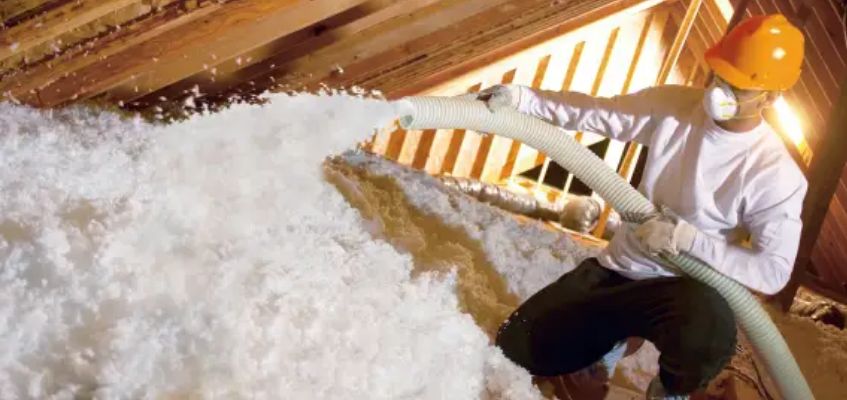
7. Loose-Fill Insulation

Loose-fill insulation, such as blown-in fiberglass or cellulose, is installed by blowing or pouring loose insulation material into cavities, attics or other enclosed spaces.

8. Batt Insulation

Batt insulation comes in pre-cut panels or rolls and is typically made of fiberglass. It is designed to fit between standard spacing in framing, making it a convenient option for walls and ceilings.

Types of Insulation Sheets

The insulation sheets play a crucial role in enhancing energy efficiency, maintaining optimal temperatures, and contributing to overall comfort within living and working spaces. This exploration into the “Types of Insulation Sheets” seeks to shed light on the characteristics, applications, and advantages of these materials, empowering homeowners, builders and insulation enthusiasts with the knowledge needed to make informed decisions about their insulation needs.

Types of Insulation Sheets

1. Roof Insulation Sheets

Roof insulation sheets plays a pivotal role in creating a thermally efficient and comfortable living space. The choice of insulation sheets is a crucial aspect of roof insulation services, contributing to energy savings and enhanced home insulation.

2. Air Bubble Insulation Sheets

Air bubble insulation sheets have gained popularity as an innovative and effective solution for thermal insulation in various applications. These sheets, often comprised of layers of reflective foil and trapped air pockets, offer a range of benefits that make them a preferred choice in the realm of insulation.

3. Heat Insulation Sheets

Heat insulation sheets are essential components in creating energy-efficient and comfortable environments by preventing the transfer of heat. These sheets, designed with specific thermal properties, find applications in various industries, construction projects, and home improvements.

4. Aluminum Insulation Sheets

Aluminum insulation sheets represent a sophisticated solution in the realm of home insulation services, combining the versatility of aluminum with the thermal properties essential for effective insulation. These sheets, often composed of aluminum foil layers and other insulating materials, offer unique advantages in enhancing energy efficiency and maintaining optimal indoor temperatures.

Facts About Insulation Service

Thermal Insulation services, often delivered by skilled insulation contractors, go beyond the contemporary understanding of regulating temperature and reducing energy consumption. Insulating your home is not just about keeping the energy bills in check; it’s a fundamental aspect of creating a warm and comfortable living space. However, there are several misconceptions surrounding insulation, and it’s crucial to grasp the key facts. Here are 13 intriguing facts about insulation that should be on your radar:

1. Recyclable and Reusable

Insulation is a recyclable and reusable heating solution, contributing to sustainability. Materials like cellulose insulation are crafted from 85% recycled paper product, making them eco-friendly choices for maintaining a warm home. This recycling process transforms post-consumer and post-industrial paper waste into a high-performance insulation material. By utilizing recycled materials, cellulose insulation reduces the demand for new resources, promoting a circular economy.

2. Easy Insulation Installation

When it comes to enhancing the comfort of your home and achieving significant energy savings, installing insulation stands out as a simple and easy. The process of insulating your home doesn’t require complex procedures or extensive renovations, making it an accessible and impactful home improvement option. In the realm of sustainable construction and responsible energy consumption, insulation stands out as a simple yet powerful tool.

3. Cost-Effective

Insulation services offer a cost-effective investment for slashing energy bills. Despite the initial cost that may seem substantial, insulation services prove to be a wise financial decision. The investment pays for itself within five to six years and continues to generate savings over its impressive 40-year lifespan. Recognizing insulation as more than just an upfront expense, this strategic financial move becomes evident as it significantly curtails energy bills, showcasing a swift return on investment.

4. Energy Bill Savings

By investing in top-notch Thermal insulation, you can enjoy significant savings. High-quality insulation can potentially cut down utility bills by as much as 40%. Given that heating and cooling makeup about 54% of typical utility costs, choosing the right insulation services becomes a smart approach to managing expenses and avoiding unnecessary energy waste. This underscores the considerable financial impact of effective temperature regulation on household spending.

5. R-Value Measurement

Integrating top-tier thermal insulation services into your home can lead to significant savings. The implementation of optimal insulation has the potential to achieve a remarkable 40% reduction in utility bills. Given that heating and cooling account for 54% of average utility expenses, choosing the Professional insulation services emerges as a potent strategy to manage costs and curtail energy wastage. This emphasizes the considerable financial impact that efficient temperature regulation, facilitated by high-quality insulation, can exert on overall household expenditures.

6. Reduces Carbon Dioxide

Insulating a house not only lowers energy demand but also reduces carbon dioxide emissions. By decreasing energy needs, insulation contributes to a greener world by curbing a major contributor to global warming. This natural air pollutant is a major contributor to global warming and climate change, so by using insulation you’ll be lowering your carbon footprint and contributing towards a greener world.

7. Varieties in insulation service

People often misunderstand that insulation is only a one-step process and has no variety. But actually, insulation service has over 10 varieties. Such insulation services include insulation with the help of spray foam, blown fiberglass, injection foam, rigid barrier, cellulose, etc. The realm of Thermal insulation is far from a singular, one-size-fits-all approach. Contrary to common misconceptions, insulation offers a diverse array of options, each tailored to specific needs and preferences. These types of insulation materials span from spray foam and blown fiberglass to injection foam, rigid barrier, cellulose, and more.

Schedule a consultation for top-notch Insulation Services.

8. Better Insulation helps in better Health

As we discussed before, asbestos was an earlier solution to insulation. But later, it was discovered that asbestos had permanent harmful effects on the human lungs. So, there was an immediate need to replace it with a safer insulating material. Thus, fiberglass came into existence and it became a quick success. As a result, we use it today in all Professional insulation services.
Thus, Fiberglass is one of several accidental inventions. Maybe if this accident hadn’t happened then we would be still using harmful asbestos for insulating services.

9. Upgraded Insulation can increase your home’s value:

Installing new insulation not only contributes to energy bill savings but can also enhance your home’s market value. Elevating your home’s Energy Performance Certificate from a D to a C has the potential to boost your house value by 3%. Furthermore, achieving an increase of two bands could result in an impressive 8.8% rise in your property’s overall value.

10. Coloring insulation material for better results

Many people simply install insulation material and think that it’s all they need to do to save energy. But very few realize that coloring the sheets will improve the insulation capacity. A dark color will help it to absorb more heat and increase the insulating ability. On the other hand, a lighter color will help it to reflect a lot of heat and maintain a low temperature.

Schedule Your Insulation Installation Today.

Conclusion

In summarizing this discourse on insulation services and unveiling compelling facts about insulation, it’s resoundingly clear that insulation stands as a non-negotiable element for every household. So, from this article, we can easily conclude that insulation is a must-have for all houses. Many governments have made it mandatory for new construction.

Opting for Neo Thermal Insulation, recognized as a leader in thermal insulation services, becomes a strategic move for transforming outdated homes into energy-efficient sanctuaries. Therefore, it is a great idea to renovate all old houses with insulating materials. Insulating services are very affordable and don’t drain you by any means. They are available both offline and online. And, the companies also provide excellent after-sales support. it is a fundamental necessity for all houses. Governments worldwide have recognized its pivotal role in energy efficiency, making it mandatory for new constructions. Looking back to the pre-1980 era, when insulation wasn’t a requirement, we see a stark contrast in energy consumption and emission levels.

Frequently Asked Question

1. What are the benefits of having insulation services?

Insulation services contribute to substantial savings on heating and cooling expenses, often exceeding 40%. This reduction in energy consumption leads to lower utility bills, making it a cost-effective investment for homeowners and businesses alike.

2. which company provide the Professional insulation services?

Neo Thermal Insulation is the best insulation company in India that provides top insulation services for diverse sectors like Warehouses, Manufacturing Industries, Commercial, Domestics, Apartments, Malls, Fitness Training Centers, etc. In the services include roof thermal insulation, complete building insulation, ceiling insulation, floor insulation, etc. They have a team of insulation constructors that analyze your building inside-out and recommend the best thermal insulation services that will provide high resistance to your building and will sustain all weather changes to keep your interior environment unchanged.

3. Where is the best place to put insulation?

Insulate every outer wall, encompassing (3A) walls that separate living spaces from unheated garages, shed roofs, or storage areas; (3B) foundation walls situated above ground level; (3C) foundation walls within heated basements. Additionally, apply insulation to floors positioned above unconditioned spaces, such as vented crawl spaces and unheated garages.

4. How long is insulation good for?

The lifespan of insulation can vary based on factors such as the type of insulation, environmental conditions, and the quality of installation. Here are general estimates for the longevity of common types of insulation:

1. Fiberglass Insulation: Fiberglass insulation, when properly installed and not subjected to damage, can last for 100 years or more. It is durable and does not deteriorate over time.

2. Cellulose Insulation: Cellulose insulation, typically made from recycled paper or plant fibers, can have a lifespan of around 20 to 30 years. However, its longevity can be affected by factors such as moisture and settling.

3. Spray Foam Insulation: Spray foam insulation has a long lifespan and is known for its durability. It can last 20 years or more, and its effectiveness is less likely to diminish over time.

4. Polyurethane Foam Insulation: Like spray foam, polyurethane foam insulation is durable and can last for several decades. With proper installation, it can provide effective insulation for 20 years or more.

5. Mineral Wool Insulation: Mineral wool insulation, made from materials like basalt or recycled slag, is known for its resilience. It can last for 50 years or more, maintaining its insulating properties.

Talk to us?

Download Brochure